
ROI Analysis of 215kWh Cabinet BESS for Construction Site Power
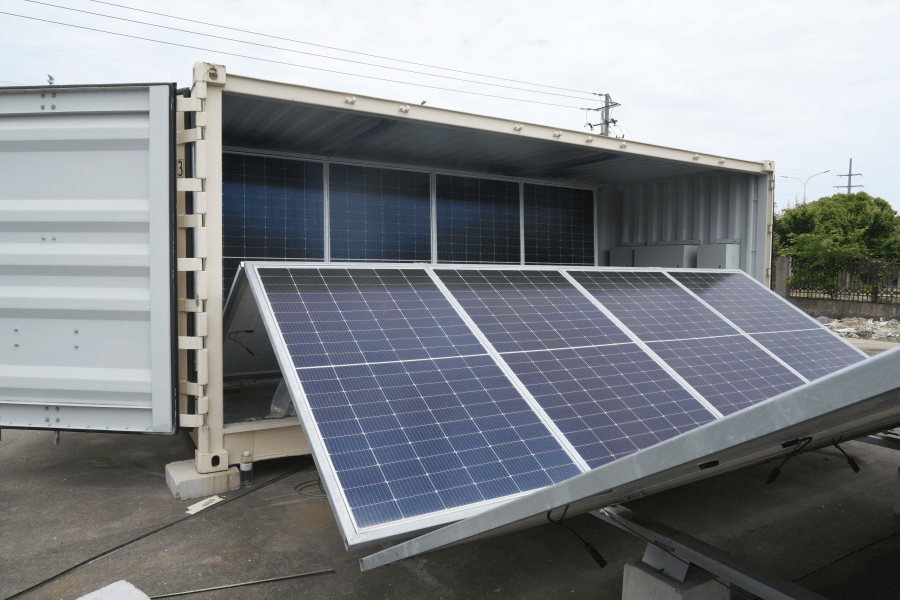
Table of Contents
- The Silent Power Problem on Every Job Site
- Beyond the Diesel Gen-Set: The Real Cost of "Business as Usual"
- The Modern Solution: A 215kWh Power Cabinet That Pays for Itself
- Breaking Down the ROI: It's More Than Just Fuel Savings
- A Real-World Case: How a German Contractor Quietly Cut Costs
- The Tech That Makes It Work (Without Needing a PhD)
- What's Next for Your Site?
The Silent Power Problem on Every Job Site
Let's be honest. When you're managing a construction project, power is supposed to be a given. You flip a switch, things run. But if you've spent more than a week on a site, you know the reality is messier. Temporary power is anything but temporary in its headaches. You're dealing with the roar and fumes of diesel generators, utility connection delays that hold up your entire critical path, and those maddening peak demand charges that seem to hit just when you're pouring concrete. I've seen project managers spend more time arguing with the utility company or fuel suppliers than reviewing blueprints. The core problem? We've accepted a noisy, expensive, and inefficient model because, until recently, the alternatives seemed too complex or too costly.
Beyond the Diesel Gen-Set: The Real Cost of "Business as Usual"
We all know diesel is expensive. But the agitation point, the real pain, is in the hidden costs and risks. First, there's volatility. According to the U.S. Energy Information Administration (EIA), diesel prices can swing over 30% in a single year. Try locking in a project budget with that variable. Then, there's the carbon cost. More and more municipalities, especially in the EU and states like California, are implementing strict emissions regulations on construction sites. A non-compliant site isn't just facing a fine; it can be shut down.
But here's what I've seen firsthand on site that doesn't always make the spreadsheet: inefficiency. Generators are rarely run at their optimal load. They guzzle fuel at idle and during low-power tasks. You're also paying for the noise - literally. Some urban projects have strict noise ordinances, limiting productive work hours. And let's not forget the security risk of on-site fuel storage. It's a liability walking on two legs. This "business as usual" model isn't just costly; it's a constant operational drag.
The Modern Solution: A 215kWh Power Cabinet That Pays for Itself
This is where the conversation gets interesting. We're not talking about sci-fi future tech. We're talking about a practical, deployable asset: a containerized or cabinet-style 215kWh Battery Energy Storage System (BESS). Think of it as a silent, giant power bank for your entire site. It doesn't replace the grid or a generator entirely; it optimizes them. It charges during off-peak, low-cost hours (or from a temporary solar array), and then discharges during expensive peak periods or to avoid running the generator. It provides instant backup during a utility flicker, keeping critical tools and systems online. The shift is from viewing power as a consumable expense (like diesel) to viewing it as a manageable asset.
Breaking Down the ROI: It's More Than Just Fuel Savings
When we do an ROI analysis for a 215kWh BESS on a construction site, fuel savings are just the entry point. Let's break it down in a way any project manager would appreciate:
- Direct Fuel & Utility Savings: By load-shaving and peak avoidance, you can cut generator runtime by 60-80%. This is straight-to-the-bottom-line savings. You're also mitigating those brutal demand charges from the utility.
- Regulatory & Carbon Incentives: In many regions, using clean storage can qualify for tax credits, grants, or help you meet sustainability mandates for the project bid. It's a competitive edge.
- Operational Uptime & Efficiency: No more work stoppages for fuel delivery or generator maintenance. Crews work in a quieter, cleaner environment. Honestly, the productivity boost is tangible when you're not shouting over engine noise.
- Risk Mitigation: Eliminate on-site fuel storage hazards. Ensure power for critical safety and communication systems. This has intangible value that every site safety officer will champion.
The payback period for a well-utilized 215kWh system in a high-cost energy market can often be under 3 years. And since the system's core components have a lifespan exceeding 10 years, the long-term value is clear.
A Real-World Case: How a German Contractor Quietly Cut Costs
Let me share a case from North Rhine-Westphalia. A mid-sized contractor was building a residential complex with a tight margin and even tighter local noise regulations. Their diesel generators were eating into profits and limiting work hours. They deployed a Highjoule 215kWh cabinet BESS as a hybrid system. The BESS was charged from the grid at night (low tariff) and paired with a small, temporary solar canopy during the day.

The result? Generator use dropped to weekends only for the heaviest loads. They extended their daily quiet work window by 3 hours. The project manager told me the ROI wasn't just in the saved diesel bills; it was in keeping the project on schedule and avoiding neighbor complaints that could have led to permits being reviewed. The system was UL and IEC certified, which smoothed the approval process with local authorities - a detail you don't think about until it's a blocker.
The Tech That Makes It Work (Without Needing a PhD)
I know terms like C-rate and LCOE can make eyes glaze over. Let's keep it simple. For a construction site BESS, three things are non-negotiable:
- Ruggedness & Safety (The UL/IEC Shield): This isn't a lab unit. It needs to withstand dust, vibration, and temperature swings. Every Highjoule cabinet is built to UL 9540 and IEC 62485 standards. This isn't just a sticker; it's a full design philosophy for thermal management and cell safety that gives you peace of mind.
- Smart Management (The Brains): The system needs to be smart enough to decide when to charge, when to discharge, and when to fire up the generator, all without adding to your crew's workload. It's about set-and-forget reliability.
- Total Cost of Ownership (LCOE - Levelized Cost of Energy): This is the key metric. It factors in the upfront cost, maintenance, lifespan, and total energy delivered. A quality BESS with robust thermal management might have a slightly higher upfront cost but a significantly lower LCOE because the batteries degrade slower and last longer. You're buying years of cheap, reliable power.
What's Next for Your Site?
The question isn't really if battery storage is coming to construction - it's already here. The question is whether your next project will be burdened by the old model or empowered by the new one. You don't need to overhaul everything. Start with a feasibility assessment. Look at your last project's fuel logs and utility bills. Then, picture a quieter, cleaner, more financially predictable site. What would that be worth to your bottom line and your team's sanity?
We've helped dozens of contractors make this shift. The first step is just a conversation about your specific site challenges. Ready to see what the numbers could look like for you?
Tags: Construction Site Power UL Standard LCOE Europe US Market Renewable Energy ROI Analysis Battery Energy Storage System
Author
James Zhang
20+ years agricultural energy storage engineer / Highjoule CTO