
ROI Analysis of 215kWh Cabinet Energy Storage for Telecom Sites
Contents
- The Silent Cost Killer at Your Remote Telecom Site
- Beyond the Diesel Gen: The Real Grid & Cost Challenge
- The 215kWh Cabinet: More Than Just a Battery Box
- Crunching the Numbers: A Pragmatic ROI Breakdown
- From the Field: Expert Insights on Making it Work
- Looking Ahead: Your Next Strategic Move
The Silent Cost Killer at Your Remote Telecom Site
Let's be honest. When we talk about telecom base stations, especially those off-grid or in weak-grid areas, the conversation immediately jumps to uptime. Reliability is king. But I've been on enough sites, from the hills of California to the remote corners of Scotland, to know there's a silent partner in every operations meeting: the relentless, gnawing cost of keeping the lights on. And it's not just about the diesel.
The real pain point, the one that keeps network managers up at night, is the total cost of energy resilience. It's a cocktail of fuel prices, generator maintenance, unexpected grid demand charges, and the sheer logistical headache of servicing remote assets. The International Energy Agency (IEA) has highlighted the telecom sector's growing energy appetite, driven by data traffic. This isn't a future problem; it's a present-tense drain on your OpEx and a real barrier to deploying sites where they're needed most.
Beyond the Diesel Gen: The Real Grid & Cost Challenge
We've all relied on diesel generators as the backup workhorse. But let's agitate that pain a bit. On site, I've seen generators that are run far beyond their efficient sweet spot, gulping fuel and needing parts replaced twice as often as planned. Then there's the grid-connected site. You think you're safe? A few voltage sags or a peak demand charge from your utility can turn a predictable bill into a financial surprise. Honestly, in regions like Texas or parts of Germany, these grid instability events and time-of-use tariffs are becoming more common, not less.
The challenge is twofold: predictability and control. You can't predict the next fuel price spike or grid anomaly, and without the right technology, you have zero control over how your site consumes expensive power. This volatility directly attacks your project's ROI and makes long-term budgeting a guessing game.
The 215kWh Cabinet: More Than Just a Battery Box
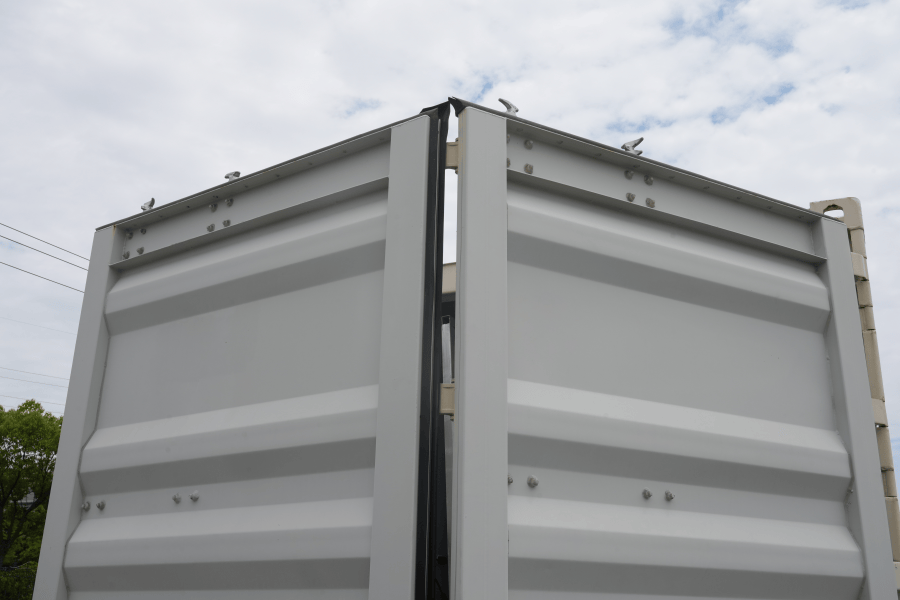
This is where the conversation gets practical. The solution isn't just adding batteries; it's integrating smart, self-contained energy storage as a core part of your site's power architecture. Enter the 215kWh cabinet-style energy storage container. Think of it not as a cost, but as a strategic energy asset.
At Highjoule, when we engineer these systems for the US and EU markets, we don't start with the battery cell. We start with the end goal: lowering the Levelized Cost of Energy (LCOE) for the site. That's a fancy term for the total lifetime cost of all the power you use. A 215kWh unit is a sweet spot for many telecom sites - it's substantial enough to carry critical load for extended periods, manage daily peak shaving cycles, and integrate with solar, yet it's standardized and compact for straightforward deployment.
The key is in the all-in-one, pre-integrated design. It comes with the battery racks, thermal management system, fire suppression, and power conversion built in, all pre-tested to relevant standards like UL 9540 and IEC 62933. This isn't a science project; it's a plug-and-play power asset. I've seen a deployment in an industrial park in North Rhine-Westphalia, Germany, where three such cabinets were rolled out to support a cluster of macro sites. The primary challenge was grid connection costs and capacity fees. By using the storage to shave peak demand and provide backup, the telecom operator avoided a six-figure grid upgrade and turned a capex problem into a manageable, ROI-positive OpEx solution.

Crunching the Numbers: A Pragmatic ROI Breakdown
Let's talk brass tacks. How does a 215kWh cabinet actually pay for itself? The ROI analysis typically stacks value streams:
- Demand Charge Management: This is often the biggest win. In many US commercial utility rates, a significant portion of the bill is based on your highest 15-minute power draw (demand peak) in a month. The BESS discharges during those short peaks, literally cutting the top off your consumption profile. I've seen reductions of 20-30% on the demand portion of the bill.
- Fuel & Generator O&M Displacement: For sites with generators, the storage acts as the first line of backup. This extends generator life, reduces runtime by over 80% in many cases, and slashes fuel delivery and maintenance costs. The math is simple: less diesel burned equals direct savings.
- Grid Service & Incentives: In some markets, aggregators can pay for the ability to use distributed batteries for grid stability. While not the primary driver, it's a potential revenue trickle that improves payback.
A typical payback period we see for well-utilized telecom sites ranges from 4 to 7 years, after which the system is essentially printing annual savings for the rest of its 10-15 year design life. The National Renewable Energy Laboratory (NREL) has published studies showing how commercial energy storage economics are becoming favorable across the US. The value is real and bankable.
From the Field: Expert Insights on Making it Work
Alright, so the theory sounds good. But what makes or breaks it on the ground? Based on two decades of deployment, here's my take:
Thermal Management is Non-Negotiable: Battery lifespan is everything for ROI. A cheap, passive cooling system might save upfront cost but will degrade your battery 30% faster in a hot Arizona or Spanish summer. Our systems use active, climate-controlled thermal management. It's a capex item that pays massive dividends in long-term performance and safety.
Understand the C-Rate in Practical Terms: You'll hear specs like "1C" or "0.5C." Don't let it intimidate you. Simply, it's the speed at which the battery can discharge its energy. A 215kWh system with a 1C rating can deliver 215kW of power for one hour. For peak shaving, you might need a high C-rate for short, powerful bursts. For backup, a lower C-rate might be fine. Matching this to your actual load profile is crucial - overspecing here wastes money.
Localization is Key: A system for California needs to meet UL and CA Title 24 specs. One for the EU needs CE marking and IEC standards. This isn't just paperwork. It involves fundamental design choices in safety protocols and grid interfaces. Partnering with a provider like Highjoule, who engineers for these specific markets from the ground up, avoids huge headaches during commissioning and inspection.

Looking Ahead: Your Next Strategic Move
The question isn't really "can we afford to deploy energy storage?" anymore. Having walked through the numbers and the on-site realities, the more pressing question is: "Can we afford not to, given the rising and unpredictable cost of business-as-usual?"
The 215kWh cabinet model represents a mature, standardized approach to taking control of your site's energy economics. It transforms a volatile cost center into a stabilized, predictable, and ultimately reducible line item. The technology is proven, the standards are clear, and the financial case gets stronger every time fuel prices jump or the grid hiccups.
So, what's the load profile of your most challenging site? And what would stabilizing that energy cost do for your five-year plan?
Tags: UL Standard BESS Telecom Energy Storage ROI Analysis Energy Cost Savings US EU Market
Author
James Zhang
20+ years agricultural energy storage engineer / Highjoule CTO