
Reliable BESS for Telecom Towers: Solving Grid & Cost Challenges in US/EU
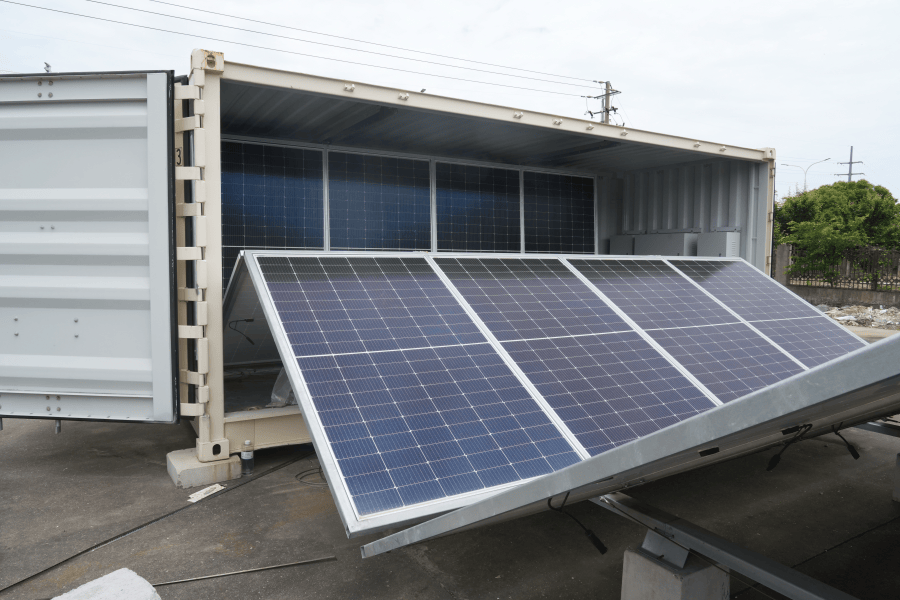
Table of Contents
- The Silent Cost of Unreliable Power for Telecom
- Beyond the Spec Sheet: What Really Matters On-Site
- A Tangible Solution: The Tier 1 Containerized BESS
- Seeing is Believing: A Case from the Midwest
- The Expert Take: C-Rate, Thermal Runaway, and Your Bottom Line
- Making It Real: What to Look For in Your Next Project
The Silent Cost of Unreliable Power for Telecom
Let's be honest. When we talk about telecom base stations, we usually focus on coverage and bandwidth. But the real conversation I have with operators on the ground, whether it's in Texas or Bavaria, always circles back to one thing: keeping the lights on. The grid isn't as robust as we'd like, especially in remote or rapidly growing areas. A single outage doesn't just drop a few calls - it can trigger massive SLA penalties, costly diesel generator runtimes, and a real hit to your brand's reputation for reliability.
Honestly, I've seen this firsthand. A telecom client in California was facing frequent grid sags. Their old lead-acid battery banks couldn't handle the constant cycling, failing faster than expected and creating a maintenance nightmare. Every site visit was a cost. This isn't an isolated issue. According to the National Renewable Energy Laboratory (NREL), power outages and quality issues cost the U.S. economy billions annually, with critical infrastructure like telecom being disproportionately affected. The traditional "set and forget" backup power approach just doesn't cut it anymore.
Beyond the Spec Sheet: What Really Matters On-Site
So, the industry pivots to Battery Energy Storage Systems (BESS). Great move. But here's where the agitation begins. Not all BESS are created equal for the harsh, unattended environment of a telecom base station. You can't just take a unit designed for a climate-controlled warehouse and plop it next to a tower in Arizona heat or Scandinavian cold. I've been called to sites where thermal management was an afterthought, leading to reduced lifespan and, in a couple of scary instances, potential safety risks. The specs on paper promised 10 years, but the real-world stress of daily charge/discharge cycles, temperature swings, and minimal maintenance was cutting that in half.
The pain points are clear: sky-high lifecycle costs (LCOE) from premature replacement, safety concerns around thermal events, and regulatory headaches trying to get non-compliant equipment permitted under strict local codes like UL 9540 in the US or IEC 62933 in Europe. The solution isn't just a battery; it's a fully engineered, code-compliant system.
A Tangible Solution: The Tier 1 Containerized BESS
This is where the conversation gets practical. The answer lies in a pre-integrated, plug-and-play unit built to telecom-grade rigor: a Tier 1 Battery Cell Energy Storage Container. Think of it as a self-contained power fortress. At Highjoule, when we design these, we start with the end in mind - the dusty, windy, extreme-temperature site. The core isn't just any cell; it's Tier 1, sourced from manufacturers with proven track records in automotive-grade reliability, giving you a known, stable performance baseline.
But the magic is in the integration. The container itself is a marvel of passive and active thermal management, ensuring cells operate in their Goldilocks zone year-round. It houses the power conversion system (PCS), fire suppression, and controls all pre-wired and tested in the factory. This slashes deployment time from weeks to days. And crucially, every component is selected and assembled to meet or exceed UL and IEC standards, so getting it approved by your local authority having jurisdiction (AHJ) is a smooth process, not a battle.

Key Advantages for Telecom Operators:
- Predictable LCOE: High-quality cells + intelligent management = longer, predictable lifespan, driving down your cost per cycle.
- Inherent Safety: Multi-level protection (cell, module, system), continuous gas and thermal monitoring, and integrated suppression are non-negotiable features.
- Grid Services Ready: Beyond backup, these systems can participate in demand response or frequency regulation programs, turning a cost center into a potential revenue stream.
Seeing is Believing: A Case from the Midwest
Let me give you a real example. A regional telecom provider in the US Midwest was expanding coverage into rural areas with weak grid infrastructure. They needed backup for 6-8 hours during frequent storms but wanted to avoid the fuel logistics and emissions of diesel gensets as a primary backup. The challenge was deploying a solution that their small field team could manage across dozens of remote sites.
We worked with them to deploy our containerized BESS units. The prefabrication was key. Each 20-foot container arrived on a flatbed, was craned into place on a simple concrete pad, and was connected to the station's DC bus and grid connection. The longest part was the crane scheduling! Because the system was pre-certified to UL 9540, the local inspector's review was straightforward. Now, these sites ride through outages seamlessly. The operator also configured the system to perform peak shaving during high-tariff hours, offsetting some of the capital cost. It's a win-win that started with choosing the right, purpose-built container solution.
The Expert Take: C-Rate, Thermal Runaway, and Your Bottom Line
Okay, let's get a bit technical, but I'll keep it in plain English. When evaluating a Technical Specification of Tier 1 Battery Cell Energy Storage Container for Telecom Base Stations, don't just look at the total kWh. Dig into the C-rate. Simply put, it's how fast you can charge or discharge the battery relative to its size. A 1C rate means you can pull the full capacity in one hour. For telecom, you don't typically need a super high C-rate for backup (a 0.5C-1C is often fine), but a battery rated for higher C-rate is usually built with more robust internal connections, which translates to better longevity and efficiency even at lower drains. It's a mark of quality.
Then there's thermal management. This is the heart of safety and lifespan. I've opened up units where the cooling was just a simple fan blowing air past cells. In a dusty telecom site, that's a recipe for clogged filters and overheated cells. A sophisticated system uses liquid cooling or precision air channels to keep every cell within a tight temperature band, dramatically slowing degradation and virtually eliminating the risk of a single cell's failure cascading (thermal runaway). This engineering directly protects your investment.
Finally, always bring it back to Levelized Cost of Energy (LCOE). It's the total cost of owning and operating the system over its life, divided by the energy it delivered. A cheaper upfront unit with poor thermal management and low-quality cells will have a sky-high LCOE because you'll replace it sooner. The Tier 1 container approach aims for the lowest possible LCOE, even if the initial ticket is higher.

Making It Real: What to Look For in Your Next Project
So, where do you start? My advice from two decades in the field is to shift the conversation from buying a commodity to partnering for a lifecycle solution. Look for a provider whose engineering team understands the telecom environment. Ask them: "Walk me through your thermal design for a site that hits 45C (113F). Show me your UL 9540 certification. What does your remote monitoring platform tell me about cell-level health?"
At Highjoule, this is the only way we know how to build. Our containers are designed with these exact questions in mind, and our local service networks in North America and Europe ensure that support isn't just a phone call away - it's a technician who understands your specific site challenges. The goal isn't just to sell you a box of batteries; it's to ensure you forget it's even there, quietly doing its job for 15+ years.
What's the biggest power reliability headache you're facing at your tower sites today? Is it the cost of downtime, the complexity of maintenance, or the uncertainty of new regulations? The right storage solution should address all three.
Tags: UL Standard BESS LCOE Europe US Market Renewable Energy Telecom Power Backup
Author
James Zhang
20+ years agricultural energy storage engineer / Highjoule CTO