
Outdoor IP54 Hybrid Solar-Diesel BESS for Remote Island Microgrids
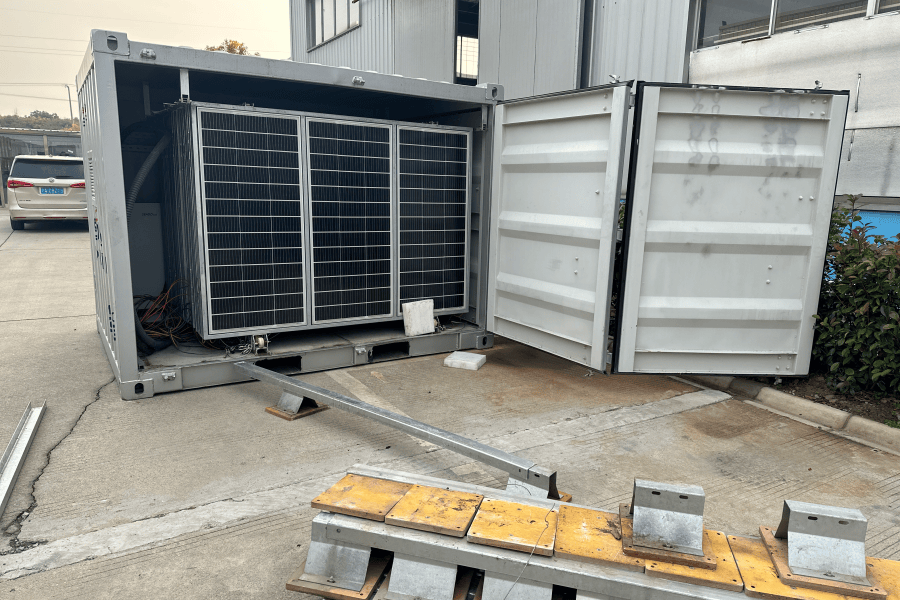
Table of Contents
- The Island Problem: More Than Just Scenery
- Why Standard Solutions Fail in Salt Air
- The IP54 Answer: Built for the Real World
- Case Study: A Greek Isle's Turnaround
- An Expert's Inside Look: It's Not Just a Box
- Making the Numbers Work for Your Island
The Island Problem: More Than Just Scenery
Honestly, after 20 years on sites from the Caribbean to the Scottish Isles, I've learned one thing: remote islands are the ultimate stress test for energy equipment. The postcard views hide a brutal reality for microgrids. You're looking at total dependency on expensive, noisy, and polluting diesel generators, with fuel costs that can swing wildly and logistics that keep operators up at night. According to the International Renewable Energy Agency (IRENA), islands often pay 300% to 500% more for electricity than mainland grids, with diesel making up the lion's share of that cost. The moment you introduce solar to offset this, you hit the next wall: intermittency. The sun sets, clouds roll in, and without a robust buffer, you're back to 100% diesel - defeating the whole purpose.
Why Standard Solutions Fail in Salt Air
Here's the aggravation I've seen firsthand. A standard indoor battery system, even a good one, placed in an outdoor enclosure on a island is a recipe for premature failure. It's not just rain. It's salt-laden mist that corrodes connections in months. It's fine, abrasive sand that finds every gap. It's humidity that condenses inside enclosures, creating a mini rainforest for your DC busbars. Thermal management becomes a nightmare; an air-cooled system just recirculates that corrosive, humid air, cooking the batteries while also rusting them from the inside out.
Most "outdoor" solutions are just indoor units in a shed. They might claim an IP rating, but the system-level design - how the power conversion, thermal management, and safety systems interact in that environment - is an afterthought. I've been called to sites where the BESS tripped offline because a coastal fog triggered a humidity sensor, or where a simple filter change was missed and led to a $50,000 inverter board corrosion failure. The risk isn't just operational; it's financial and safety-related. This is why standards like UL 9540 for BESS safety and IEC 62933 for performance are non-negotiable starting points, but the real-world application demands more.
The Core Challenge: System Integration vs. Component Assembly
There's a big difference between bolting a solar inverter, a diesel genset controller, and a battery rack together versus designing them as a single, optimized hybrid system. The latter is what islands desperately need.
The IP54 Answer: Built for the Real World
This is where a true Technical Specification of IP54 Outdoor Hybrid Solar-Diesel System for Remote Island Microgrids transitions from a datasheet to a lifeline. Let's break down what that really means.
IP54 isn't just a nice-to-have; it's the baseline for survival. "IP" stands for Ingress Protection. The "5" means it's dust-protected (not totally dust-tight, but enough to keep harmful particulates out). The "4" means it can handle water splashes from any direction. For a coastal island, this means the entire system - battery cabinets, PCS (Power Conversion System), controllers - is designed as a unified outdoor asset. No need for expensive concrete blockhouses or climate-controlled warehouses. You pour a slab, set it down, connect it, and it's designed to withstand the environment.
At Highjoule, when we engineer to this spec, we're thinking system-level. It's a fully integrated solution where:
- Solar PV Input and Diesel Genset Input are managed by a single, sophisticated controller that prioritizes solar, uses batteries for load-shifting and frequency regulation, and treats the diesel genset as a last-resort backup or for peak shaving.
- The Battery Storage isn't an add-on. It's the heart of the system, with a C-rate and cycle life matched to the solar profile and diesel-offset goals of the island. We're not pushing for the highest C-rate (which stresses batteries); we're optimizing for the lowest Levelized Cost of Energy (LCOE) over 15+ years.
- Safety & Compliance is baked in, not bolted on. This means UL 9540/9540A listed systems, IEC 62485-2 compliance for stationary batteries, and seamless integration with island microgrid controls (IEEE 1547 for grid interconnection is a key reference, even for isolated grids).
Case Study: A Greek Isle's Turnaround
Let me give you a real example. We deployed one of our IP54 outdoor hybrid systems for a small community in the Greek islands. Their challenge was textbook: ?0.45/kWh electricity costs, 18-hour daily diesel runtime, and a 500kW solar farm that was being curtailed because the old grid couldn't handle its variability.
The solution was a containerized IP54 system housing a 1MWh lithium iron phosphate (LFP) battery, a bi-directional inverter, and the hybrid controller, all pre-integrated and tested at our facility. It was shipped and online within 8 weeks of site prep.
- Challenge: Reduce diesel use, integrate existing solar, withstand harsh Mediterranean coastal conditions.
- Deployment: The system was placed adjacent to the existing diesel power plant. It automatically forms the microgrid, with the diesel gensets now slaved to the hybrid system's commands.
- Outcome: Diesel runtime cut to under 4 hours per day (mostly at night during low-battery periods). Solar curtailment eliminated. Fuel savings paid for the system's finance costs from year one. The local operator now manages the entire energy flow from a single dashboard.

An Expert's Inside Look: It's Not Just a Box
When I open up one of our systems during commissioning, here's what I point out to the local engineers that makes the difference:
- Thermal Management is Everything: We use a closed-loop, liquid-cooling system for the batteries. It's not just about keeping them at 25C for optimal life. It's about isolating the battery cells from the external environment. The cooling fluid circulates in a sealed loop; the external air only cools a heat exchanger. This means the battery interior stays pristine - no salt, no sand, no humidity. This single feature probably doubles the practical lifespan in island conditions compared to air-cooled alternatives.
- C-rate in Context: Everyone gets excited about high C-rates (a measure of charge/discharge speed). For an island, a moderate, consistent C-rate (like 0.5C) is often smarter than a 1C or 2C system. It puts less stress on the batteries, improves longevity, and is perfectly matched to the relatively predictable daily solar charge/discharge cycle. It's a key lever in minimizing LCOE.
- The Intelligence Layer: The hybrid controller's logic is what turns hardware into savings. It's making real-time decisions: "Should I charge the battery from solar, or send solar directly to the hotel load? Is a cloud coming that requires me to hold battery reserve? Should I start the diesel genset now at 80% load for efficiency, or can I wait?" This is where 20 years of algorithm tuning pays off.
Making the Numbers Work for Your Island
The conversation always ends with economics. The goal isn't just to be green; it's to be financially sustainable. A properly specified IP54 hybrid system directly attacks the two biggest cost drivers: fuel and generator maintenance. By extending generator life through reduced runtime and providing grid stability to enable more solar, the return on investment becomes clear and bankable.
For a business or community decision-maker in the US or Europe looking at a remote asset - whether it's a resort, a research station, or a whole island community - the question isn't "Can we afford this system?" It's "Can we afford not to have this predictable, lower-cost, and more resilient energy foundation?" The technical spec is your blueprint for making that foundation weather the storm, literally and financially.
What's the single biggest operational cost your remote site is facing right now - is it fuel volatility, generator upkeep, or the limitation on adding more renewables? The design of your hybrid system starts with that answer.
Tags: UL Standard BESS LCOE Europe US Market Renewable Energy Microgrid Hybrid System IP54
Author
James Zhang
20+ years agricultural energy storage engineer / Highjoule CTO