
ROI Analysis: 215kWh Pre-Integrated PV Container for EV Charging Stations
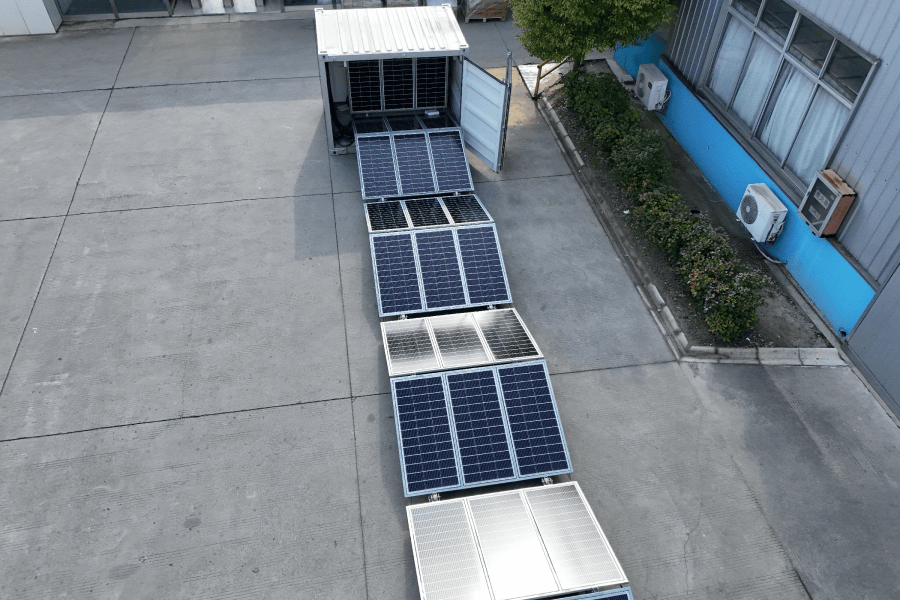
Table of Contents
- The Real Challenge: It's Not Just About Power, It's About Profit
- The Hidden Cost Pitfalls of "DIY" EV Charging Power
- The 215kWh Pre-Integrated Container: Your Turnkey ROI Engine
- Crunching the Numbers: A Real-World ROI Breakdown
- Beyond the Spreadsheet: The Unseen ROI Boosters
- Making It Work for You: An Expert's Field Notes
The Real Challenge: It's Not Just About Power, It's About Profit
Let's be honest. If you're looking at pairing solar and storage with your EV charging stations, you've already moved past the "why." The real question keeping you up at night is the "how much" and "when do I get my money back." I've sat across the table from dozens of site hosts, fleet operators, and commercial developers in California and across the EU, and the conversation always circles back to one thing: a clear, defensible, and fast ROI.
The dream is simple. Use solar to charge your batteries, use those batteries to power fast chargers, avoid crippling demand charges, and maybe even earn some grid services revenue. The reality on the ground, as I've seen firsthand, is often a tangled web of separate equipment vendors, complex interconnection studies, and safety certifications that drag out timelines and eat into your margins before you even flip the switch.
The Hidden Cost Pitfalls of "DIY" EV Charging Power
Here's where the traditional approach agitates the problem. You might source a PV array from one supplier, a 215kWh battery cabinet from another, a power conversion system (PCS) from a third, and then hire an EPC to stitch it all together on-site. Each step introduces cost and risk.
- Soft Costs That Hardly Stay Soft: NREL studies consistently show that soft costs - engineering, permitting, interconnection fees, and on-site labor - can constitute up to 50% of a distributed energy project's total cost. For a multi-component system, this is multiplied.
- The Safety & Standards Maze: In the US, you're looking at UL 9540 for the energy storage system, UL 1973 for the batteries, and UL 1741 for the inverters, not to mention local fire codes (like the emerging NFPA 855). In the EU, it's the IEC 62933 series and CE marking. Getting a field-assembled system through all these hoops is a marathon, not a sprint.
- Performance Uncertainty: Will these components, never tested together as a full system, deliver the promised cycle life and C-rate for fast charging? Thermal management is a classic failure point. An undersized or poorly integrated cooling system will degrade your batteries faster, turning your projected 10-year ROI into a 15-year slog.

The 215kWh Pre-Integrated Container: Your Turnkey ROI Engine
This is where the logic of the pre-integrated PV container becomes so compelling. Think of it not as a box of parts, but as a power plant in a box, purpose-built for this application. At Highjoule, we build these units with the ROI drivers as the primary design criteria.
The solution is a single, factory-assembled container that houses the 215kWh battery bank, the PV inverters, the battery management system (BMS), the thermal management system, and the critical safety gear - all pre-wired, pre-tested, and certified as a single unit. This shifts the complexity from your job site to our factory floor.
Crunching the Numbers: A Real-World ROI Breakdown
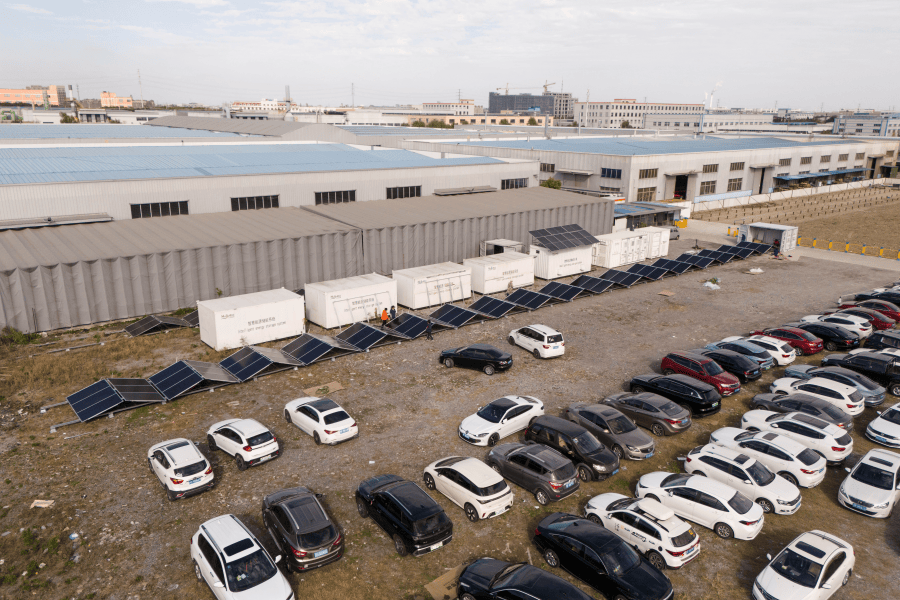
Let's talk data. Based on a project we supported in Northern Germany for a logistics fleet depot, the ROI levers become clear. The site had six 150kW DC fast chargers.
| Cost Factor | Traditional "DIY" Approach | Pre-Integrated 215kWh Container |
|---|---|---|
| System Hardware | ~?280,000 | ~?310,000 |
| On-site Integration Labor | ?45,000 - ?65,000 | ?10,000 (placement & connection) |
| Engineering & Permitting | ?30,000+ | ?15,000 (simplified as a single unit) |
| Time to Commissioning | 6-9 months | 3-4 months |
| Key Revenue/Cost Avoidance | Similar for Both | |
| ? Demand Charge Reduction | ~?28,000/yr | |
| ? Solar Self-Consumption Boost | ~?15,000/yr | |
| ? Grid Services (Frequency Regulation) | ~?8,000/yr | |
The pre-integrated unit had a higher upfront hardware cost, but the dramatic reduction in soft costs and faster time-to-revenue shortened the simple payback period by nearly 18 months. The Levelized Cost of Storage (LCOS) over the system's life is lower because we optimize for longevity - like using a C-rate that balances fast charging needs with battery stress, managed by a sophisticated, integrated BMS.
Beyond the Spreadsheet: The Unseen ROI Boosters
Honestly, the biggest wins sometimes aren't in the initial spreadsheet. They're in risk mitigation and optionality.
- Future-Proofing: A container is modular. If your fleet grows, you don't re-engineer the system; you add another container alongside it. This scalability protects your initial investment.
- Warranty & Safety Clarity: With one vendor (like Highjoule) responsible for the entire power block under a single warranty, finger-pointing vanishes. And because it arrives as a UL 9540 or IEC 62933-certified unit, the local AHJ (Authority Having Jurisdiction) has a much clearer path to approval. I've seen this cut permitting time in half.
- Operational Simplicity: Our remote monitoring platform gives you one dashboard for the entire solar+storage+charging ecosystem. You're not managing three different vendor portals. This reduces operational overhead, which is a real, if often hidden, cost.
Making It Work for You: An Expert's Field Notes
So, how do you ensure you capture this ROI? From two decades in the field, here's my advice:
1. Start with the Load Profile, Not the Product Catalog. Work backwards. Analyze your actual or projected EV charging curves. How many cars/trucks per hour? At what power? That peak demand is your target. The 215kWh size is a sweet spot for many 4-6 stall commercial sites, but your needs may vary. The right partner should help you model this, not just sell you a box.
2. Treat Compliance as a Feature, Not a Hurdle. Insist on pre-certification. Ask for the UL or IEC certification numbers upfront. For the US market, for example, our containers are listed to UL 9540. This isn't just a sticker; it's your insurance policy for a smooth deployment.
3. Plan for the Long Haul (Literally). Ask about thermal management. In Arizona heat or Canadian winters, the system's ability to keep its batteries at an optimal temperature directly impacts degradation and, therefore, your long-term ROI. Our systems use a closed-loop, HVAC-based system that's far more robust than simple air-cooling for a demanding EV charging cycle.
The bottom line? The path to a strong ROI for your EV charging power needs isn't about finding the cheapest components. It's about choosing the most integrated, intelligently designed, and locally compliant system. The goal is to start earning from Day 1, not spending.
What's the single biggest uncertainty in your own site's economics right now - is it the demand charges, the interconnection queue, or something else entirely?
Tags: UL Standard BESS LCOE Europe US Market Renewable Energy Energy Storage ROI EV Charging
Author
James Zhang
20+ years agricultural energy storage engineer / Highjoule CTO