
BESS Safety & Deployment Speed: Lessons from Rural Solar Containers for US/EU Markets
Table of Contents
- The Speed vs. Safety Trap in Western Markets
- The Hidden Costs of "Just Complying"
- A Blueprint from an Unlikely Place
- Beyond the Checklist: Engineering for Real-World Deployment
- The Localization Imperative: It's Not Just About Standards
- Your Next Step: Asking the Right Questions
The Speed vs. Safety Trap in Western Markets
Hey there. If you're reading this, you're probably evaluating a battery storage project, and you're caught between two powerful forces: the urgent need to get your system online (to capture incentives, meet sustainability goals, or simply start saving on energy costs), and the non-negotiable demand for absolute safety and regulatory compliance. Honestly, I've felt that pressure on site, watching project managers sweat over timelines while the safety officer is scrutinizing every conduit and clearance.
Here's the phenomenon we see across the US and Europe: the deployment process for commercial and industrial (C&I) battery energy storage systems (BESS) is often... sequential. First, you design for performance and cost. Then, you layer on safety to meet UL 9540, IEC 62933, or the local fire code. Finally, you figure out how to actually get this complex, heavy piece of equipment onto your site, connected, and commissioned. This sequential thinking creates friction. It adds weeks to timelines and can lead to costly last-minute redesigns when a brilliant layout on paper meets the reality of a cramped substation or a restrictive local fire marshal's interpretation.
The Hidden Costs of "Just Complying"
Let's agitate that pain point a bit. What does this friction really cost? It's not just time. The National Renewable Energy Laboratory (NREL) has shown that "soft costs" - permitting, interconnection, installation - can make up a staggering 30-50% of the total installed cost of a distributed storage system. Every day of delay hits your project's Levelized Cost of Energy (LCOE), that all-important metric that determines long-term viability.
More critically, a design that treats safety as an add-on can be inherently fragile. I've seen this firsthand: a system that passed lab certification struggles with thermal management in a real-world heatwave because the site-specific airflow wasn't fully considered during the rush to deploy. Thermal runaway is a phrase that keeps engineers and insurers up at night for a reason. A "compliant" system isn't always an optimally safe or resilient one when deployed in the field.

A Blueprint from an Unlikely Place
Now, here's where our solution lens comes in, and it might surprise you. For years, my team at Highjoule has been involved in projects worldwide, including challenging off-grid and rural electrification. One of the most instructive frameworks we've seen is the evolving Safety Regulations for Rapid Deployment Solar Container for Rural Electrification in Philippines.
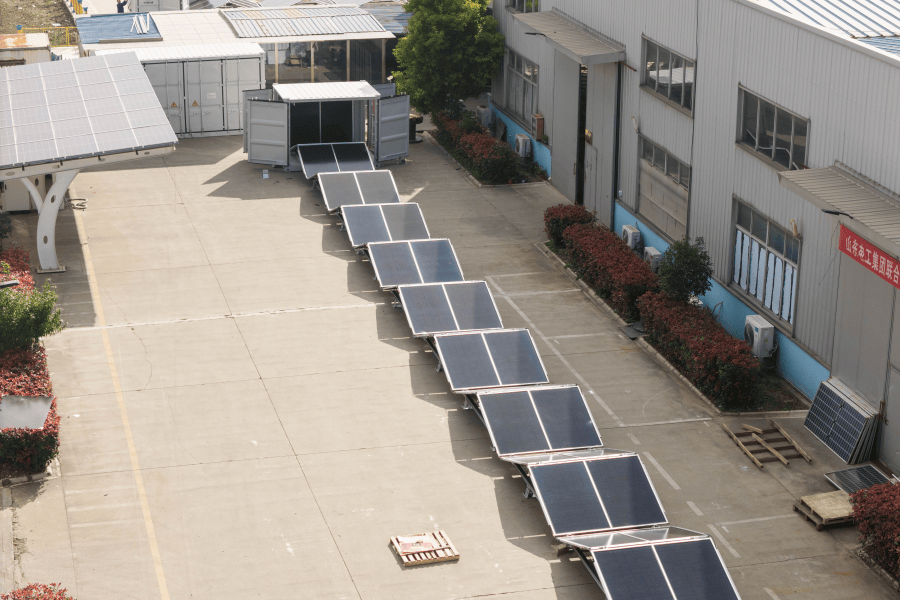
Why does this matter for a project in California or Germany? Because these regulations were born from extreme necessity. They mandate that safety, rapid deployment (think: helicopter-able or truck-delivered in a single unit), and resilience in harsh environments are designed in from the very first sketch. The container isn't just a box; it's a pre-engineered, pre-tested ecosystem where the battery rack, thermal management (crucially, often passive or low-power active cooling suited for remote sites), fire suppression, and grid interconnection are all integrated and validated as a single unit before it ever leaves the factory.
This "unitized" approach flips the sequential model on its head. It's the difference between shipping loose lumber and nails to a site versus delivering a pre-fabricated, code-inspected room. The speed gains are obvious. But the safety gain is profound: when all systems are co-engineered, you avoid the integration risks that plague field-assembled projects.
A Case in Point: Learning from the Field
Let me give you a localized example. We worked on a microgrid project for a remote data center in Northern Sweden. The challenges mirrored a rural Asian site: limited skilled labor on-site, extreme temperature swings, and a critical need for reliability. By applying the core philosophy from those rapid-deployment regulations - pre-integration and extreme environment testing - we delivered a containerized BESS that was fully tested at our facility under simulated Arctic conditions. It arrived on site, was connected in under 48 hours, and passed local inspection immediately because the entire UL-certified unit was the approved component. The client's "soft cost" and deployment risk plummeted.
Beyond the Checklist: Engineering for Real-World Deployment
So, what are the technical takeaways for a commercial decision-maker? It's about asking your vendor deeper questions.
- Thermal Management: Don't just ask if it has cooling. Ask about its performance at your site's highest ambient temperature, at the system's full C-rate (that's the rate of charge/discharge). A system designed for rapid deployment in tropical climates inherently has a robust thermal design.
- Grid Interaction: Is the power conversion system (PCS) fully integrated and tested with the battery management system (BMS) at the factory? Or is it a field match? Factory integration prevents nasty commissioning surprises.
- Safety as a System: True safety isn't just a fire extinguisher ball inside a container. It's about cell selection, BMS algorithms that prevent stress, physical spacing, and ventilation - all designed together. This systems approach is the heart of the best rapid deployment standards.
At Highjoule, this mindset is baked into our product development. Our standard commercial container lines are built with this integrated, "deployment-optimized" philosophy. We test the complete system, not just components, to the relevant UL and IEC standards. This upfront effort is what ultimately lowers your project's real-world LCOE by derisking installation and ensuring long-term, safe operation.
The Localization Imperative: It's Not Just About Standards
Now, you can't just drop a system designed for one country's regulations into another. The key is adopting the engineering principle, not the specific rule. The Philippine regulations emphasize adaptability and resilience. For the EU and US, this translates into a different kind of localization.
It means your BESS provider must deeply understand the nuances of California's Title 24 or Germany's BImSchG (Federal Immission Control Act) permitting. They should have local engineering partners who can navigate the utility interconnection process. The "rapid deployment" advantage is nullified if you get stuck for months in local permitting because your supplier treats it as your problem, not theirs.
Our approach has been to build these regulatory and utility relationship frameworks in our key markets. So when we talk about rapid deployment, we're talking about the entire project lifecycle - from the first site assessment to the long-term service and performance guarantees - being streamlined and de-risked.
Your Next Step: Asking the Right Questions
The landscape of BESS is moving from a component-based business to a solution-based one. The insights from frontier markets, where constraints are greatest, are showing us the way.
So, in your next vendor conversation, move beyond the spec sheet. Ask them: "How is safety and deployment speed engineered into your system from the start, not added on at the end? Can you show me a case where this integrated approach saved time and reduced risk in a market like mine?" The answers will tell you everything you need to know about who is thinking about the real-world success of your project, and who is just selling you a battery in a box.
What's the biggest bottleneck you're facing in your current storage project evaluation - is it permitting uncertainty, interconnection timelines, or concerns about long-term operational safety?
Tags: UL Standard Rapid Deployment Solar Container US Market BESS Safety Energy Storage Systems IEC Standard European Market
Author
James Zhang
20+ years agricultural energy storage engineer / Highjoule CTO