
Rapid Deployment BESS for Farm Irrigation: Cut Costs & Boost Resilience
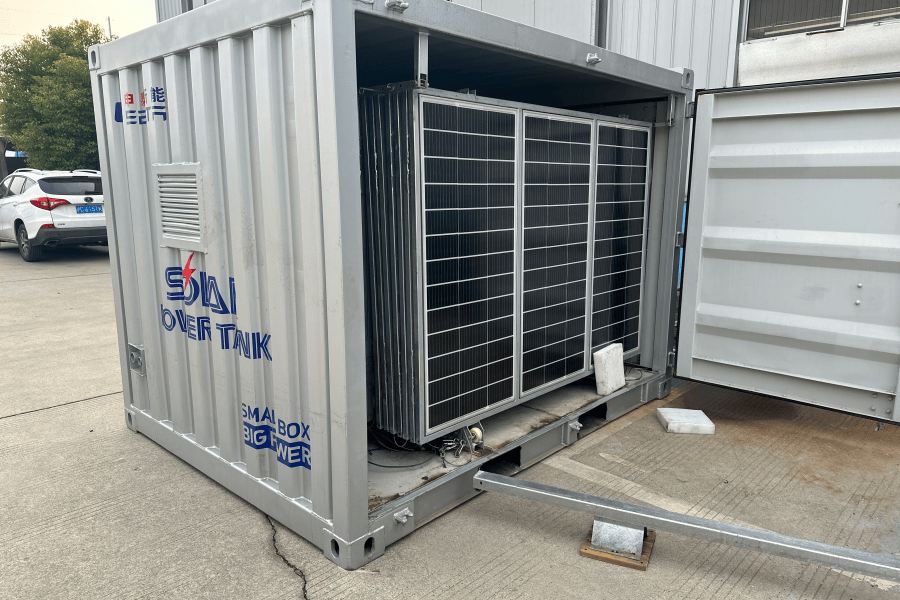
Table of Contents
- The Real Problem Isn't the Sun, It's the Clock (and the Bill)
- Why "Just Add Solar Panels" Isn't the Full Answer
- The Core Idea: Storage as Your Water Insurance Policy
- From Blueprint to Reality: A California Vineyard's Story
- Under the Hood: What to Look For in a Farm-Ready BESS
- So, Where Do You Start?
The Real Problem Isn't the Sun, It's the Clock (and the Bill)
Let's be honest. If you're managing a large farm or agricultural operation in the US Midwest or Southern Europe right now, you're thinking about water and energy. They're the same conversation. You need to pump water, often during the peak heat of the day when crops are thirstiest. But that's precisely when everyone else is cranking their AC, and electricity prices skyrocket. I've sat at kitchen tables with farm managers who show me utility bills where demand charges C fees for your highest power draw C make up a staggering 30-40% of the total cost. You're punished for doing exactly what you need to do to keep your business alive.
The initial thought is, "Go solar." And that's a great first step. But here's the firsthand reality I've seen on dozens of sites: your irrigation pumps need power in the early morning or evening, and sometimes, critically, during a grid outage when the sun isn't shining. Solar alone leaves a big gap. You become grid-dependent again, just at a slightly lower cost. The true goal isn't just cheaper energy; it's energy resilience and water security.
Why "Just Add Solar Panels" Isn't the Full Answer
This gap creates a cascade of headaches. First, financial uncertainty. Volatile energy markets mean your operating costs are a gamble every season. Second, operational risk. An unexpected grid outage during a critical irrigation window can threaten an entire season's yield. I remember a project in Texas where a farmer told me, "A six-hour outage during a drought isn't an inconvenience; it's a disaster."
The data backs this up. The National Renewable Energy Lab (NREL) has shown that pairing solar with storage can increase the utilization of renewable energy for agricultural operations by over 50%, directly tackling that timing mismatch. Without storage, you're often forced to oversize your solar array to cover some off-peak needs, which is a capital-intensive and inefficient fix.
The Core Idea: Storage as Your Water Insurance Policy
This is where the concept of a rapid deployment photovoltaic storage system truly shines. Think of it not as an extra piece of hardware, but as a buffer and a buffer. It does two fundamental things:
- Shifts Energy: It stores cheap solar power produced at noon for use during expensive peak evening hours or for night-time irrigation, slashing those demand charges.
- Provides Back-Up: It becomes an instantaneous power source for critical pumps if the grid falters, ensuring water flow never stops.
The "rapid deployment" aspect is crucial for agriculture. You can't afford a 12-month construction project. Modern, containerized Battery Energy Storage Systems (BESS) are pre-assembled, pre-tested, and can be deployed on a simple concrete pad in weeks, not months. This gets you to savings and security faster.
From Blueprint to Reality: A California Vineyard's Story
Let me tell you about a project we did in Sonoma County, California. A vineyard was facing soaring peak-time energy costs for their drip irrigation and frost protection systems. Their challenge was dual: reduce operational costs and ensure absolutely reliable power for frost fans in early spring - a make-or-break need.
We deployed a 500 kW/1 MWh containerized BESS alongside an existing solar array. The system was designed for rapid integration. Here's what mattered on the ground:
- Standards First: Every component, from the battery racks to the power conversion system, carried UL 9540 and IEC 62619 certifications. This wasn't just a checkbox; it was non-negotiable for permitting and insurance.
- The "Brain": The system's energy management software was programmed with the farm's specific irrigation schedule and utility rate structure. It automatically decides when to charge from solar, when to discharge to shave peak demand, and when to hold reserve for backup.
- Outcome: In the first year, they cut their peak demand charges by over 60%. But more importantly, the farm manager sleeps better during frost season knowing the BESS can seamlessly take over.

Under the Hood: What to Look For in a Farm-Ready BESS
As an engineer who's stood in the mud commissioning these systems, here are the technical specs you should understand, translated simply:
- C-rate (Charge/Discharge Rate): Think of this as the "power vs. endurance" dial. A higher C-rate means the battery can discharge its energy faster - critical for starting large pump motors that have a high initial surge. For irrigation, you need a battery that can handle that surge, not just a slow trickle.
- Thermal Management: This is the battery's internal climate control. Farms face dusty, hot, or cold environments. A liquid-cooled system (which we use at Highjoule) is like a precision car radiator - it keeps the battery at its ideal temperature year-round, which is the single biggest factor for long life and safety. Air-cooled units can struggle in extreme farm conditions.
- LCOE (Levelized Cost of Energy): This is your ultimate "cost per useful kWh" over the system's life. A cheaper battery that degrades in 5 years has a terrible LCOE. A robust, thermally managed system with a 10+ year design life, even at a higher upfront cost, delivers a far lower and more predictable LCOE. Your focus should be on total lifetime cost, not just the initial price tag.
The key is a system engineered for the harsh, real-world agricultural environment, not a lab. At Highjoule, our design philosophy is "over-engineer for reliability." That means IP65 enclosures to keep dust and moisture out, corrosion-resistant materials, and remote monitoring so we (or your local technician) can see an issue before it becomes a problem.
So, Where Do You Start?
The journey begins with your utility bill and your irrigation schedule. Map out your highest power draws. Then, have a conversation with a provider that doesn't just sell boxes, but understands farming's rhythms and the stringent safety standards (UL, IEC, IEEE) required in our markets.
The right rapid-deployment solar-plus-storage system isn't an expense; it's a piece of critical agricultural infrastructure. It transforms your energy from a volatile cost into a predictable, controlled input - as essential as water itself. What's the one irrigation cycle you absolutely cannot afford to miss?
Tags: UL Standard BESS LCOE Agricultural Irrigation Renewable Energy US Europe Market
Author
James Zhang
20+ years agricultural energy storage engineer / Highjoule CTO