
ROI Analysis of 215kWh Cabinet Pre-integrated PV Container for Industrial Parks
Quick Navigation
- The Silent Tax on Your Industrial Park's Bottom Line
- Why Traditional ROI Stumbles on the Factory Floor
- The Shift: From DIY Projects to Plug-and-Play Containers
- A Case Study in Numbers: The 215kWh Cabinet in Action
- Beyond the Spreadsheet: The Hidden ROI Drivers
- Making the Move: What to Look For
The Silent Tax on Your Industrial Park's Bottom Line
Let's be honest. When you're managing an industrial park, your core focus is keeping production lines humming, not becoming an expert in kilowatt-hours and demand charges. But here's the thing I've seen firsthand on sites from Ohio to North Rhine-Westphalia: energy volatility has become a silent, relentless tax on operational budgets. You're not just paying for the power you use; you're getting hit with punitive peak demand charges, navigating time-of-use rates that feel like a rollercoaster, and facing increasing pressure to meet sustainability mandates. The ROI Analysis of a 215kWh Cabinet Pre-integrated PV Container for Industrial Parks isn't just a financial exercise - it's a blueprint for taking back control.
Why Traditional ROI Stumbles on the Factory Floor
The promise of solar-plus-storage for industry is clear. The reality of deploying it? That's where the headaches start, and where traditional ROI models fall apart. They often assume a perfect, frictionless installation.
In the real world, I've seen projects where the "balance-of-system" costs - the engineering, the custom metalwork to fit different inverters and battery racks, the on-site integration and commissioning that takes weeks - completely erode the projected savings. A study by the National Renewable Energy Laboratory (NREL) highlights that soft costs and integration complexity remain significant barriers to wider BESS adoption. You might calculate a 5-year payback on the equipment, only to find the installation and grid interconnection process adds another 18 months of labor and unexpected expenses.
The other killer is uncertainty. A standard ROI spreadsheet can't quantify the risk of a thermal runaway event because of a poorly designed battery enclosure, or the production downtime if your custom-configured system has a fault and needs specialized troubleshooting. This is where the concept of a pre-integrated container changes the game.
The Shift: From DIY Projects to Plug-and-Play Containers
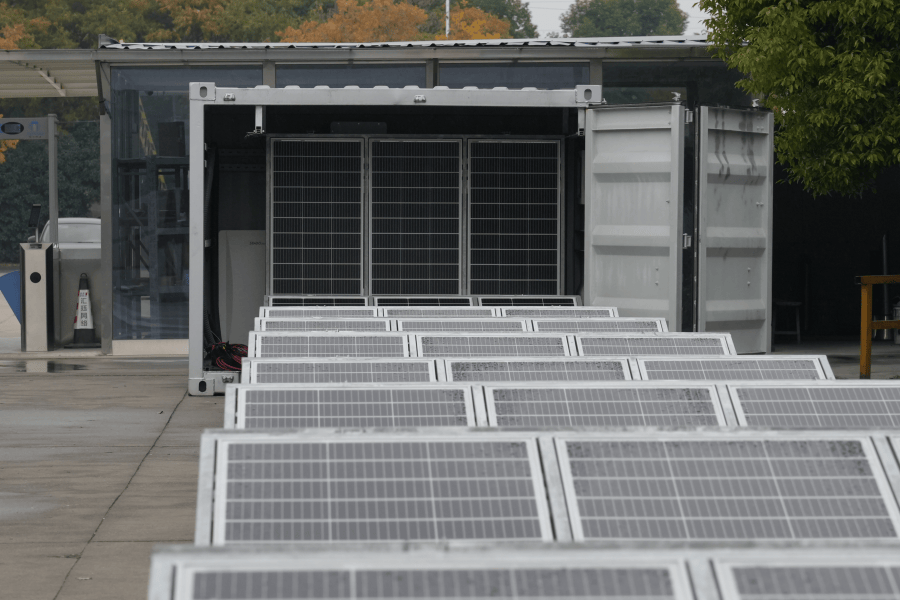
This is the core of the modern approach. Instead of sourcing batteries, inverters, climate control, and fire suppression as separate components and assembling them on your valuable real estate, you're essentially buying a fully functional, tested "energy appliance." The 215kWh cabinet pre-integrated into a PV-ready container is a prime example of this philosophy.
Think of it like this: you wouldn't build a generator from scratch. You'd buy one that's UL-listed, safety-certified, and ready to ship. Why should your energy storage system be any different?
At Highjoule, our work with industrial clients has pivoted towards these solutions because the ROI math becomes cleaner and faster. The container arrives with the 215kWh battery cabinet, power conversion system, thermal management (this is critical - I'll explain below), and safety systems all talking to each other, having been stress-tested at the factory. Your deployment timeline shrinks from months to weeks. The "agitation" of hidden costs and integration risks is dramatically reduced.

A Case Study in Numbers: The 215kWh Cabinet in Action
Let's talk about a project we completed for a mid-sized manufacturing cluster in Texas. Their pain points were classic: demand charges spiking over $40/kW during summer afternoons, and a corporate mandate to offset 25% of their energy with renewables.
The Challenge: A rooftop PV system was already planned, but without storage, it would do little to shave those critical afternoon peaks. They needed a storage solution that could be deployed before the next cooling season, without extensive civil works or a dedicated HVAC engineer on staff.
The Solution: We deployed two of our 215kWh pre-integrated container units. These weren't massive, grid-scale beasts. They were compact, positioned near the main substation, and pre-wired for the PV input. The core financial drivers were:
- Demand Charge Management: The system was programmed to discharge strategically during the 3-hour peak window, reducing their peak demand draw from the grid by an average of 180kW.
- PV Self-Consumption Optimization: It stored excess solar generation from midday for use later, increasing their on-site consumption from ~60% to over 85%.
- Simplified Deployment: Because the unit was pre-certified to UL 9540 and IEC 62933 standards, the local AHJ (Authority Having Jurisdiction) review was streamlined. It was "plug and play" from a regulatory perspective, which is a huge time-saver.
The ROI Lift: The pre-integrated nature cut the installation and commissioning timeline by roughly 60% compared to a traditional build. This meant the system started generating savings months earlier. Their simple payback period, accounting for available federal ITC and local incentives, landed at just under 4 years. The "hidden" ROI was zero production downtime during installation and a maintenance contract based on a known, sealed system.
Beyond the Spreadsheet: The Hidden ROI Drivers
Any vendor can give you a spreadsheet. My job is to tell you what those cells often miss. When we talk about a 215kWh cabinet inside a container, three technical factors directly impact your long-term return:
- Thermal Management (The Longevity Multiplier): Honestly, this is where cheap systems fail. Batteries degrade faster if they get too hot or too cold. A proper container has an integrated, precision cooling/heating system that maintains the optimal temperature range. This isn't just a fan; it's a system designed for the specific C-rate and chemistry of the 215kWh cabinet. Good thermal management can add years to the system's life, which dramatically improves the Levelized Cost of Storage (LCOS) - the real metric for long-term value.
- C-rate (The Power Personality): The C-rate tells you how quickly the battery can discharge its energy. A 215kWh system with a 1C rate can deliver 215kW of power for one hour. For demand charge management, you often need high power for short bursts. The right C-rate means the system is perfectly sized for your peak-shaving needs - you're not overpaying for capacity you don't need. A pre-integrated system is engineered with matched components, so the inverter and battery C-rate are in sync, ensuring you get the performance the ROI model assumes.
- Safety & Standards (The Insurance Policy): Compliance with UL/IEC/IEEE standards isn't a checkbox; it's your insurance policy. It affects your insurability, your permitting, and your peace of mind. A pre-integrated container from a reputable provider has undergone the rigorous testing these standards require as a complete unit. I've seen projects delayed by a year because a custom battery enclosure failed a critical UL test on-site. That delay has a massive, negative ROI impact.
Making the Move: What to Look For
So, you're considering an ROI Analysis for a 215kWh Cabinet Pre-integrated PV Container. Fantastic. Here's my advice, straight from the field:
Don't just compare $/kWh on the cabinet alone. Compare the total installed and operational cost over 10 years. Ask potential providers:
- "Can you show me the UL 9540 certification for the complete container system?"
- "What is the guaranteed degradation rate of the battery under your specified thermal management scheme?"
- "Walk me through a recent, similar deployment timeline - from contract to commissioning."
- "How is the container pre-wired for my planned PV array? What's the interface?"
The goal is to move from a complex, risky construction project to a predictable, high-value asset acquisition. That's the fundamental shift. The right pre-integrated solution turns energy storage from a capital expenditure headache into a strategic, ROI-positive tool for managing your park's energy future.
What's the single biggest peak demand charge your facility faced last month? That number is the best starting point for your own analysis.
Tags: UL Standard BESS PV Container Industrial Energy Storage ROI Analysis Energy Cost Savings
Author
James Zhang
20+ years agricultural energy storage engineer / Highjoule CTO