
ROI Analysis of 215kWh Cabinet Solar Container for High-altitude Regions
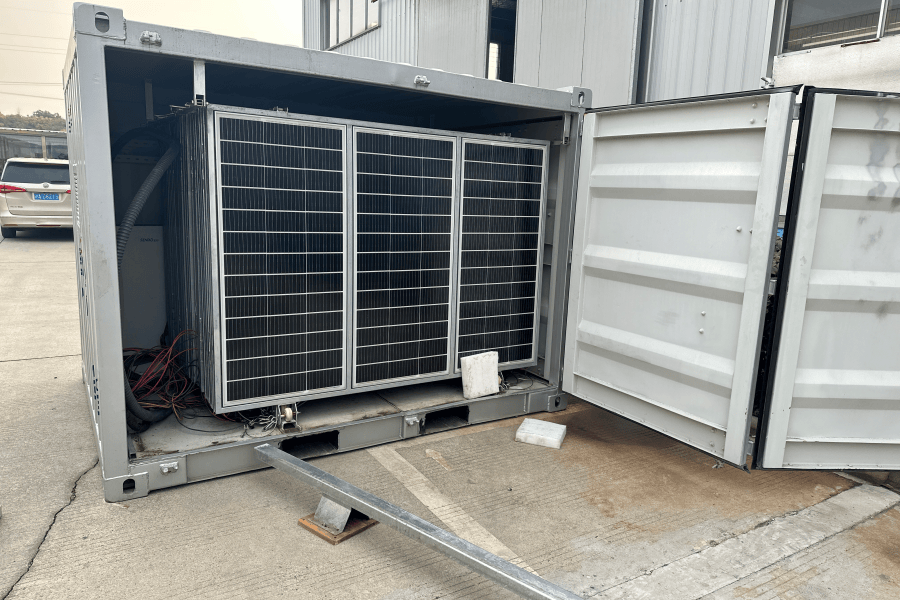
Table of Contents
- The High-Altitude ROI Challenge: It's Not Just About the Price Tag
- Aggravating the Pain Point: Where Efficiency and Safety Take a Hit
- The 215kWh Containerized Solution: A Pragmatic Blueprint for ROI
- A Real-World ROI Breakdown: From Theory to Mountain Top
- Expert Insights: The Unseen Factors That Make or Break Your Investment
The High-Altitude ROI Challenge: It's Not Just About the Price Tag
Let's be honest. When most commercial or industrial clients in the US or Europe look at a battery energy storage system (BESS), the first question is about payback period. It's a fair question. But in my 20+ years of deploying systems from the Alps to the Rockies, I've seen a common, costly mistake: using standard, lowland ROI models for high-altitude projects. The spreadsheet might look good on paper, but the reality on a windy, cold mountaintop can tell a very different story. The core problem isn't just the capital expenditure for the 215kWh Cabinet Solar Container; it's the total cost of ownership that gets skewed by altitude.
Aggravating the Pain Point: Where Efficiency and Safety Take a Hit
Think about it. High-altitude sites are chosen for good reasons - proximity to remote renewable generation, critical telecom infrastructure, or mining operations. But these environments are brutal. The thin air affects cooling efficiency dramatically. A standard air-cooling system has to work 30-40% harder just to move enough air to dissipate the same heat, leading to higher parasitic load (that's the energy the system uses to run itself) and component stress.
Then there's the thermal cycling. Temperatures can swing from -20C at night to intense solar radiation during the day. This constant expansion and contraction is a nightmare for battery longevity and can void warranties if the system isn't explicitly designed for it. According to a National Renewable Energy Laboratory (NREL) study, improper thermal management is one of the leading causes of accelerated degradation in lithium-ion BESS, potentially reducing cycle life by up to 20% in harsh environments. That directly attacks your ROI by shortening the asset's revenue-generating life.
Honestly, I've seen this firsthand on site: a project where the "value-engineered" thermal system led to such inconsistent cell temperatures that the battery management system was constantly derating output. The client paid for 200kW, but was only reliably getting 150kW on cold mornings - a 25% loss in capacity they hadn't budgeted for.

The 215kWh Containerized Solution: A Pragmatic Blueprint for ROI
This is where the right ROI Analysis of a 215kWh Cabinet Solar Container for High-altitude Regions becomes your most valuable tool. It forces you to move beyond the unit cost per kWh and model the real performance. At Highjoule, our approach is to treat the container itself as a integrated protective ecosystem. The solution isn't just a battery in a box; it's a pre-engineered environment built for the challenge.
For the US and European markets, this starts with compliance as a baseline, not a feature. UL 9540 and IEC 62933 aren't just stickers; they're a framework for safety that's non-negotiable, especially in remote locations. Our 215kWh cabinet units are designed with this from the ground up. But we go further with altitude-rated components: forced-air or liquid cooling systems with oversized, high-static-pressure fans or pumps that compensate for low air density, and heaters that pre-condition the battery to an optimal temperature range before dispatch.
The modular, containerized format is key. It allows for factory-level quality control on the most complex systems - all the electrical work, thermal management, and fire suppression are integrated and tested under one roof before it ever sees a mountain road. This drastically reduces on-site commissioning time and risk, a huge but often hidden cost in remote deployments.
A Real-World ROI Breakdown: From Theory to Mountain Top
Let's talk numbers with a scenario. Consider a ski resort in the Swiss Alps or a microgrid for a remote community in Colorado. They need to shift solar energy from day to night, provide backup power, and potentially participate in grid services.
Traditional, non-optimized BESS at 2,500m altitude:
- Higher OpEx: Increased fan energy consumption reduces net usable energy.
- Faster Degradation: Poor temperature uniformity may reduce cycle life from 6,000 to 4,800 cycles.
- Revenue Loss: Performance derating means you can't bid full capacity into frequency regulation markets.
- Maintenance Risk: More frequent filter changes and component checks due to harsher conditions.
Altitude-Optimized 215kWh Container (like Highjoule's design):
- Protected CapEx: Slightly higher initial cost for robust thermal management.
- Optimized OpEx: Efficient cooling maintains low parasitic load.
- Protected Lifetime: Stable temperatures preserve cycle life, ensuring you get the full 6,000+ cycles.
- Full Revenue Potential: System delivers rated power (C-rate) consistently, enabling full participation in revenue streams.
The real ROI win is in the Levelized Cost of Storage (LCOS) - the total cost per MWh stored and discharged over the system's life. By protecting lifetime and performance, the optimized container often achieves a 15-25% lower LCOS in these environments, even with a higher upfront cost. That's the number that should guide the decision.
Expert Insights: The Unseen Factors That Make or Break Your Investment
Here's what you won't find in a standard datasheet, but I've learned from being on site:
1. C-rate Isn't a Constant: A battery's C-rate (how fast it charges/discharges relative to its capacity) is thermally limited. At altitude with poor cooling, a 1C battery might only sustainably operate at 0.7C. Your 215kWh Cabinet Solar Container analysis must model the real, sustained C-rate in the target environment, not the lab-perfect rating.
2. Thermal Management is the ROI Engine: Think of it as the most important subsystem. It's not an accessory. A well-designed system keeps every cell within a tight temperature band (usually 20-30C). This minimizes degradation, the single biggest variable in your long-term cost. It's the difference between replacing your core asset in 10 years versus 15+.
3. Logistics and Service are Part of the Equation: How do you service a system at 3,000m? At Highjoule, we design for it. Modular cabinets within the container allow for safe, easy hot-swapping of components without taking the whole system offline. We also leverage local service partners in key regions like the DACH area in Europe or the Western US for faster response. This reduces downtime risk, which is a direct financial exposure.
So, the next time you evaluate storage for a high-altitude site, don't just ask for the price per kWh. Ask for the LCOS model that accounts for thermal performance at your specific altitude. Ask to see the design specs for the cooling system and the altitude ratings of key components. Ask about the service plan for that remote location.
What's the one operational challenge at your high-altitude site that keeps you up at night? Is it the winter performance, the maintenance access, or the uncertainty of long-term degradation? Let's talk specifics.
Tags: UL Standard BESS LCOE Europe US Market Solar Container Renewable Energy High-Altitude ROI
Author
James Zhang
20+ years agricultural energy storage engineer / Highjoule CTO