
ROI Analysis of 215kWh Cabinet Solar Container for Industrial Parks | Highjoule
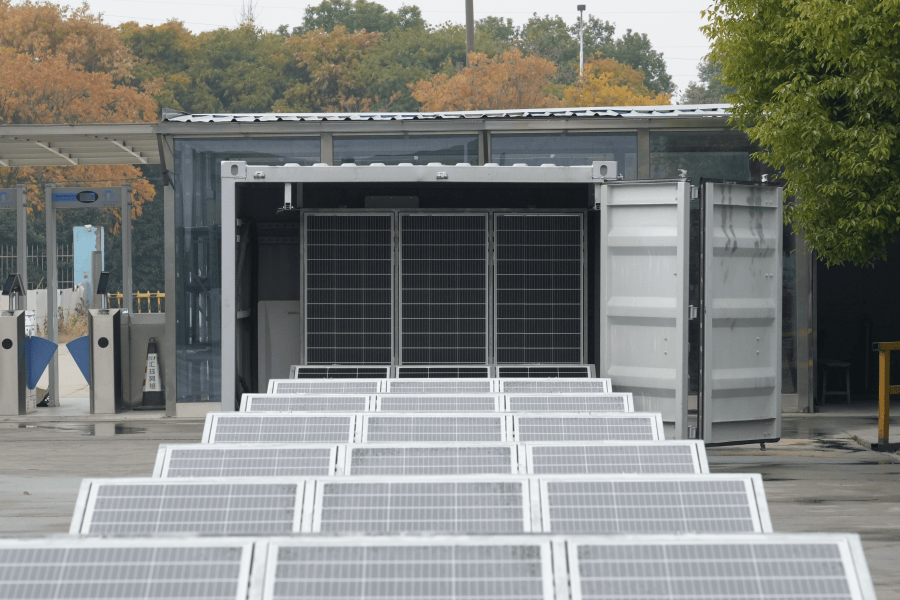
Table of Contents
- The Real Problem: It's Not Just About Storing Kilowatt-Hours
- The Cost of Doing Nothing: More Than Just a High Bill
- The 215kWh Container: A Pragmatic Solution, Not a Magic Box
- Breaking Down the ROI: Where the Money Actually Comes From
- A Case in Point: How a German Mittelstand Company Made it Work
- Expert Insights: The Devil's in the Thermal & Electrical Details
- Making It Real: What to Look For Beyond the Spec Sheet
The Real Problem: It's Not Just About Storing Kilowatt-Hours
Let's be honest. When most industrial park managers in the US or Europe first look at battery storage, they see a capital expense line item that's tough to justify. The conversation often starts with, "What's the payback period on this 215kWh cabinet?" But in my 20+ years on sites from California to North Rhine-Westphalia, I've learned the real pain point isn't the technology itself - it's the volatility and complexity of your energy costs that's killing your operational budget.
You're dealing with peak demand charges that can make up 30-50% of your facility's electricity bill, unpredictable time-of-use rates, and the constant pressure to add sustainability metrics without hurting the bottom line. A standard solar array helps, but honestly, it often just shifts the peak a few hours. The problem you're trying to solve is financial predictability, not just green credentials.
The Cost of Doing Nothing: More Than Just a High Bill
Let's agitate that pain for a second. I've sat across from plant managers staring at a monthly bill where a single 15-minute peak, maybe from simultaneous HVAC and machinery startup, triggered a demand charge that added thousands to that month's cost. According to the National Renewable Energy Lab (NREL), commercial and industrial demand charges in the US have been rising about 3-4% annually, often outpacing general energy inflation.
But it's more than that. Grid instability is a growing concern. Even brief outages or voltage sags can halt sensitive production lines, leading to spoilage, downtime, and restart costs. The "cost of doing nothing" includes this operational risk. You're leaving money on the table through unmanaged demand and exposing your core processes to grid hiccups. That's a risky business strategy.
The 215kWh Container: A Pragmatic Solution, Not a Magic Box
This is where a well-designed, containerized 215kWh system stops being a "battery project" and starts being a financial and operational shock absorber. The solution isn't about having the biggest battery; it's about having the right-sized, intelligently dispatched one. A 215kWh cabinet, especially in a pre-integrated, plug-and-play container format, hits the sweet spot for many small to mid-sized industrial facilities: large enough to meaningfully shave peak demand and provide backup for critical loads, but small enough to avoid massive upfront cost and complex permitting.
At Highjoule, we view these containers as an engineered asset. The key is the brain - the energy management system (EMS) - that decides in milliseconds when to charge (from solar or the grid during cheap periods) and when to discharge to cap your power draw at that critical moment. It's automating a cost-saving strategy you simply can't manually.
Breaking Down the ROI: Where the Money Actually Comes From
So, let's talk ROI for a 215kWh system. Forget the generic online calculators. The real return is a combination of streams:
- Demand Charge Reduction: This is typically the #1 saver. By discharging the battery during your facility's short peak periods, you can flatten your power draw. I've seen clients reduce their peak demand by 40-70kW consistently, which translates directly to monthly savings on the demand portion of their bill.
- Arbitrage (Time-of-Use): Charge when rates are low (night), use or discharge when rates are high (afternoon/evening). In markets like California or parts of the EU with high price spreads, this adds up.
- Backup Power & Resilience: How much is 2-4 hours of backup for your critical control systems, servers, or lighting worth? It avoids shutdown costs and maintains safety.
- Incentives & Accelerated Depreciation: The US Investment Tax Credit (ITC) and Modified Accelerated Cost Recovery System (MACRS), or similar EU national grants and accelerated depreciation schedules, can improve the net capital cost by 30-50%. This is huge for ROI.
A simplified payback often falls in the 4-7 year range, but with strong incentives and high local demand charges, I've seen projects dip under 4 years. After that, it's nearly pure operational savings for the rest of the system's 15+ year life.
A Case in Point: How a German Mittelstand Company Made it Work
Let me give you a real example from a project I oversaw. A precision machining company in Baden-W1rttemberg, Germany, had a 250kW solar rooftop array but still faced high grid draw during morning startup and late afternoon. Their peak demand charges were brutal, and grid power was expensive.
We deployed one of our Highjoule Cubicle ESS containers - a 215kWh, UL/IEC-compliant system. The challenge was seamless integration with their existing solar inverter and ensuring the EMS could predict their machine shop load patterns. The container format was key because it allowed for fast, off-line commissioning and kept the site disruption to a single afternoon for placement and connection.
The result? In the first year, they cut their peak grid draw by 65kW on average, reducing their demand charges by over 28%. Combined with solar self-consumption optimization, their overall annual electricity bill dropped by ?18,000. The container also provides them with a guaranteed 2-hour backup for their CNC control units, preventing six-figure losses in material and downtime during the region's occasional grid faults.

Expert Insights: The Devil's in the Thermal & Electrical Details
Here's the insider perspective you won't get from a sales brochure. When evaluating any containerized BESS for ROI, ask about the C-rate and thermal management.
The C-rate (like 0.5C, 1C) tells you how fast the battery can discharge relative to its capacity. A 215kWh system with a 1C rating can deliver 215kW of power - great for sharp, high-power peak shaving. A 0.5C system only delivers ~107kW. You need to match this to your load profile. If your peak is short and spiky, a higher C-rate is critical for ROI.
And thermal management? Honestly, I've seen too many systems derate (lose power) or degrade prematurely because of poor cooling. Our containers use an independent, forced-air cooling system that maintains optimal cell temperature even during high-power discharge in a Texas summer or a Spanish heatwave. This protects your investment and ensures the performance you paid for, year after year. It directly impacts the Levelized Cost of Storage (LCOS) - the true long-term cost metric.
Making It Real: What to Look For Beyond the Spec Sheet
So, how do you move forward? Look for a provider that talks about your load profile and utility rate structure first, not just battery chemistry. They should offer a detailed pre-feasibility analysis - like the ROI analysis we're discussing here - that models your specific data.
Insist on compliance with local standards: UL 9540 and IEC 62443 for the system are non-negotiables in the US and EU for safety and cybersecurity. That's our baseline at Highjoule. Finally, ask about long-term service and performance guarantees. The container should be a hands-off asset. Our team provides remote monitoring and proactive maintenance alerts, so your focus stays on your production, not your power plant.
The right 215kWh container isn't an expense; it's a hard-working financial asset on your balance sheet. What does your last 12 months of utility bills say your peak pain point is?
Tags: UL Standard BESS Industrial Energy Storage Solar Container ROI Analysis Demand Charge Management
Author
James Zhang
20+ years agricultural energy storage engineer / Highjoule CTO