
ROI Analysis of Air-cooled Mobile Power Containers for Remote Island Microgrids
Contents
- The Remote Power Dilemma: It's More Than Just Diesel
- Why Traditional ROI Stumbles on the Shoreline
- The Mobile Container Advantage: Agility Meets Economics
- Breaking Down the ROI: It's in the (Cooling) Details
- A Real-World Perspective: Lessons from the Field
- Beyond the Spreadsheet: The Intangible ROI
The Remote Power Dilemma: It's More Than Just Diesel
Let's be honest. If you're managing energy for a remote island community, a mining outpost, or a coastal resort, you've had this conversation. The sun is plentiful, the wind is steady, but the economics... they just never seem to add up the way the sales brochure promised. You're likely wrestling with a hybrid system: some solar PV, maybe a wind turbine, and that old, rumbling diesel genset that's both a lifeline and a financial sinkhole. I've been on-site for these discussions from the Greek islands to off-grid Alaskan communities. The core problem isn't the desire for renewables - it's the crushing Levelized Cost of Energy (LCOE) that fails to pencil out when you factor in everything: fuel logistics, maintenance marathons, and the sheer complexity of installing permanent infrastructure in logistically challenging locations.
Why Traditional ROI Stumbles on the Shoreline
Here's the agitation part, based on what I've seen firsthand. Traditional, permanent Battery Energy Storage System (BESS) installations for these microgrids often face a triple threat that torpedoes their Return on Investment (ROI):
- Sky-High CAPEX & Installation Drag: Pouring concrete foundations, building permanent shelters, and managing complex electrical interconnections in remote areas isn't just expensive; it's slow. Project timelines stretch, and capital is tied up way before the first electron is stored. According to the National Renewable Energy Laboratory (NREL), balance-of-system costs can contribute up to 30% of total storage project costs, a figure that balloons with remoteness.
- Thermal Management Headaches: Islands are hot. Traditional liquid-cooled BESS units are highly effective, but they add complexity, potential leak points, and maintenance requirements. If a pump fails or a coolant line is compromised in a remote location, you're looking at costly downtime and specialized service calls. The system's efficiency (its C-rate - basically, how fast it can charge and discharge) can suffer if temperatures aren't managed reliably.
- Inflexibility & "Stranded Asset" Risk: Commit a massive, fixed asset to a location, and you're locked in. What if demand patterns change? What if a better site becomes available? The financial model is rigid.
Honestly, many ROI models from a decade ago simply didn't account for these "soft costs" and operational risks adequately. They looked great in a spreadsheet run in a comfortable office, but fell apart in the salty, humid, logistically-tough real world.

The Mobile Container Advantage: Agility Meets Economics
This is where the solution in our title - the Air-cooled Mobile Power Container - fundamentally changes the ROI equation. Think of it not just as a battery, but as a power asset on wheels (or on a skid, ready for shipping). At Highjoule, we've moved towards this model because it directly attacks the pain points I just described. It's a pre-integrated, pre-tested system that arrives on-site, meets key standards like UL 9540 and IEC 62933, and can be connected in a fraction of the time. The agility is the first major ROI driver.
Breaking Down the ROI: It's in the (Cooling) Details
Let's get into the technical weeds, but I'll keep it simple. The "air-cooled" part is a huge, often underestimated, economic lever. Here's my expert insight from deploying these:
- Lower Lifetime Cost (LCOE): Air-cooled systems use ambient air and sophisticated internal ducting/venting to manage temperature. Fewer moving parts than liquid systems means higher inherent reliability and lower maintenance costs over a 15-20 year lifespan. No coolant to replace, no leak risks. This directly reduces your operational expenditures (OPEX), a critical component of LCOE.
- Preserved Performance & Safety: A well-designed air-cooled container, like ours at Highjoule, uses advanced thermal modeling to ensure even cell temperature distribution. This prevents hot spots, maintains optimal C-rate performance for frequency regulation or solar smoothing, and critically, enhances long-term safety and battery longevity. Longer life = better ROI.
- Deployment Speed = Revenue Sooner: This is cash flow 101. If you can cut 6 months off your deployment timeline by using a plug-and-play mobile container, you start generating value - by offsetting diesel, providing grid services, or firming renewables - months earlier. That dramatically improves your net present value (NPV) and shortens the simple payback period.
A Real-World Perspective: Lessons from the Field
Let me give you a case that's not just theoretical. We worked with a community on a island off the coast of Maine, USA. Their challenge was peak shaving and backup power, with a goal to integrate more local wind. A traditional BESS installation faced prohibitive civil works costs due to the rocky terrain and a short construction season.
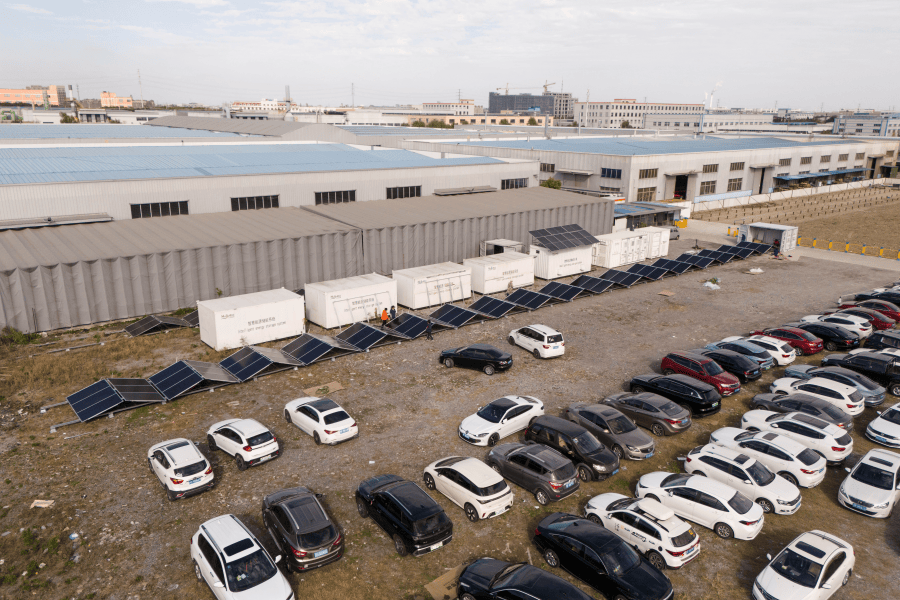
Our solution was a 1 MWh air-cooled mobile container. It was factory-built, tested to UL standards, shipped, and placed on a simple prepared pad. It was interconnected and operational in under three weeks. The ROI analysis here was compelling:
| Factor | Traditional Fixed BESS | Mobile Air-Cooled Container |
|---|---|---|
| Installation Time | 4-5 months | 3 weeks |
| Civil Works Cost | High (blasting, concrete) | Low (graded pad) |
| System Availability | Month 6+ | Month 1 |
| Thermal System Maintenance | Scheduled coolant service | Filter checks/replacement |
The project achieved its target ROI nearly 18 months faster than the alternative model, primarily due to the accelerated revenue generation and avoided capital costs.
Beyond the Spreadsheet: The Intangible ROI
Finally, there's an ROI that doesn't always make it into the Excel model but matters immensely on a remote island. Resilience. A mobile container can be strategically relocated in case of a storm surge or changing infrastructure needs. Scalability. Need more capacity? You can add another container incrementally, with minimal disruption. Compliance Peace of Mind. Knowing your system is built from the ground up to meet UL and IEC standards isn't just about checking a box; it's about insurance, financing, and community safety.
At Highjoule, our focus is building that intrinsic safety and economic durability into every mobile unit we ship. We're not just selling a container; we're delivering a faster, more flexible, and more financially sound path to energy independence for remote microgrids. So, the next time you run an ROI model, ask yourself: are you accounting for the cost of time, the risk of complexity, and the value of agility? If not, it might be time to re-calculate.
What's the single biggest bottleneck you're facing in your remote microgrid project's financial model? Is it the installation timeline, the ongoing Opex, or something else entirely?
Tags: UL Standard BESS LCOE Europe US Market Renewable Energy Microgrid Energy Storage ROI
Author
James Zhang
20+ years agricultural energy storage engineer / Highjoule CTO