
The Ultimate Guide to LFP (LiFePO4) Energy Storage Containers for Military Bases
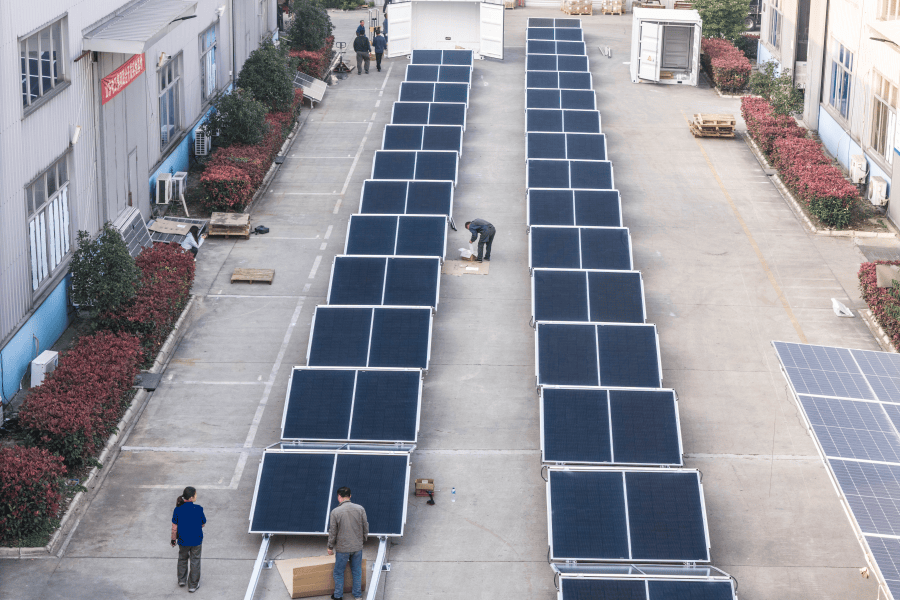
Table of Contents
- The Problem: A Base Commander's Nightmare
- Why LFP (LiFePO4) Isn't Just Another Battery
- Beyond the Cell: What Makes a True Military-Grade Container
- A Real-World Case: Silent Sentinel in the Southwest
- Making the Decision: Key Questions to Ask Your Vendor
The Problem: A Base Commander's Nightmare
Let's be honest. When we talk energy at a military installation, we're not talking about reducing a utility bill. We're talking about mission integrity. I've been on-site during exercises where a simulated grid outage wasn't just an inconvenience - it was a critical vulnerability. The hum of diesel generators is a tell-tale signature, and their fuel logistics are a chain of potential failure points. The core problem isn't a lack of power; it's a lack of resilient, silent, and instantly available power.
And this is where many first-generation energy storage projects stumbled. Early lithium-ion solutions, often using NMC chemistry, brought great energy density but introduced new headaches: stringent thermal runaway risks, complex cooling needs, and a lifecycle that didn't always pencil out for 24/7 readiness. Deploying commercial, off-the-shelf tech in a high-stakes environment is a gamble no base commander should take.
Why LFP (LiFePO4) Isn't Just Another Battery
So, why is the industry shifting towards LFP, or LiFePO4, for these critical applications? It boils down to the triad of military needs: Safety, Longevity, and Total Cost.
From a chemistry standpoint, LFP is inherently more stable. The phosphate-based cathode material has a stronger molecular bond, making it far more resistant to thermal runaway - the nightmare scenario of uncontrolled fire. In practical terms, this means a significantly wider safe operating temperature and a lower risk of catastrophic failure if a cell is compromised. Honestly, after seeing thermal propagation tests on both chemistries, the difference isn't subtle. It's the difference between containing an incident and managing an emergency.
Then there's longevity. A typical quality LFP cell can deliver 6,000 to 10,000 cycles while retaining 80% of its capacity. For a base that might cycle its storage daily for peak shaving or frequent microgrid operations, this translates to decades of service, not just years. The Levelized Cost of Storage (LCOE) - a key metric we live by - plummets when you spread the capital cost over twice as many cycles with minimal degradation.

Finally, let's talk about the C-rate. This is just engineer-speak for how fast you can charge or discharge the battery. While some chemistries excel at blistering fast discharge (high C-rate) for short bursts, LFP offers a robust, steady performance profile. For a military base, this means reliable power for sustained operations - whether it's supporting a communications black start for hours or smoothing out the solar generation curve all day. It's the dependable workhorse, not the fragile racehorse.
Beyond the Cell: What Makes a True Military-Grade Container
Anyone can put LFP cells in a shipping container. Building a military-ready Energy Storage System (ESS) is a different ball game. The container itself is your first line of defense.
Thermal Management is non-negotiable. In the Arizona desert or a Norwegian winter, the system must maintain optimal temperature. We've moved beyond simple air conditioning. Advanced liquid cooling systems, like the ones we integrate at Highjoule, directly manage cell-level temperature, ensuring uniform performance and extending life. This isn't a luxury; it's what ensures your BESS is ready at 2 PM in July during a blackout.
Then comes the brain: the Battery Management System (BMS) and system controls. A true military-grade BMS does more than monitor voltage. It performs active cell balancing, provides detailed state-of-health diagnostics, and integrates seamlessly with base SCADA and microgrid controllers. It needs to speak the right protocols (like IEEE 2030.5) and be cyber-hardened from the ground up.
And of course, certifications. In the U.S., this means UL 9540 for the overall system and UL 9540A for the crucial fire safety test. In the European theater, IEC 62933 and IEC 62619 are your benchmarks. These aren't just stickers; they are the result of thousands of hours of third-party validation. When we design our Highjoule HPC series containers, these standards are the starting point, not an afterthought.
A Real-World Case: Silent Sentinel in the Southwest
Let me share a scenario from a recent project (details sanitized for security). A forward-operating base in the U.S. Southwest needed to reduce its diesel dependency and create a "silent watch" capability for its surveillance and comms infrastructure. Their challenges were classic: extreme temperature swings, limited on-site technical staff, and a need for flawless automation.
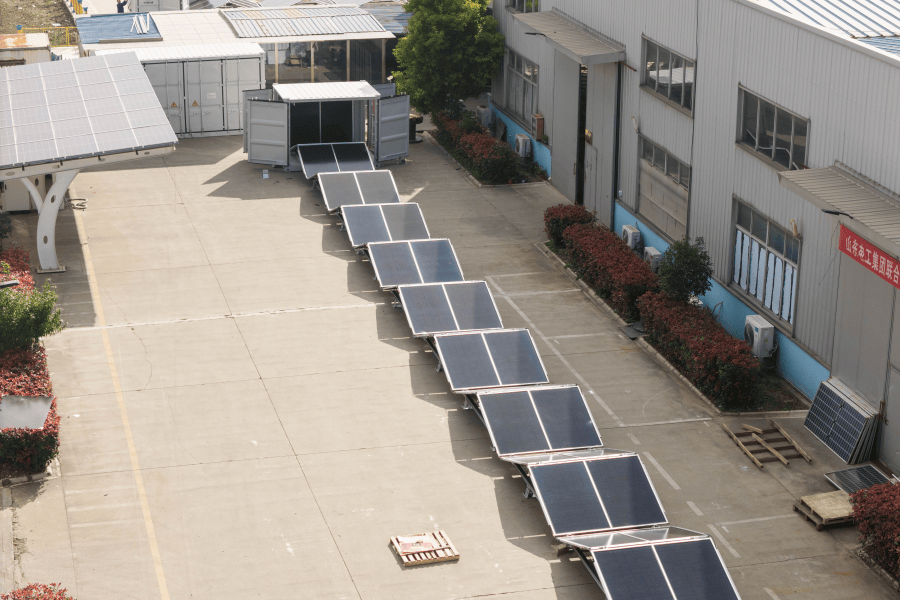
The solution was a 2 MWh LFP storage container, paired with an existing solar array. The container was spec'd with NEMA 3R environmental rating for dust and rain, and the liquid cooling was oversized for the 120F+ peak ambient temps. The key was the integration. The system was programmed for multiple modes: daily solar self-consumption, demand charge reduction, and - most critically - an automatic islanding mode. Upon grid loss, it would disconnect in milliseconds and power the critical load block for over 72 hours, with the solar array continuing to recharge it during the day.
The outcome? Diesel runtime was cut by over 70% for those loads. The carbon signature dropped. And the base gained a resilient, unmanned asset. I was there for the final commissioning, watching the load transfer happen seamlessly. That's the moment the technology fades into the background, and you're left with pure capability.
Making the Decision: Key Questions to Ask Your Vendor
So, you're considering an LFP container solution. Here are the questions I'd be asking, based on what I've seen go right (and wrong) in the field:
- Safety Data: "Can you show me the full UL 9540A test report for this exact system configuration?" Don't accept generic cell data.
- Degradation Guarantee: "What is the guaranteed end-of-warranty capacity and energy throughput (in MWh) over 10 years?" This is more telling than just cycle count.
- Grid Integration: "How does the system control interface with my existing microgrid controller? Can you provide a sample communication protocol diagram?"
- Local Support: "Who in my region performs the annual maintenance, firmware updates, and emergency response?" A container is a long-term asset, not a one-time purchase.
At Highjoule, we've built our service model around that last point. Because a piece of critical infrastructure is only as good as the team that stands behind it, long after the coffee from the commissioning day has gone cold.
What's the one operational vulnerability in your current energy resilience plan that keeps you up at night? Maybe it's time we talked about how a silent, solid-state sentinel could be the answer.
Tags: Energy Storage Container UL Standard BESS LFP Battery Military Energy Security
Author
James Zhang
20+ years agricultural energy storage engineer / Highjoule CTO