
ROI Analysis of All-in-one ESS Containers for Public Utility Grids
Contents
- The Utility Storage Puzzle: More Than Just Megawatts
- Where the Money (and Time) Really Leaks
- The All-in-One Advantage: From Capex to Lifetime Value
- A Case in Point: Lessons from a 50MW Site
- Beyond the Spreadsheet: The Intangible ROI Boosters
- Making the Numbers Work for Your Next Project
The Utility Storage Puzzle: More Than Just Megawatts
Let's be honest, if you're reading this, you're probably past the "if" and deep into the "how" of deploying utility-scale storage. The target is clear: enhance grid stability, integrate renewables, and create new revenue streams. But the path to getting a positive, bankable ROI? That's where the real engineering challenge begins.
I've been on sites from California to North Rhine-Westphalia, and the initial excitement of a new storage project often meets a harsh reality. It's not just the cost of the battery cells. It's everything around them. We're talking about months of complex system integration, navigating a maze of local and international codes (UL 9540, IEC 62933, IEEE 1547), and wrestling with balance-of-plant costs that can spiral out of control. The traditional approach - sourcing components from multiple vendors and assembling on-site - is like building a ship in a bottle. In a storm.
Where the Money (and Time) Really Leaks
When we analyze ROI, we have to look beyond the sticker price. The real pain points that erode your return are often hidden in the deployment process itself.
- Integration Hell: Mismatched communication protocols between the battery management system (BMS), power conversion system (PCS), and thermal management. I've seen projects delayed by weeks just getting these systems to talk to each other properly.
- Safety & Compliance Quagmire: Getting a site-built system certified can be a nightmare. Each component needs its own certification, and the assembled system requires another. This isn't just paperwork; it's a direct hit on your project timeline and legal viability.
- Thermal Management Guesswork: Inefficient cooling doesn't just risk safety; it murders your battery's lifespan. A poorly designed system forces batteries to operate at higher temperatures, which accelerates degradation. According to a NREL study, optimal thermal management can improve cycle life by up to 30% or more. That's a direct, massive impact on your Levelized Cost of Storage (LCOS).
- Footprint & Scalability Headaches: Space is money. A sprawling, custom-built system consumes more real estate and makes future expansion a complex, costly redesign.
The All-in-One Advantage: From Capex to Lifetime Value
This is where the all-in-one integrated industrial ESS container changes the ROI equation. It's not a magic bullet, but from a financial and operational standpoint, it's the closest thing we have. Think of it not as a product, but as a de-risking strategy.
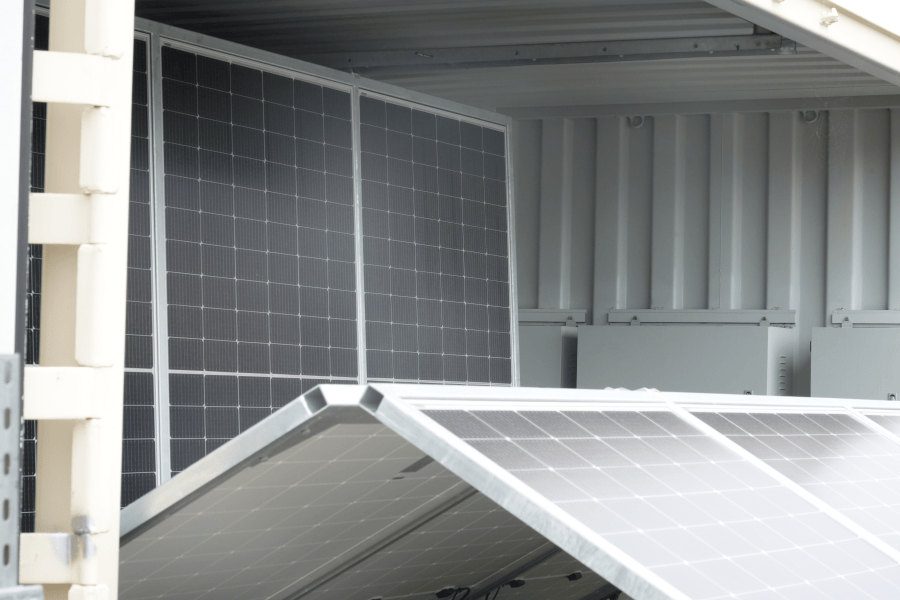
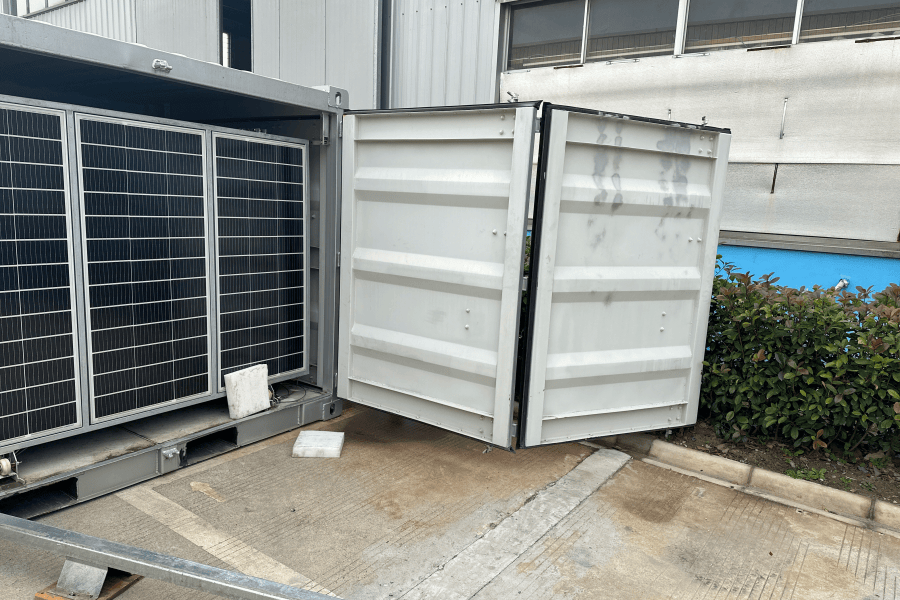
The core value is predictability. At Highjoule, we engineer our GridMax containers as fully functional, grid-ready assets. The batteries, PCS, HVAC, fire suppression, and controls are pre-integrated and tested in a controlled factory environment. This shifts a huge portion of the risk and cost from the volatile construction site to the predictable factory floor.
Let's break down the ROI impact:
- Radically Reduced Deployment Time: What takes 6-9 months on-site can be slashed to 8-12 weeks. It's "plug-and-play" in utility terms. Your asset starts generating revenue or providing grid services months earlier.
- Certified Safety, Delivered: The entire container is certified as a single unit (like UL 9540A). This eliminates countless approval hurdles, because you're deploying a pre-approved system, not hoping your on-site assembly passes muster.
- Optimized Performance = Higher Lifetime Yield: Because we control the entire ecosystem, we can fine-tune it. For example, we match the C-rate of the batteries to the inverter's capabilities and ensure the liquid cooling system maintains an optimal 2C cell temperature differential. This isn't just tech talk - it means the system delivers its rated power consistently and lasts for thousands more cycles.
A Case in Point: Lessons from a 50MW Site
I want to share a recent project in the American Southwest. The utility needed 50MW/200MWh of storage for peak shaving and frequency regulation. The initial plan was a traditional build.
After a joint ROI analysis, we pivoted to four of our 12.5MW GridMax containers. The results?
- Timeline: Commissioning was completed in 11 weeks from delivery, vs. a projected 32 weeks for a stick-built approach.
- Cost Certainty: Balance-of-plant costs were fixed and reduced by nearly 40%, as site work was limited to foundation and interconnection.
- Operational Insight: The unified monitoring platform gave the utility's operators a single pane of glass for performance, health, and revenue tracking, reducing their O&M learning curve.
The financial model showed the all-in-one approach delivered a positive ROI 18 months earlier than the traditional model, purely based on faster time-to-market and lower installed cost.
Beyond the Spreadsheet: The Intangible ROI Boosters
Honestly, some of the biggest benefits don't fit neatly into an Excel model but are critical for decision-makers.
- Future-Proofing: Need to expand? You add another identical, pre-certified container. It's modular scaling without re-engineering the entire site.
- O&M Simplicity: Spare parts, training, and support are for a single, known system. Troubleshooting is faster. This lowers the total cost of ownership over 10-15 years.
- Risk Mitigation: You have one vendor responsible for the performance of the entire integrated system. That clarity is invaluable.
Making the Numbers Work for Your Next Project
The question isn't whether an integrated container has a higher upfront unit cost. Sometimes it does. The real question is: What is the total cost of ownership and the time-to-value over the asset's life?
When you run the numbers - factoring in accelerated deployment, guaranteed performance, lower financing costs due to de-risking, and extended system life - the all-in-one model almost always wins for standard utility applications.
My advice? For your next RFP or internal business case, demand two financial models: one for the traditional component-based approach, and one for a pre-integrated container solution. Compare them on LCOS, not just upfront capex. Factor in the cost of construction delays and the revenue from getting online sooner.
What's the single biggest delay you've faced in your last storage deployment, and how much did that ultimately cost the project?
Tags: UL Standard BESS IEEE 1547 ROI Analysis Utility-Scale Energy Storage Grid Services
Author
James Zhang
20+ years agricultural energy storage engineer / Highjoule CTO