
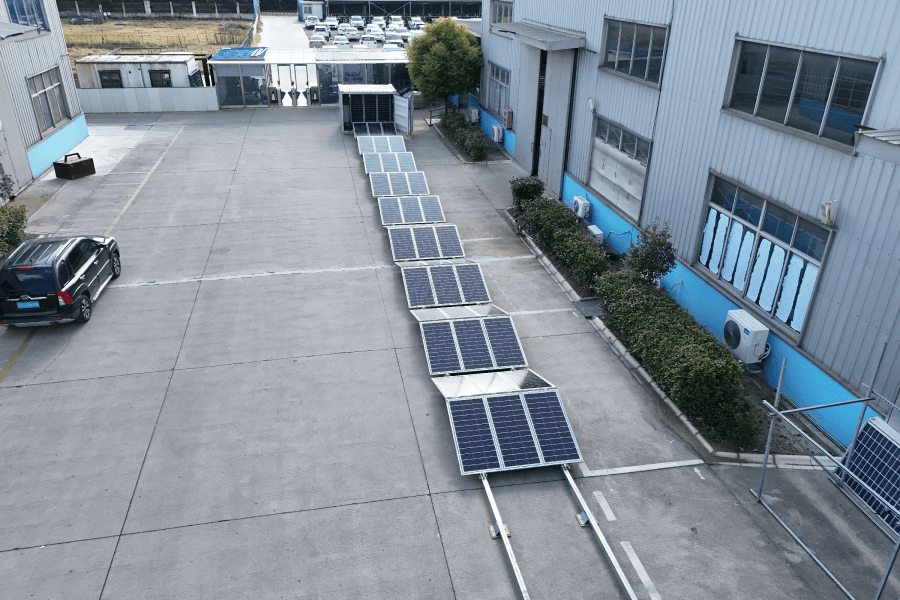
ROI Analysis of Air-cooled Pre-integrated PV Container for Data Center Backup Power
Contents
- The Silent Cost of "Just a Backup"
- Beyond Diesel: The Numbers Don't Lie
- The Container Advantage: More Than Just a Box
- Cracking the ROI Code for Your Data Center
- A Real-World Deployment: Lessons from the Field
- Making the Move: What to Look For
The Silent Cost of "Just a Backup"
Let's be honest. For most data center operators, backup power has traditionally been a checkbox item. You install the diesel gensets, you test them monthly, you hope you never need them. The conversation starts and ends with uptime. But over my 20+ years deploying energy systems globally, I've seen a massive shift. That backup line item is now a central piece of the financial and operational puzzle. Why? Because the old model is getting brutally expensive and, frankly, a bit risky.
The pain point isn't just the capital outlay for generators. It's the operational drag. You've got fuel contracts, stringent emissions compliance (especially in California and the EU), maintenance schedules that pull engineers away from core IT work, and the sheer noise and space those beasts consume. And let's not forget the "stranded asset" problem - that multi-million dollar system sits idle 99.9% of the time, depreciating. In today's climate, both environmental and economic, that's a tough pill to swallow for any CFO or sustainability officer.
Beyond Diesel: The Numbers Don't Lie
The industry is waking up to this. According to the International Energy Agency (IEA), global data center electricity consumption could double by 2026. That's not just a cost issue; it's a grid resilience issue. Utilities are offering fewer and fewer incentives for pure demand, and more for flexibility. This is where the ROI Analysis of Air-cooled Pre-integrated PV Container for Data Center Backup Power moves from a niche idea to a boardroom necessity.
Think about it. What if your backup system could also be a revenue-generating or cost-avoidance asset during normal operations? Instead of sitting idle, it could be performing grid services, shaving peak demand charges, or storing excess solar from on-site PV. Suddenly, the math changes completely. The payback period shrinks, and the system starts contributing to your bottom line from day one, not just on the dreaded day of an outage.
The Container Advantage: More Than Just a Box
This is where the pre-integrated, air-cooled container solution shines. I've been on site for enough "stick-built" BESS projects to know the headaches: months of civil work, coordinating multiple vendors (battery racks, PCS, HVAC, fire suppression), and a commissioning phase that feels like it never ends. Every day of delay is a day of lost revenue potential.
A pre-integrated container, like the ones we engineer at Highjoule, flips that script. It arrives on a truck, a fully tested power plant in a box. All the critical components - lithium-ion battery racks, bi-directional inverters, thermal management, and safety systems - are factory-integrated and tested against UL 9540 and IEC 62933 standards. This isn't just about convenience; it's about de-risking the project. You get a predictable timeline and a known, certified performance profile.
Now, let's talk air-cooling. Honestly, I get the question a lot: "Is liquid cooling better?" For hyperscale, high-density IT racks, maybe. But for a containerized BESS, a well-designed air-cooled system is often the sweet spot for ROI. It's simpler. Fewer moving parts, no risk of coolant leaks onto electrical components, and drastically lower maintenance complexity. Our field data shows that a robust, variable-speed air management system can maintain optimal cell temperature (crucial for longevity and safety) with a lower lifetime Levelized Cost of Energy (LCOE). We're talking about minimizing auxiliary power consumption, which directly eats into your revenue stack.

Cracking the ROI Code for Your Data Center
So, how do you actually model the ROI? It's more than just comparing the capex of a BESS container to a diesel gen-set. You need a multi-layer financial model. Here's how I break it down with clients:
- Capital Avoidance: Can the BESS delay or negate the need for a costly substation upgrade? Often, yes.
- Demand Charge Management: This is the big one for commercial power bills. The BESS discharges during your 15-30 minute peak, potentially slicing thousands off monthly bills.
- Energy Arbitrage: Charge with cheap off-peak or solar power, discharge during expensive peak hours.
- Grid Services Revenue: Markets like FERC 2222 in the US or balancing services in Europe allow you to sell frequency regulation or capacity back to the grid.
- Resilience Valuation: What's the cost of one minute of downtime for your facility? The BESS provides seamless transition during an outage, protecting that value.
The beauty of the pre-integrated container is its speed to revenue. Because it deploys fast and is ready to go, you start ticking these boxes within weeks, not years.
A Real-World Deployment: Lessons from the Field
Let me give you a concrete example from a project we completed in Northern Germany for a colocation data center. Their challenge was twofold: enhance backup resilience beyond diesel and mitigate the impact of volatile daytime energy prices.
The solution was a 1.5 MW/3 MWh Highjoule AtlasContainer (air-cooled, pre-integrated), coupled with an existing rooftop PV array. The deployment was key: from site approval to commercial operation in under 14 weeks. The container's native compliance with German grid codes (based on IEC standards) saved months of paperwork.
Here's the operational insight I found most compelling. The facility manager uses the system for daily peak shaving. But the thermal management system's efficiency meant that the auxiliary load was so low that even on a cloudy day, the PV could cover it, keeping the system truly "green." During a planned grid maintenance window, the BESS seamlessly bridged the gap for critical loads, and the diesels never even spooled up - saving fuel and maintenance cycles. Their projected ROI, factoring in avoided demand charges and grid incentives, dropped below 5 years. The CFO was happier than the engineers!
Making the Move: What to Look For
If you're considering this path, your ROI Analysis of Air-cooled Pre-integrated PV Container for Data Center Backup Power must be grounded in reality. Don't just look at the spec sheet. Dig into the provider's field experience. Ask them:
- "Can you show me the C-rate and efficiency curves at my specific ambient temperature range?" (This tells you real performance, not just lab specs).
- "How is the air-cooling system controlled, and what's its worst-case power draw?"
- "What's the single point of failure in the container, and how is it mitigated?"
- "Can you provide a sample grid interconnection study for a similar project in my region (like the US with IEEE 1547 or the EU)?"
At Highjoule, we build these answers into our design from the start. Our containers use a moderate C-rate - not the highest on the market - because we know that optimizes cycle life and reduces thermal stress, which is what actually delivers a 20-year ROI. The safety systems aren't an add-on; they're baked into the UL 9540 certification.
The future of data center power isn't just about having backup; it's about having a smart, flexible, and financially intelligent energy asset. The right container solution sits at that intersection. So, the real question isn't "Can we afford it?" It's becoming "Can we afford to keep writing checks for diesel and wasted capital, while our competitors turn their power infrastructure into a profit center?"
What's the one grid constraint or energy cost in your region that keeps you up at night? That's probably where your ROI story begins.
Tags: UL Standard BESS Europe US Market Renewable Energy Data Center Backup ROI Analysis Air-Cooled Container
Author
James Zhang
20+ years agricultural energy storage engineer / Highjoule CTO