
Top 10 Rapid Deployment PV Container Manufacturers for Data Center Backup Power
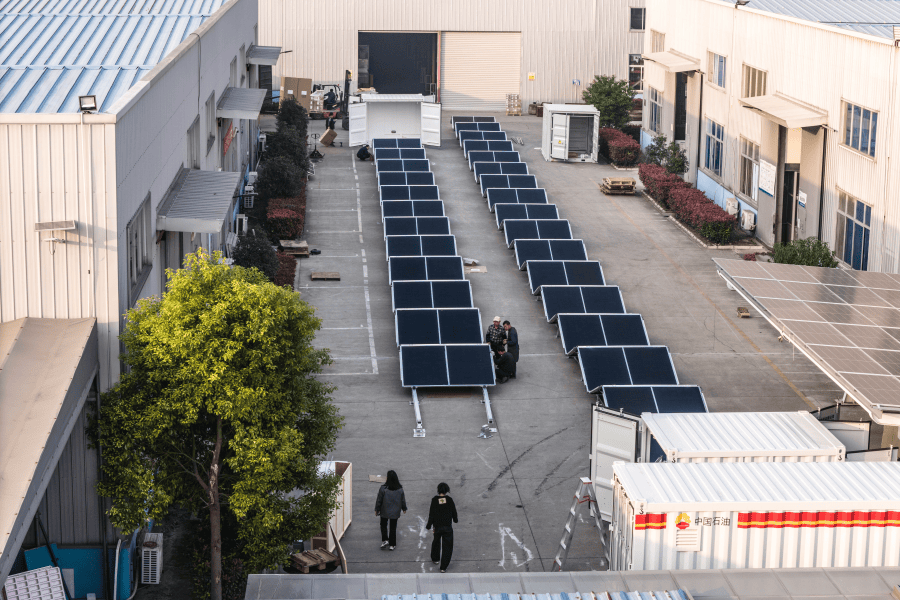
Table of Contents
- The Silent Problem: Data Center Resilience in the Age of Renewables
- Why It Hurts: The Real Cost of Getting Backup Power Wrong
- The Game Changer: Pre-Integrated PV Containers
- Spotlight on the Top 10 Manufacturers
- Beyond the Spec Sheet: What to Really Look For
- The Future is Modular, But It Needs to Be Smart
The Silent Problem: Data Center Resilience in the Age of Renewables
Let's be honest. For years, when we talked about data center backup power, the conversation started and ended with diesel generators. They're loud, they're dirty, and honestly, they're a bit of a relic. But they worked. The problem now? The world has changed. Grids are more volatile, sustainability mandates are real, and the sheer scale of data demand is exploding. I've been on sites where the backup gennies are tested, and the whole neighborhood knows it. That model is under pressure.
The real pain point I see, especially in North America and Europe, is the time-to-power paradox. You need massive, clean backup capacity, and you need it yesterday. Traditional BESS or solar-plus-storage deployments can take 18-24 months from design to commissioning. For a data center facing a capacity crunch or new carbon regulations, that timeline is a business risk. You're left juggling interim solutions that are neither cost-effective nor aligned with your long-term ESG goals. It's a frustrating gap between ambition and reality.
Why It Hurts: The Real Cost of Getting Backup Power Wrong
I've seen this firsthand. A client in Germany's industrial heartland faced steep grid upgrade fees and a hard deadline to reduce their carbon footprint for a new server hall. Their initial plan for a custom BESS got bogged down in local permitting and complex interconnection studies. The delay wasn't just about missing a date; it was about lost revenue from delayed server farm activation and potential non-compliance fines.
This is where the aggravation amplifies. It's not just about the capital expenditure (CapEx). It's about the Levelized Cost of Energy (LCOE) for your backup power over 15-20 years. A delayed, over-engineered, or poorly integrated system drives up your soft costs (engineering, permitting, labor) and can hurt your operational expenditure (OpEx) through inefficient cycling or higher maintenance. According to a recent NREL analysis, "soft costs" can represent up to 50% of the total price of a commercial storage system. That's a huge variable to control.
The Standards Maze
Then there's the safety and compliance headache. In the US, you're looking at UL 9540 for the energy storage system and UL 1741 for the inverters. In Europe, it's IEC 62933 and grid codes like VDE-AR-N 4105 in Germany. Navigating this without a vendor who truly understands these standards is a minefield. One missing certification can halt your entire project.
The Game Changer: Pre-Integrated PV Containers
This is where the landscape is shifting, and the concept of rapid-deployment, pre-integrated PV containers becomes a true solution. Think of it as a "data center backup power plant in a box." These aren't just containers with gear thrown in. The top manufacturers design them from the ground up as a unified system.
The core value is radical simplification. Instead of managing 10 different vendors (battery racks, PCS, HVAC, fire suppression, EMS), you have one responsible party delivering a single, tested, certified unit. It slashes your deployment timeline from years to months. I was involved in a project in Texas where a 2 MW/4 MWh pre-integrated container for a colocation data center was energized in under 90 days from site approval. That speed is a game-changer.
At Highjoule, when we partner with clients on such solutions, we focus on what happens after the container is placed. Our service model is built around predictive analytics and local technician networks. The system's EMS doesn't just control charge/discharge; it gives us visibility into cell-level performance and thermal gradients, allowing us to schedule maintenance before it becomes an issue. This operational peace of mind is half the value.
Spotlight on the Top 10 Manufacturers
Evaluating the market leaders isn't just about who has the biggest container. It's about their design philosophy, their compliance depth, and their field track record. Here's a high-level view of what separates the top tier. These manufacturers have proven they can deliver the complete, compliant package that data center operators need.
| Focus Area | What It Means for You | Key Questions to Ask |
|---|---|---|
| UL/IEC Certification Depth | Is the entire system certified, or just components? A fully certified unit speeds up AHJ approval immensely. | "Can you provide the full system certification report for UL 9540A (fire safety)?" |
| Thermal Management Design | This is critical for lifespan and safety. Look for liquid cooling or advanced forced-air systems with precise zone control. | "What is the maximum temperature delta between cells in your design at 1C continuous discharge?" |
| Grid-Forming Capability | Advanced units can "black start" or form a microgrid, providing true grid independence during an outage. | "Is the inverter capable of grid-forming mode per IEEE 1547-2018?" |
| Energy Density & Footprint | Maximizing MWh per square meter is key for space-constrained data center yards. | "What is your system's energy density (kWh/m2), including the auxiliary unit?" |
| Local Service & Commissioning | Manufacturers with local crews reduce deployment risk and ensure support is hours away, not days. | "Do you have certified commissioning engineers based in my region?" |
Honestly, the best manufacturers excel in at least three of these areas. They don't just sell hardware; they sell a de-risked pathway to compliance and operation.
Beyond the Spec Sheet: What to Really Look For
Okay, so the specs look good on paper. Here's what 20 years of walking onto job sites has taught me to dig into:
- C-Rate in the Real World: A manufacturer might advertise a 1C continuous rating. But what's the derating at 35C or 40C ambient? In Arizona or Spain, that matters. A robust system will have minimal derating, meaning you get the power you paid for when you need it most.
- Thermal Management, Again: I can't stress this enough. I've opened containers where the cooling system was an afterthought. Look for redundant chillers, smart airflow that isolates high-heat components (like the PCS), and sensors everywhere. The goal is uniform temperature. A 5C spread is okay; a 15C spread will murder your battery lifespan.
- The "Soft" Costs They Cover: Does the vendor provide full interconnection study support? Do they have stamped engineering drawings for your specific site? The best ones do. This is where Highjoule's model integrates tightly - we act as the owner's engineer, translating the manufacturer's product into a permitted, grid-approved asset.

The Future is Modular, But It Needs to Be Smart
The trend is clear: backup power is becoming modular, containerized, and closely tied to on-site generation like PV. But the next step is intelligence. The system shouldn't just sit there waiting for a grid failure. It should be optimizing your energy costs daily - performing peak shaving, providing frequency response services if the market allows, and maximizing self-consumption of any on-site solar.
This is where your choice of manufacturer and partner converges. You need a hardware platform with a sophisticated, open-API Energy Management System (EMS) and a partner who can configure it for your specific economic and resilience goals. Is the system future-proofed for second-life batteries? Can software updates enable new revenue streams down the line?
So, as you look at these Top 10 Manufacturers, see them not just as a product vendor, but as a potential long-term infrastructure partner. The right choice doesn't just give you backup power; it gives you a strategic, flexible, and compliant energy asset. What's the one resilience challenge you're facing that a traditional approach just can't solve?
Tags: UL Standard BESS LCOE Europe US Market PV Container Renewable Energy Data Center Backup
Author
James Zhang
20+ years agricultural energy storage engineer / Highjoule CTO