
ROI Analysis of Black Start Hybrid Solar-Diesel Systems for Data Center Backup
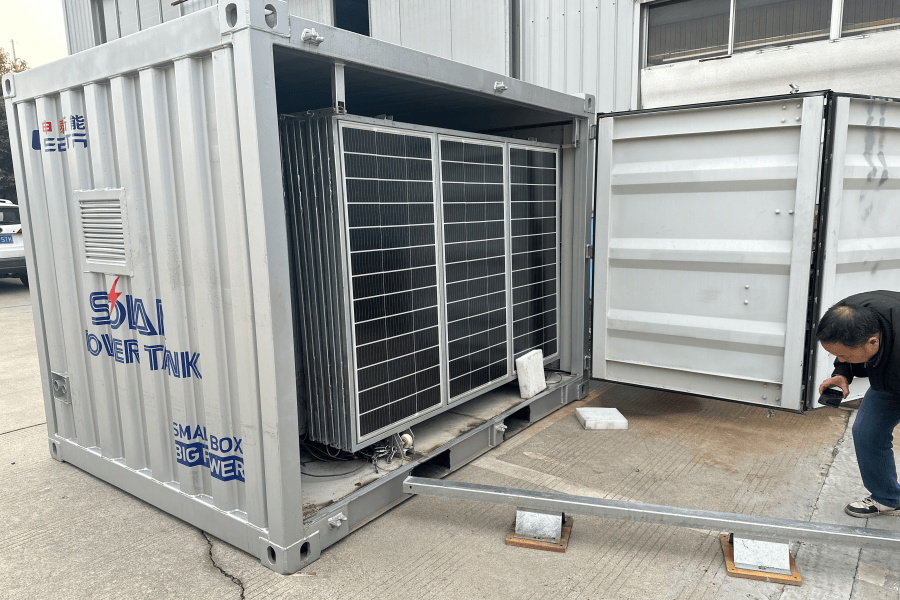
Table of Contents
- The Silent Problem with "Unbreakable" Backup
- The Real Cost of Downtime Isn't Just Diesel
- The Hybrid Black-Start Solution: More Than Just a Generator
- Cracking the ROI Code: A Practical Breakdown
- The On-the-Ground Reality: A Case from North Rhine-Westphalia
- Making the Numbers Work for Your Site
The Silent Problem with "Unbreakable" Backup
Let's be honest. If you're managing a data center in the US or Europe, you've got a backup power system. Probably a massive diesel genset array, meticulously maintained, with fuel contracts that would make a logistics manager proud. It's the industry standard, the "tried and true" solution. But over my 20+ years on site, from Texas to Bavaria, I've seen a common, silent anxiety in the eyes of facility managers during grid failure simulations. It's not about if the generators start. It's about the five to ten critical seconds of absolute blackness before they do, and the cascading costs that follow a less-than-perfect black start.
That's the real, unspoken problem. We've optimized for the 99% scenario but often leave the 1% - the true black-start event from a completely dead grid - to chance and hope. And hope, as I've learned the hard way, is not a reliable component in a mission-critical system.
The Real Cost of Downtime Isn't Just Diesel
We all know the Uptime Institute's figures: a full data center outage can cost over $740,000 on average. But the agitation, the real pain point, goes deeper than a headline number. It's in the granular details:
- The "Dark Start" Risk: A dead-grid black start puts immense stress on generator engines and electrical systems. I've witnessed failed voltage regulators and sync issues during these high-stress moments, turning a 30-second recovery into a 30-minute crisis.
- Operational Slippage: Every second of downtime now triggers a chain of SLA penalties, brand reputation damage, and internal recovery labor that isn't captured in simple diesel-per-gallon calculations.
- The Green Compliance Headache: In the EU and parts of the US like California, running diesel generators for extended testing or non-emergency use is facing stricter environmental regulations. Your reliable backup is becoming a compliance liability and a public relations challenge.
So you're caught: needing impeccable reliability while facing rising costs, environmental scrutiny, and operational complexity. The traditional model is showing its age.
The Hybrid Black-Start Solution: More Than Just a Generator
This is where the conversation gets practical, and where the ROI Analysis of a Black Start Capable Hybrid Solar-Diesel System becomes your most valuable tool. We're not talking about just slapping some solar panels on the roof. We're talking about a seamlessly integrated system where a Battery Energy Storage System (BESS) acts as the instantaneous backbone.
Here's how it flips the script: In a grid outage, the UL 9540-certified BESS provides instant, seamless power - no break in the sine wave. It stabilizes the critical load immediately. Then, without pressure, it initiates the black start sequence for the diesel generators. The gensets start in a calm, controlled environment and smoothly synchronize before picking up the base load. The BESS then transitions to supporting peak shaving or readying for the next event. It turns a high-risk, all-or-nothing event into a managed, graceful transition.

Cracking the ROI Code: A Practical Breakdown
When clients ask about ROI, they often expect a simple payback period on equipment. For this hybrid system, the value is multi-layered. Let's break it down in plain terms:
- CAPEX vs. Avoided Cost: Yes, there's an upfront capital cost for the solar array and BESS. But the ROI analysis must weigh this against the avoided cost of a single major outage, potential fines for generator testing emissions, and future diesel fuel price volatility. The National Renewable Energy Laboratory (NREL) has shown hybrid systems can reduce generator run-hours by up to 80% for testing and peak loads, slashing maintenance and fuel costs.
- LCOE - The Real Metric: Forget just sticker price. We need to talk about Levelized Cost of Energy (LCOE) for your backup power. By integrating solar (free fuel) and using the BESS for strategic discharge, you dramatically lower the LCOE of your overall backup and prime power strategy over the system's 15-20 year life.
- Thermal Management & C-rate - The Longevity Keys: This is insider baseball, but crucial. A high C-rate (charge/discharge rate) can stress a battery. In our Highjoule designs, we prioritize optimal thermal management and moderate C-rates for black start duty. This isn't a racing battery; it's a marathon runner. It reduces degradation, extends lifespan beyond warranty projections, and protects your long-term ROI. Honestly, I've seen cheaper systems with poor thermal design lose 30% of their capacity in a few years in Arizona heat. That's a sunk cost.
The On-the-Ground Reality: A Case from North Rhine-Westphalia
Let me give you a real example. We deployed a system for a colocation provider in Germany. Their challenge: strict local emissions limits prevented them from running their diesel gensets for the required weekly tests. They faced a compliance versus reliability dilemma.
Our solution was a containerized, IEC 62933-compliant BESS integrated with their existing gensets and a new rooftop solar canopy. Now, the BESS handles the weekly "load bank" testing seamlessly, with zero emissions. The solar array offsets daytime base building load. In a simulated black-start test, the facility transitioned to backup power with zero interruption. The ROI wasn't just in diesel savings. It was in: 1) Maintaining regulatory compliance and avoiding fines. 2) Marketing a "green-guaranteed" uptime to eco-conscious clients. 3) Future-proofing against ever-tightening emissions laws.
The financial model showed a payback in under 7 years, but the strategic risk mitigation was immediate.

Making the Numbers Work for Your Site
The truth is, there's no one-size-fits-all ROI spreadsheet. A data center in California with SGIP incentives and high solar irradiance has a different model than one in the UK. The key is a site-specific analysis that factors in your local utility rates (demand charges are a huge driver!), incentive programs, solar potential, and your unique risk tolerance.
At Highjoule, our process starts with your data. We model your load profiles, analyze your solar potential, and run failure mode scenarios. We don't just sell a battery container; we build a financial and resilience model that makes sense for your boardroom and your operations team. Our systems are designed to the highest UL and IEC standards because, on site, I know that's what passes inspection and more importantly, what survives a real crisis.
So, the question isn't really "Can we afford to look at a hybrid system?" The question is, given the rising costs of downtime, compliance, and fuel, can you afford not to run the numbers? What's the actual LCOE of your current backup strategy over the next decade?
Tags: BESS Black Start Capability Data Center Backup ROI Analysis Hybrid Solar-Diesel System
Author
James Zhang
20+ years agricultural energy storage engineer / Highjoule CTO