
ROI Analysis of Black Start Solar Containers for Coastal Salt-Spray Environments
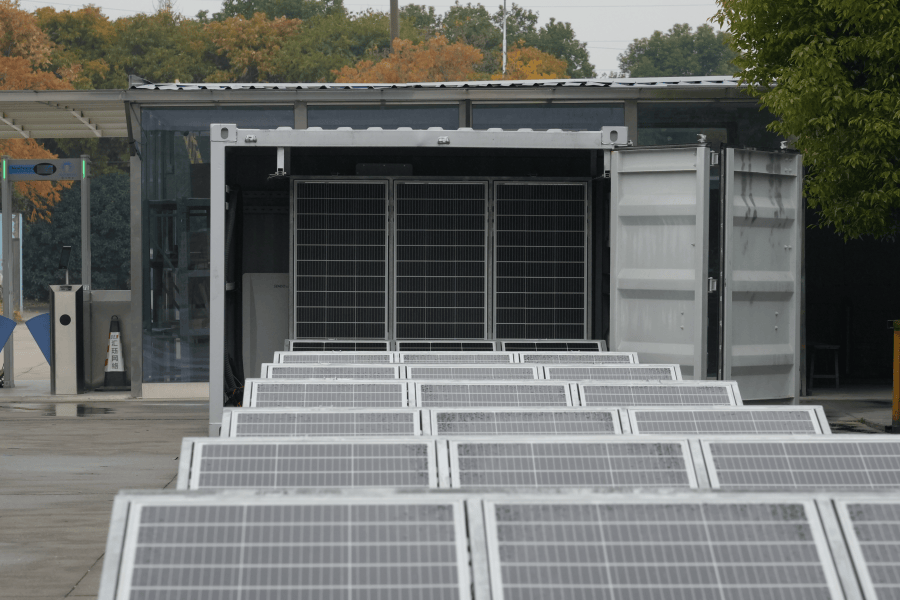
Beyond the Price Tag: The Real ROI of a Black Start Solar Container for Coastal Sites
Hey folks, let's talk about something that doesn't get enough airtime when we discuss energy storage for coastal industrial parks, ports, or island communities. Everyone wants the ROI calculation, the neat spreadsheet. But honestly, I've been on enough project sites from the Gulf Coast to the North Sea to know that the standard ROI model often misses the biggest cost drivers in salty, humid air. It's not just about the cost per kilowatt-hour. It's about what happens when the grid goes down in a storm, and your multi-million dollar facility is looking at days of downtime because your backup system?- quietly corroded from the inside out.
In this article:
- The Hidden Cost of Salt Air: More Than Just Rust
- Black Start Isn't a Luxury, It's a Business Continuity Tool
- Building for the Coast: Where Standards Meet Reality
- The Real ROI Math: A Case from the Field
- Key Questions to Ask Your Supplier
The Hidden Cost of Salt Air: More Than Just Rust
The problem is insidious. It's not the dramatic failure you see coming. According to a NREL report on renewable asset durability, corrosion from salt spray can accelerate component aging by up to 5x compared to inland environments. We're talking about printed circuit boards, busbar connections, relay contacts, and cooling system fins. I've opened up containers where the exterior looked fine C a bit of surface staining C but the internal electrical panels showed advanced creep corrosion. That's a recipe for increased maintenance, unexpected faults, and a severely shortened system lifespan. If your base ROI calculation assumes a 15-year life, but your control boards are failing in 7, your math just fell apart.
Black Start Isn't a Luxury, It's a Business Continuity Tool
This is where the "Black Start Capable" part of our keyword moves from a technical spec to a core financial asset. In a coastal storm event, the main grid is often the first point of failure. A standard grid-following BESS is useless in a blackout - it needs a grid signal to sync. A black-start system is an island. It can boot itself up from zero and energize your critical loads, acting as the seed for your facility's microgrid.
Let's agitate that pain point: What's the cost of one hour of downtime for your processing plant, cold storage, or data center? For many of our industrial clients, it's tens of thousands of dollars per minute. Suddenly, the premium for a true black-start system isn't an expense; it's insurance with a calculable, often staggering, return. The ROI isn't just in energy arbitrage; it's in avoided business catastrophe.

Building for the Coast: Where Standards Meet Reality
So, what does a solution built for this reality look like? It starts with going beyond the checkbox. Yes, UL 9540 and IEC 61439 are table stakes. But for salt-spray, you need to dig into specifics like the corrosion resistance categories in IEEE C57.12.28 or the salt fog testing durations in IEC 60068-2-52. At Highjoule, we've learned that it's a system-wide approach:
- Enclosure & Thermal Management: It's not just about an IP rating. We use pressurized, nitrogen-inerted enclosures with marine-grade coatings (think ASTM B117 salt spray test for 1000+ hours). Our cooling systems are designed with coated, corrosion-resistant coils and sealed air paths to keep the salt-laden air outside. Honestly, a standard air conditioner unit will choke on salt in a few years.
- Component-Level Hardening: Conformal coating on all PCBs, silver-plated or tinned copper busbars, and stainless-steel fastures. This adds upfront cost but slashes your lifetime operational cost - the key to a positive LCOE (Levelized Cost of Energy) in harsh environments.
- Black Start Architecture: This requires a specific system design: a dedicated uninterruptible power supply (UPS) for the control systems, sequenced load-shedding capabilities, and robust switching gear that can handle inrush currents when re-energizing a dead facility. The C-rate of the battery matters here for that initial surge power.
The Real ROI Math: A Case from the Field
Let me give you a real, anonymized example from a fish processing plant in Northern Europe. Their challenge: frequent grid instability, salty air, and a need to keep freezers at -25C to prevent millions in inventory loss.
Challenge: They evaluated a standard containerized BESS. The projected ROI from peak shaving was good - about a 6-year payback. But it didn't account for the accelerated corrosion risk or provide black-start capability.
Our Solution: We deployed a hardened, black-start capable solar container. The upfront cost was 22% higher.
The ROI Shift: In year 3, a major storm took down the regional grid for 14 hours. Our system black-started, powered the critical freezer load and essential processing lines for the full duration. The plant manager later estimated avoided loss at over ?850,000. That single event covered the entire system premium. The extended lifespan projection (20 years vs. the standard 12-15 in that environment) further improved the long-term financial model. The ROI was transformed from simple energy savings to asset preservation and business continuity.
Key Questions to Ask Your Supplier
When you're evaluating a ROI Analysis of a Black Start Capable Solar Container for Coastal Salt-spray Environments, move past the brochure. Get specific:
- "Can you show me the salt spray corrosion test certification for the enclosure and internal components?"
- "Walk me through the step-by-step black start sequence for my specific critical load list."
- "What is the expected degradation rate of the battery in a C5 (highly corrosive) environment, and how is that factored into your performance warranty?"
- "Do you have local service technicians trained to maintain systems in corrosive environments?" (This is where Highjoule's local deployment hubs make a tangible difference.)
The bottom line? In a coastal environment, the cheapest system is often the most expensive one over its life. The true ROI comes from a system engineered for the harsh reality on the ground, designed not just to save money on your energy bill, but to protect the much larger business it supports. What's the potential cost of not having that resilience for your operation?
Tags: UL Standard BESS Black Start Salt-Spray Corrosion ROI Analysis Energy Resilience Coastal Microgrid
Author
James Zhang
20+ years agricultural energy storage engineer / Highjoule CTO