
ROI Analysis of Grid-forming Off-grid Solar Generators for Construction Sites
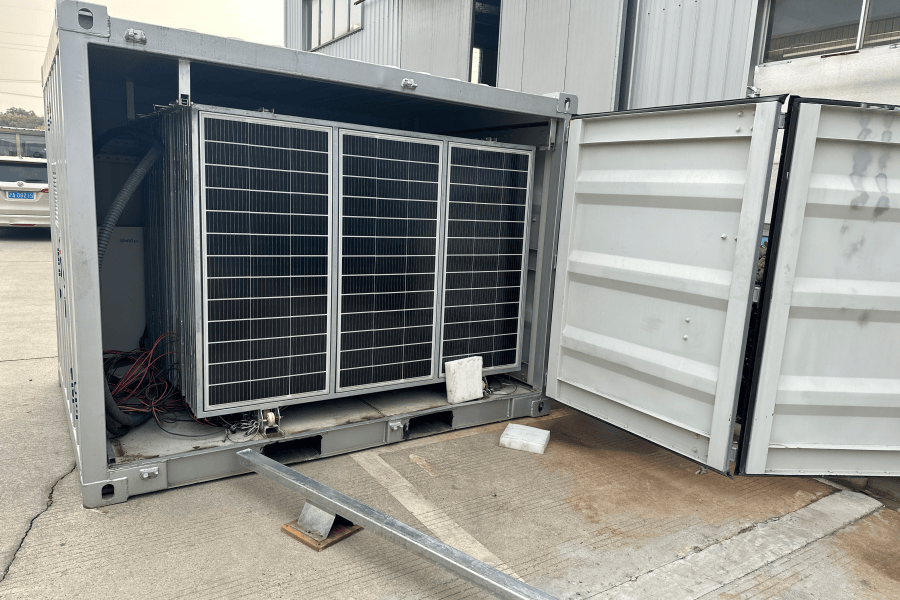
Table of Contents
- The Diesel Hangover (And Why It's Killing Your Budget)
- The Hidden Costs Nobody Talks About
- A Smarter Way to Power Up: The Grid-Forming Off-Grid Generator
- Cracking the ROI Code: Real Numbers
- The Tech That Makes It Work (Not Just Talk)
- Beyond the Spreadsheet: Real-World Proof
- Your Next Move
The Diesel Hangover (And Why It's Killing Your Budget)
Let's be honest. If you're managing a construction site in the US or Europe right now, your relationship with diesel generators is probably... complicated. You rely on them, but you don't like them. The noise, the smell, the constant refueling runs, the rising fuel bills that seem to have a mind of their own. According to the International Energy Agency (IEA), diesel prices for industrial use have seen volatility of over 40% in some regions the past few years. That's not a cost line item; that's a gamble.
But the bigger problem, the one I've seen firsthand on sites from Texas to North Rhine-Westphalia, isn't just the price at the pump. It's the total operational drag. You're not just paying for diesel. You're paying for the truck and driver to deliver it. You're paying for the downtime when the tank runs dry mid-pour. You're paying for the noise permits and the community complaints that can grind a project to a halt. And if you're waiting for a permanent grid connection? That timeline is often out of your control, delaying revenue by weeks or months.
The Hidden Costs Nobody Talks About
This is where the real agitation starts. We fixate on fuel cost per gallon, but let's agitate the real pain points:
- Carbon Compliance & ESG Goals: More and more municipalities, and frankly, your own corporate board, are setting hard targets. That diesel genset is a carbon and NOx machine working directly against those goals. The fines and the reputational hit are becoming tangible costs.
- Grid Connection Delays: In many areas, especially for new industrial or large-scale residential developments, getting that final utility transformer and hook-up can take 6-18 months. Your entire project's ROI is ticking away, but your power isn't.
- Power Quality Issues: Try running sensitive surveying equipment, modern CNC cutters for pre-fab units, or even just consistent site lighting on a shaky diesel generator. Voltage sags and harmonics can damage equipment and create safety hazards.
So the problem isn't just "diesel is expensive." It's that traditional site power is unpredictable, dirty, and operationally sluggish. It actively works against your project's schedule, budget, and social license to operate.
A Smarter Way to Power Up: The Grid-Forming Off-Grid Generator
This is where the conversation gets interesting. The solution isn't just slapping some solar panels next to a diesel gen-set. That's a basic hybrid system. We're talking about a fully integrated, off-grid grid-forming solar generator.
What does that mouthful mean? Simply put, it's a system that combines: 1. A significant solar PV array. 2. A large-scale Battery Energy Storage System (BESS) C the heart of the operation. 3. Advanced grid-forming inverters.
The magic is in the "grid-forming" part. Unlike traditional grid-following inverters that need an existing grid signal to sync to, these inverters create a stable, clean, and robust mini-grid from scratch. They act as the brain and the backbone, seamlessly blending solar generation, battery storage, and yes, even a diesel genset as a last-resort backup, into a single, rock-solid power source for your entire site.
At Highjoule, when we design these systems, we start with one question: "How do we make this site forget it's off-grid?" The answer is in the engineering C using UL 9540 and IEC 62933 certified BESS containers with grid-forming capabilities baked in from the start.
Cracking the ROI Code: Real Numbers
Alright, let's talk ROI. This is where clients' eyes either glaze over or light up. Let's aim for the latter.
The standard ROI calculation for a construction site power system looks at Capital Expenditure (CapEx) vs. Operational Expenditure (OpEx). A diesel genset has low CapEx but cripplingly high OpEx. The grid-forming solar+BESS solution has a higher upfront CapEx but dramatically lower OpEx.
Here's a simplified breakdown of where the savings stack up:
| Cost/Saving Factor | Traditional Diesel Genset | Grid-Forming Solar + BESS |
|---|---|---|
| Fuel Costs | Very High & Volatile | Reduced by 70-90% (genset as backup only) |
| Fuel Logistics & Theft | Ongoing cost & risk | Negligible |
| Maintenance | Frequent engine servicing | Primarily low-touch BESS monitoring |
| Noise/Fines/Permits | Significant | Minimal (near-silent operation) |
| Carbon Tax/ESG Risk | Increasing liability | Asset that meets ESG targets |
The real kicker? Asset Redeployment. Once your site is connected to the main grid, you don't have a bunch of used, depreciated diesel generators. You have a mobile, high-value BESS asset. You can physically move the Highjoule container to your next site, lease it to another project, or use it for on-site peak shaving now that the grid is connected. That transforms a cost center into a future revenue-generating asset.
The Tech That Makes It Work (Not Just Talk)
Let's get into some brass tacks, but I'll keep it coffee-chat level. The ROI hinges on the tech's reliability. Three things matter most:
- Grid-Forming Inverters: These are the conductors of the orchestra. They provide the stable voltage and frequency (the "grid signal") that all your site equipment needs. Honestly, this is non-negotiable for off-grid construction power. It's what allows you to run big inductive loads like crane motors right next to sensitive electronics.
- BESS C-rate & Thermal Management: The C-rate is basically how fast you can charge or discharge the battery safely. A construction site has huge, sudden power demands (think: a big welder kicking on). Our systems are designed with a sufficient C-rate to handle those surges without breaking a sweat. And to maintain that for years, the thermal management system (liquid cooling, in our case) is critical. It keeps the battery at its happy temperature, ensuring longevity and safety - something we rigorously test to UL standards.
- Low Levelized Cost of Energy (LCOE): This is the big-picture financial metric. LCOE is the total lifetime cost of your power system divided by the total energy it produces. Solar + BESS has a very low "fuel" cost (sunlight), so over the 15-20 year life of the system, the LCOE crushes diesel. A National Renewable Energy Lab (NREL) study shows solar+storage LCOE becoming competitive with grid power in many cases, let alone diesel.

Beyond the Spreadsheet: Real-World Proof
Let me give you a case from the field. We deployed a system for a logistics warehouse developer in the arid southwest of the US. The permanent grid connection was 9 months out. The traditional bid was for three, large 500kW diesel generators running 24/7 for site prep and early construction.
Our Solution: A 1.2MW solar canopy + two 1MWh Highjoule Grid-Forming BESS containers. A single, smaller 400kW diesel genset was kept on-site as a backup.
The Outcome: In the first 4 months, the diesel genset ran for less than 50 hours total. The project manager told me his fuel delivery costs dropped from a weekly headache to zero. But more importantly, they powered through a minor heatwave without issue - diesel gensets often derate (lose power) in high heat, but our BESS performance remained rock solid. The ROI, factoring in fuel savings, avoided rental costs, and the redeployment value of the BESS, came in at under 3 years. And the site had power from day one, no waiting.
Your Next Move
So, where does this leave you? If you're planning a site where grid power is distant, unreliable, or prohibitively expensive to connect early, the question is no longer "Can renewables work?" The question is, "What's the optimal mix of solar, storage, and backup to minimize my total project risk and cost?"
The ROI analysis for a grid-forming off-grid system is compelling on paper. But its real value is felt on the ground: in the silence of a site meeting held without shouting over generators, in the predictability of your monthly power budget, and in the knowledge that your project isn't held hostage by a fuel truck's schedule or a utility's backlog.
What's the one power-dependent task on your next project that a 12-hour unscheduled outage would completely derail? Let's start the conversation there.
Tags: UL Standard BESS LCOE Europe US Market Construction Power Renewable Energy Off-grid Solar ROI Analysis Grid-forming
Author
James Zhang
20+ years agricultural energy storage engineer / Highjoule CTO