
ROI Analysis of IP54 Outdoor Pre-integrated PV Container for Agricultural Irrigation
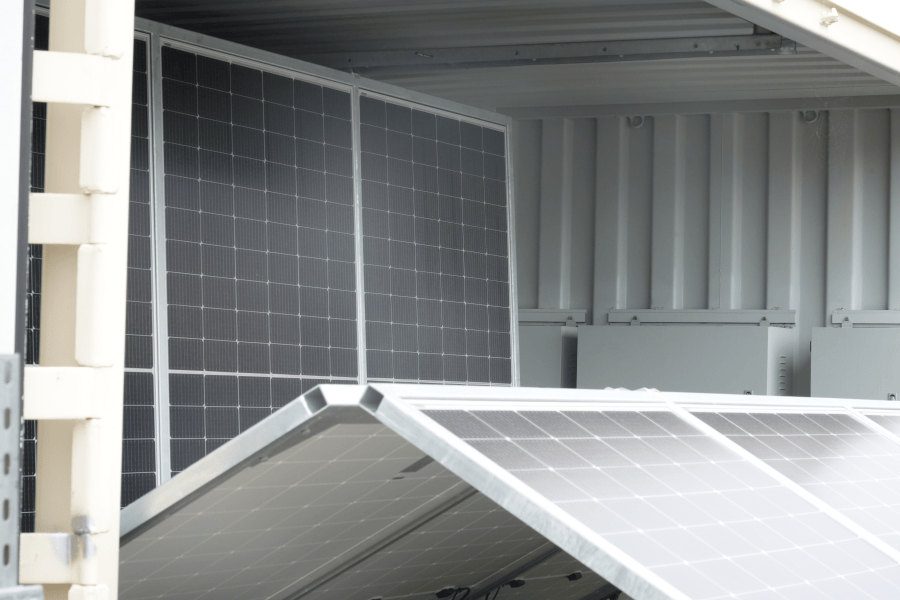
Table of Contents
- The Hidden Cost of "Keeping the Lights On" for Farms
- Why Modular and Pre-Integrated is the Smart Money
- Real Numbers, Real Farms: A Look at the ROI Drivers
- Beyond the Spreadsheet: The Unseen Benefits
- Making It Work: What to Look For in a System
The Hidden Cost of "Keeping the Lights On" for Farms
Hey there. Let's be honest, when you're managing a farm, your mind is on crops, weather, and markets. Energy? It's often just a frustrating line item on the bill, especially when it comes to irrigation. I've been on sites from California's Central Valley to the farmlands of Northern Germany, and the story is surprisingly similar. The pivot needs to run, the pumps need to work, and a power outage during a critical irrigation window isn't just an inconvenience C it's a direct threat to yield and revenue.
The traditional approach? Rely on the grid, maybe with a diesel generator as a noisy, fume-belching backup. But with grid prices becoming more volatile - we've all seen the spikes - and environmental regulations tightening, that model is getting financially and operationally painful. According to the International Energy Agency (IEA), global electricity demand for irrigation is set to grow significantly, putting more strain on both farm budgets and often-aging rural grid infrastructure. The problem isn't just the cost per kilowatt-hour; it's the uncertainty. How do you plan your season when you can't predict your largest operating expense?
Why Modular and Pre-Integrated is the Smart Money
This is where the conversation turns to solar-plus-storage. It's not a new idea, but the way it's being deployed is evolving fast. A decade ago, a solar irrigation project might have involved piecing together panels from one supplier, inverters from another, and a battery system from a third, all requiring custom engineering, a lengthy on-site installation, and a nightmare of compatibility warranties. The soft costs and timeline overruns could kill the ROI before the first drop of water was pumped.
What I've seen work on the ground, and what makes the financial math finally compelling, is the shift to pre-integrated, containerized solutions. Think of it like buying a fully equipped, weatherproof toolbox instead of sourcing each individual screwdriver, wrench, and socket. An IP54-rated outdoor pre-integrated PV container for agricultural irrigation arrives on your site with the solar inverters, battery storage, thermal management, and control systems already mounted, wired, and tested in a single, robust enclosure. This "plug-and-play" approach is a game-changer. It drastically reduces installation time and complexity - we're talking weeks, not months - which directly translates to lower upfront capital outlay and a faster path to savings. Honestly, in this business, time is literally money, and a faster commissioning means you start offsetting grid power sooner.
Real Numbers, Real Farms: A Look at the ROI Drivers
Let's talk about a project we were involved with in Texas, supporting a local integrator. A mid-sized cotton farm was facing steep demand charges and wanted to stabilize irrigation costs. They deployed a pre-integrated container solution similar to our Highjoule Hive-Prime series. The core ROI calculation wasn't just about solar generation; it was about energy arbitrage and demand charge management.
The system charges the batteries with solar during the day. In the afternoon, when grid prices peak and irrigation demand is high, it seamlessly switches to battery power. This alone shaved a significant percentage off their monthly bill. Furthermore, by smoothing out their power draw from the grid, they drastically reduced their peak demand charges - a often-overlooked killer for farms with large pumps. The container's IP54 rating was non-negotiable; this is dusty, outdoor farm equipment, not a data center. It keeps rain, dust, and debris out, ensuring reliability.
When we analyze the Levelized Cost of Energy (LCOE) for such a system - that's the total lifetime cost divided by total energy produced - the pre-integrated approach wins. By minimizing installation costs and maximizing system uptime with robust design, the LCOE becomes very competitive against volatile retail rates. A study by the National Renewable Energy Laboratory (NREL) highlights how standardization and pre-integration are key drivers in reducing BESS costs across commercial and industrial applications.

Beyond the Spreadsheet: The Unseen Benefits
The financial ROI is the headline, but the operational ROI is just as critical. I've seen this firsthand on site. A pre-integrated container with proper thermal management (we use an independent liquid cooling loop for our battery racks) isn't just about safety - though that's paramount, following UL 9540 and IEC 62619 standards. It's about battery life. Keeping cells at an optimal temperature range, especially in hot climates, slows degradation. This means the system delivers its promised cycle life, protecting your long-term investment. You're not buying a battery, you're buying years of reliable kilowatt-hours.
Then there's the C-rate - basically, how fast you can charge or discharge the battery. For irrigation, you need bursts of power to start those big pumps. A system engineered with the right C-rate capability ensures the power is there when you need it, without stressing the battery. A pre-integrated system from a reputable provider is designed holistically, so the battery chemistry, inverter size, and cooling are all matched. You don't get a surprise where the battery can't deliver the punch the pump motor needs.
Finally, there's resilience. With the right setup, your irrigation system can become an island of energy independence during a wider grid outage. That security has a value that's hard to put on a spreadsheet but is incredibly real when you're facing a drought and a blackout.
Making It Work: What to Look For in a System
If you're considering this path, my advice is to look beyond just the sticker price per kilowatt-hour of storage. Scrutinize the engineering. Is the container truly built to an outdoor industrial standard like IP54? Does the design comply with your local codes (UL in North America, IEC/IEEE standards influencing regulations in the EU)? How is thermal management handled? Ask about the system's round-trip efficiency - every percentage point lost is energy you paid for that doesn't go to your pumps.
At Highjoule, our focus has been on building this reliability and ease of deployment into our pre-integrated solutions from the start. We obsess over the thermal design and safety protocols because we know our containers are going to sit in a field for 15+ years. We also provide localized support because a remote monitoring dashboard is great, but sometimes you need a technician who understands local regulations and can be there quickly.
The bottom line? The ROI for an IP54 outdoor pre-integrated PV container in agriculture is stronger than ever, but it hinges on smart, robust engineering that keeps real-world farm conditions front and center. It's not just an energy purchase; it's an upgrade to the operational and financial resilience of your entire operation. So, what's the biggest energy pain point you're facing in your irrigation schedule this season?
Tags: UL Standard BESS LCOE Europe US Market Agricultural Irrigation
Author
James Zhang
20+ years agricultural energy storage engineer / Highjoule CTO