
ROI Analysis of IP54 Outdoor Pre-integrated PV Containers for Reliable Energy
Contents
- The Hidden Cost of the "Custom" Site Build
- When the Data Doesn't Lie: The O&M Drag on ROI
- A Case from California: When "Standard" Wasn't Enough
- Why the "Container" Itself Matters More Than You Think
- Thinking Beyond the Price Tag: The Real ROI Levers
The Hidden Cost of the "Custom" Site Build
Let's be honest. When you're planning a commercial or industrial BESS project here in the US or Europe, the initial focus is almost always on the big-ticket items: the battery racks, the PCS, the EMS. The enclosure? It's often an afterthought, a "we'll figure it out on-site" item. I've seen this firsthand, from Texas solar farms to German industrial parks. The assumption is that a basic ISO container or a custom-built shelter will do, and that's where the ROI calculation starts to leak C literally and figuratively.
The problem isn't just the upfront cost of the steel box. It's the domino effect of a non-optimized enclosure. Every day spent on-site doing custom welding, running conduit, installing HVAC, and fire suppression is a day of labor costs piling up. Every time a component from a different vendor arrives and doesn't fit perfectly, it's a delay. According to the National Renewable Energy Laboratory (NREL), soft costs C which include installation, permitting, and engineering C can still account for a significant portion of total system costs, especially for non-standardized deployments. This "field integration" phase is where budgets bleed and timelines stretch.
When the Data Doesn't Lie: The O&M Drag on ROI
Now, let's agitate that pain point a bit. Say you get the system online. A standard shipping container, even a "modified" one, isn't designed as a sensitive electronics habitat. In Arizona heat or Nordic winters, the internal thermal management system is fighting an uphill battle. I've opened containers where the temperature gradient from top to bottom was 15C, forcing some battery modules to work harder and degrade faster than others. This directly hits your Levelized Cost of Energy (LCOE) C a metric every financial decision-maker cares about.
LCOE isn't just about capital expense; it's about total lifetime output. If poor thermal uniformity knocks even 10-15% off your expected cycle life, your ROI model is shattered. Then there's ingress. Dust, moisture, salt spray C they're silent killers. A compromised IP rating leads to corrosion, ground faults, and unplanned downtime. The International Energy Agency (IEA) consistently highlights reliability as a key barrier to energy storage adoption. This reliability starts with the first line of defense: the container.
A Case from California: When "Standard" Wasn't Enough
Let me give you a real example. A few years back, we were brought into a microgrid project at a remote agricultural processing facility in Central California. The initial installer used a repurposed container. The challenge? Extreme diurnal temperature swings and pervasive alkaline dust. The system's uptime was terrible. The internal cooling was overwhelmed, causing frequent derating. The dust was getting in, coating connections.
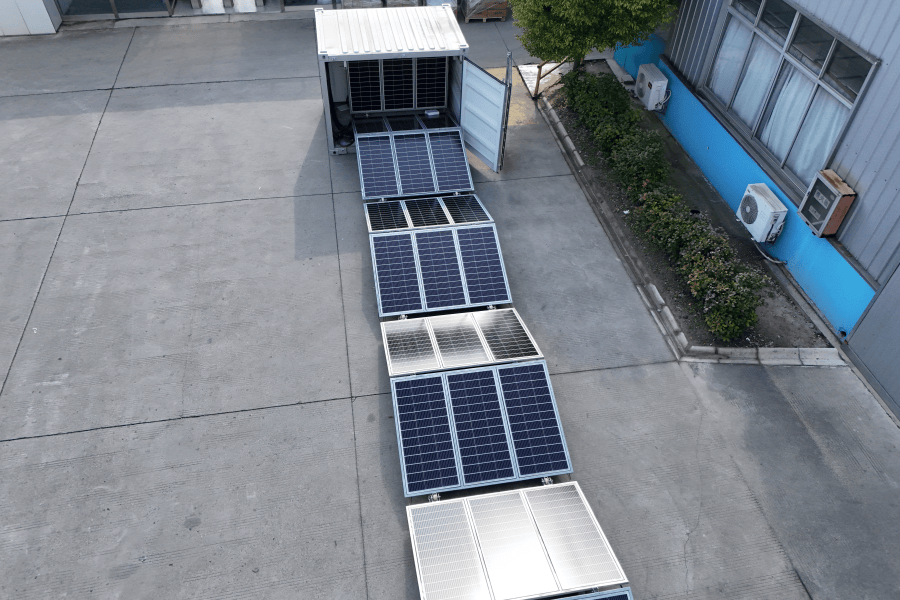
Our team's solution wasn't a magic battery chemistry. It was deploying one of our pre-integrated IP54 outdoor containers. The difference was foundational. The IP54 rating (a step above the common IP23 for basic outdoor gear) was non-negotiable for that environment. The container arrived with the HVAC, fire safety, and electrical busbars already tested as a single unit. Deployment wasn't an installation; it was a placement and connection. We cut weeks off the commissioning timeline. More importantly, the built-in, evenly distributed thermal management kept the internal ambient within a 5C band, which is what the battery cells were designed for. The owner stopped talking about downtime and started talking about expanding capacity.

Why the "Container" Itself Matters More Than You Think
This brings me to the core solution: treating the outdoor container not as a box, but as the critical, performance-defining subsystem it is. A pre-integrated, IP54-rated power unit is the game-changer. Here's my engineer's take on why.
First, Thermal Management. It's not just about having an A/C unit. It's about computational fluid dynamics (CFD) modeling during design to ensure air flows evenly across every battery rack. No hot spots. This lets you safely push the C-rate when you need to for frequency regulation or peak shaving, without worrying about accelerated aging. At Highjoule, we design the container's thermal system in tandem with the battery's specs C they're not separate procurements.
Second, Standards Compliance as a ROI Tool. You might see UL 9540 or IEC 62933 as just regulatory hoops. I see them as a pre-validated safety and performance blueprint. When your container system is certified as a whole, not just its parts, you sail through local Authority Having Jurisdiction (AHJ) approvals. In the US, especially with evolving fire codes, this is huge. It de-risks the project timeline, which is a direct financial benefit. Our pre-integrated units are built to these standards from the ground up, so you're not paying for expensive, post-facto retrofits.
Thinking Beyond the Price Tag: The Real ROI Levers
So, when we talk about ROI Analysis for a solution like this, we have to look beyond the unit's sticker price. The real analysis focuses on:
- Speed to Revenue: How many days faster can you interconnect and start your revenue stream (whether it's arbitrage, capacity payments, or resilience)? A pre-integrated container can shave months off a complex project.
- OPEX Certainty: Predictable performance means predictable maintenance. A sealed, corrosion-resistant environment slashes unscheduled service calls.
- Asset Longevity: Protecting the battery's ideal operating environment is the single biggest thing you can do to ensure it delivers its promised cycle life. This directly improves your LCOE.
- Scalability: Need to expand? With a pre-designed container solution, you're adding a known, replicable unit. It's a CapEx decision, not a new engineering project.
The principles we apply for rugged, remote deployments C like those needed for rural electrification in challenging climates C are the same that deliver superior ROI for a warehouse in Ohio or a factory in Belgium. The environment might be different, but the core need for reliability, safety, and cost predictability is universal.

Honestly, the market is moving past the "build-it-yourself" BESS approach. The future is in engineered, pre-validated power blocks. The right container isn't an expense; it's the chassis that protects your entire investment. So, on your next project model, don't just list "enclosure" as a line item. Model what happens if that line item is engineered to solve problems, not create them. What does that do to your 10-year NPV?
We're curious C what's the single biggest operational headache you've faced with outdoor deployed storage? Is it permitting, thermal issues, or something else entirely?
Tags: UL Standard BESS LCOE Europe US Market Renewable Energy ROI Analysis Outdoor Container
Author
James Zhang
20+ years agricultural energy storage engineer / Highjoule CTO