
Essential Maintenance Checklist for Grid-forming PV Storage in Eco-Resorts
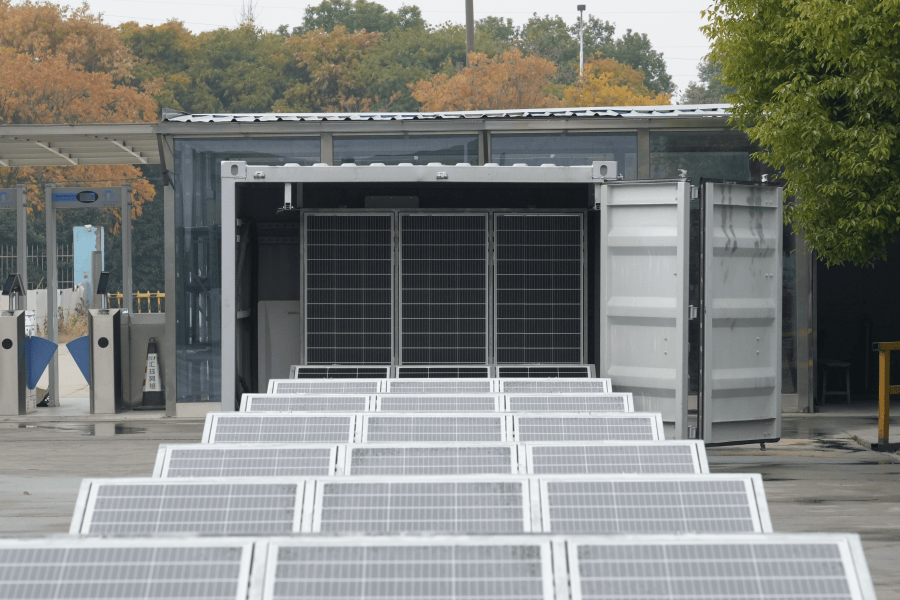
Beyond the Installation: The Real Work Starts with Your Grid-forming BESS Maintenance Checklist
Hey there. Let's be honest for a minute. When we talk about deploying a grid-forming photovoltaic storage system at an eco-resort, the conversation is usually all about the grand vision: energy independence, a pristine carbon footprint, and that powerful marketing story. And that's great. But after 20+ years on sites from California to the Bavarian Alps, I've seen the moment the real work begins. It's not the ribbon-cutting day. It's the quiet Tuesday morning, six months later, when someone needs to open that container door and actually look at the system. That's where the vision either becomes a resilient, profitable asset or starts its slow slide into a costly, unreliable liability.
What We'll Cover
- The Silent Killer of Your BESS Investment
- Why "Set and Forget" is a Multi-Million Dollar Mistake
- Your Actionable Grid-forming BESS Maintenance Framework
- Lessons from a Coastal Retreat in Big Sur
- The Engineer's Notebook: C-rate, Thermal Runaway, and LCOE
The Silent Killer of Your BESS Investment
The core problem I see, especially in remote, beautiful places like eco-resorts, isn't a lack of good hardware. It's the assumption that these systems are appliances. You plug them in, and they just work. A grid-forming BESS is more like the heart of your resort's private energy grid - a complex, living system that needs a pulse check. The pain point isn't immediate failure; it's the gradual decay. A 5% loss in efficiency here, a slight voltage drift there. It compounds. Suddenly, your diesel generator is kicking on more often than you planned, wiping out your financial and environmental savings. Honestly, I've been on sites where irregular thermal management checks led to a consistent 3-4C cell temperature rise, which can accelerate battery aging by as much as 20%. That's years of asset life, gone, because no one was following a disciplined Maintenance Checklist for Grid-forming Photovoltaic Storage System for Eco-resorts.
Why "Set and Forget" is a Multi-Million Dollar Mistake
Let's look at the numbers. The National Renewable Energy Laboratory (NREL) has shown that proactive operations and maintenance (O&M) can improve the levelized cost of storage (a key metric we call LCOE) by up to 25% over the system's lifetime. Flip that around: neglect can make your storage 25% more expensive than it needs to be. For a 1 MWh system, that's a massive chunk of change. Furthermore, the International Electrotechnical Commission (IEC) standards, like IEC 62485 for battery safety, aren't just installation guides - they're the blueprint for ongoing safe operation. In the EU and US, insurance and liability frameworks are increasingly tying coverage to demonstrable adherence to these maintenance protocols. A missing logbook isn't just an oversight; it's a potential legal and financial exposure.
Your Actionable Grid-forming BESS Maintenance Framework
So, what does a practical, no-nonsense maintenance regimen look like? It's not a 100-page manual. It's a focused, actionable checklist that aligns with UL 9540 safety standards and IEEE 1547 grid-interconnection requirements. Here's the core of what we advise our clients at Highjoule Technologies to monitor, broken into key areas:
Weekly & Monthly Checks (Visual & Logging)
- Thermal System Performance: Verify cooling intake/exhaust is unobstructed. Log ambient and internal cabinet temperatures. A 10C rise above spec can double degradation rates.
- DC & AC Connection Integrity: Visual inspection for corrosion, loose terminals, or unusual heating signs (thermal imaging recommended quarterly).
- Grid-forming Controller Status: Confirm no persistent alarm flags in the system log related to voltage/frequency stability.
- Fire Suppression System Readiness: Check pressure gauges and ensure no obstructions around system vents and suppressant nozzles.
Quarterly & Semi-Annual Deep Dives
- Battery Management System (BMS) Data Analysis: Review cell voltage and impedance imbalance trends. Proactive balancing is key.
- Full Functional Test of Islanding & Black Start: This is critical for grid-forming systems. You must verify it can seamlessly disconnect from the grid (if applicable) and re-energize your resort's critical loads on command.
- Torque Check on Critical Busbars: Thermal cycling can loosen connections over time. This is a primary cause of failures I've witnessed.
- Software & Firmware Updates: Apply security patches and performance updates from your vendor. A grid-forming inverter is a sophisticated computer.
This disciplined approach is baked into our Highjoule service packages. We know that for an eco-resort in, say, the Greek islands, you don't have a team of BESS specialists on payroll. That's why our remote monitoring platform flags these checklist items and our local partners can be dispatched for the hands-on work, ensuring everything meets the strictest UL and IEC operational codes.
Lessons from a Coastal Retreat in Big Sur
Let me give you a real example. We deployed a 2 MWh grid-forming system for a high-end, off-grid eco-lodge in California's Big Sur region. The challenge was brutal: salt air, frequent fog, and absolutely zero tolerance for power loss. The system ran flawlessly for the first year. Then, their on-site manager (a hospitality pro, not an engineer) noticed the diesel genset was doing short weekly "exercise" runs, which wasn't in the design.
Our remote monitoring hadn't triggered a major alarm, but our quarterly review of their data showed a subtle but steady increase in the internal DC resistance of one battery string. It was a classic early-warning sign. We dispatched a technician. The checklist led him straight to a slightly corroded connector in a sub-combiner box - a spot vulnerable to the moist, salty air. It was a 30-minute fix. Had it been missed, that resistance would have caused heat, accelerated the corrosion, and likely led to a full string failure during a peak winter storm, forcing the resort onto diesel for days. The maintenance checklist didn't just save a repair bill; it protected their brand promise of uninterrupted, sustainable luxury.

The Engineer's Notebook: C-rate, Thermal Runaway, and LCOE
Let's demystify a few terms you'll hear, because understanding them makes the checklist make more sense.
C-rate: Simply put, it's how fast you charge or discharge the battery. A 1C rate means emptying a full battery in one hour. For grid-forming duty, where you need instant power to stabilize the microgrid, we often design for higher C-rates. But here's the on-site insight: consistently pushing high C-rates without impeccable cooling and monitoring is like revving your car engine 24/7. It causes wear. Your checklist ensures the thermal system can handle the designed C-rate.
Thermal Management: This is the unsung hero. Batteries generate heat. The system's job is to whisk it away evenly. If one cell gets hotter than its neighbors, it ages faster, holds less charge, and becomes the weak link. In a worst-case scenario, this imbalance can lead to thermal runaway - a catastrophic, self-perpetuating fire. Every item on the thermal checklist is a firewall against that risk.
LCOE (Levelized Cost of Energy/Storage): This is your ultimate financial scorecard. It's the total cost of owning and operating the system over its life, divided by the energy it produced. A simple formula: better maintenance = longer life + higher efficiency = lower LCOE. That quarterly BMS data review? That's directly optimizing your LCOE by catching small issues before they become big, expensive ones.
The truth is, the most sophisticated grid-forming BESS in the world is only as good as the care it receives. It's the disciplined, sometimes mundane, follow-through on that maintenance checklist that transforms a capital expense into a resilient, profit-protecting asset. So, what's the one check on your system you haven't done lately?
Tags: UL Standard LCOE Optimization Grid-forming BESS Eco-Resort Energy Battery Maintenance
Author
James Zhang
20+ years agricultural energy storage engineer / Highjoule CTO