
ROI Analysis of LFP (LiFePO4) Off-grid Solar Generator for Telecom Base Stations
Contents
- The Silent Cost of Keeping the Lights On
- Why Your Old ROI Model Misses the Mark
- The LFP (LiFePO4) Advantage: It's Not Just About the Price Tag
- A Real-World ROI Breakdown
- Beyond the Spreadsheet: The Unspoken Value Drivers
- Making the Right Choice for Your Network
The Silent Cost of Keeping the Lights On
Let's be honest. When you're managing a portfolio of remote telecom towers, "reliable power" often translates to one thing: diesel generators. I've been on-site in places from the Arizona desert to rural Scotland, and the story is the same. The roar of the gen-set is the sound of money burning C not just on fuel, but on constant maintenance trips, unexpected failures, and the sheer operational headache of keeping those tanks full. The International Energy Agency (IEA) notes that off-grid and bad-grid sites globally still rely heavily on fossil fuels, creating a significant cost and emissions burden. For a network ops manager, that burden feels very personal at 2 AM when a site goes dark.
The promise of solar + storage is obvious. But here's the real talk I have with clients over coffee: many initial ROI calculations for off-grid solar generators fall short. They focus on the simple capex vs. fuel savings and miss the critical, hard-to-quantify factors that make or break a project over its 10-15 year life. That's where a deep, honest ROI Analysis of LFP (LiFePO4) Off-grid Solar Generator for Telecom Base Stations becomes your most important tool.
Why Your Old ROI Model Misses the Mark
Traditional lead-acid or even some early lithium-ion systems promised savings, but the agitation comes from hidden costs. First, cycle life. A battery that needs replacing every 3-4 years completely reshapes your financial model. Second, thermal management. I've seen containers where poor cooling led to massive efficiency drops and premature aging, something a datasheet spec doesn't always reveal. Third, and most critical, safety and standards. In the US and Europe, you're not just buying a battery; you're buying a system that must comply with UL 9540, IEC 62619, and local fire codes. A cheaper, non-compliant system can lead to astronomical costs in redesign, delays, or even liability.
Honestly, the biggest pain point I see is unpredictability. Diesel is expensive but predictable. A poorly specified storage system fails unpredictably, risking network uptime - your core business. That's not just an opex line item; it's a revenue and reputation killer.
The LFP (LiFePO4) Advantage: It's Not Just About the Price Tag
This is where Lithium Iron Phosphate (LFP) chemistry changes the game, and it's the core of a modern ROI analysis. It's not just about energy density. For off-grid telecom, three LFP traits dominate:
- Longevity: LFP batteries routinely deliver 6000+ cycles to 80% depth of discharge. That translates to a lifespan that can match the solar panels themselves, often 15+ years. This single factor dramatically lowers your Levelized Cost of Energy (LCOE) - the true measure of your system's cost over its lifetime.
- Inherent Safety: The phosphate chemistry is thermally stable. It resists thermal runaway, a crucial risk factor in unattended remote sites. This makes achieving UL and IEC certification a more straightforward and robust process, giving you peace of mind and keeping insurers happy.
- Flexibility: LFP can handle partial state-of-charge operation beautifully and has a wide temperature tolerance. This means less system stress and higher efficiency in real-world, non-ideal conditions.
At Highjoule, when we design an off-grid power system, we start with LFP as the backbone. It's the foundation that makes the financial model work reliably.
A Real-World ROI Breakdown
Let's move beyond theory. I'll share a scaled-down example from a project we completed in Northern Germany for a telecom provider. The challenge was a tower beyond the grid, using diesel with sky-high fuel logistics costs.
The Old Way (Diesel Only):
- Annual Fuel & Maintenance: ?28,000
- CO2 Penalty Costs (rising yearly): ?2,500
- Risk of Outage (fuel delay): High
The New Way (Solar + LFP BESS):
- System Capex (Highjoule integrated solution): ?115,000
- Annual Opex (remote monitoring, minimal maintenance):
- Diesel Generator Use: Reduced to backup only (<5% runtime).
The simple payback was under 5 years. But the real win? Years 6-15, where operational costs are near-zero, and the system is still performing at >80% capacity. The LCOE plummets. The NREL has great tools on this, showing how solar+storage LCOE is now competitive almost everywhere (NREL LCOE page). Our client also future-proofed the site for adding more radio units without needing a new power plant.

Beyond the Spreadsheet: The Unspoken Value Drivers
As an engineer who's done the commissioning, here's what I tell clients to add to their ROI model:
- Resilience as an Asset: A grid-independent site is a revenue-secure site. During regional outages, your tower stays up. How much is that brand reliability worth?
- OpEx Predictability: Locking in 90% of your power cost for 15 years (sunshine is free) is a CFO's dream, especially with volatile energy markets.
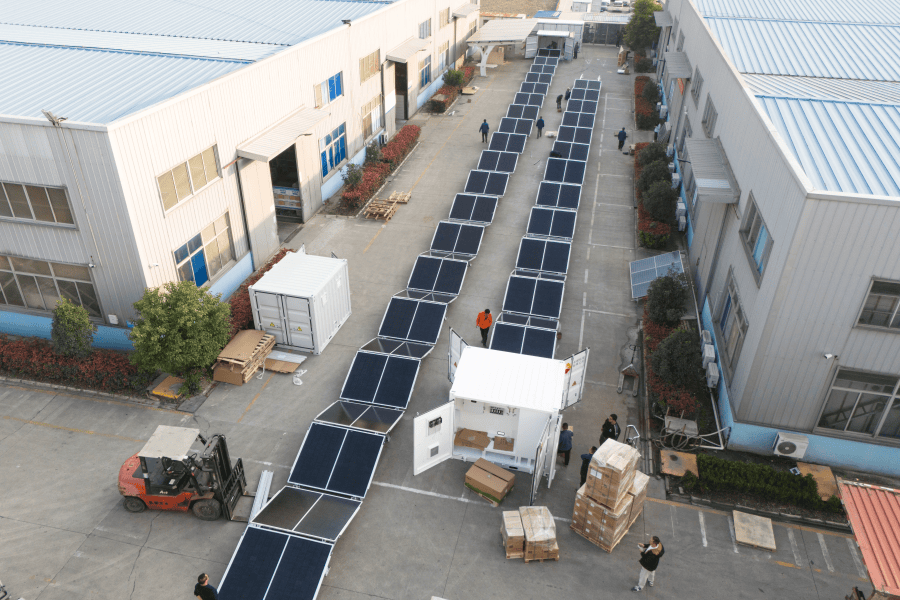
- Deployment Speed & Modularity: Our systems are pre-integrated and containerized. I've seen sites go live in weeks, not months. Time-to-revenue is faster. Need to scale? Add another battery cabinet seamlessly.
- Compliance is Not a Cost, It's a Shield: Using a system like ours, designed from the ground up for UL/IEC standards, avoids the brutal retrofit costs I've witnessed others face. It's built-in, not bolted-on.
Making the Right Choice for Your Network
So, where do you start? Don't just look at the sticker price of a battery module. Demand a full lifecycle analysis. Ask your vendor about their thermal management design (it should be proactive, not passive). Grill them on compliance certifications C ask for the test reports. And most importantly, model your ROI based on real cycle life data and local weather patterns, not ideal lab conditions.
Honestly, the shift to LFP-based off-grid solar isn't just an equipment swap. It's a strategic move from a high-risk, high-opex model to a predictable, sustainable, and ultimately more profitable one. The right ROI analysis will show you that.
What's the single biggest pain point in your remote site power strategy today? Is it fuel cost, reliability, or the headache of maintenance?
Tags: UL Standard BESS LCOE Renewable Energy LFP Battery Off-grid Solar ROI Analysis Telecom Power
Author
James Zhang
20+ years agricultural energy storage engineer / Highjoule CTO