
ROI Analysis of Liquid-cooled Pre-integrated PV Container for Military Bases
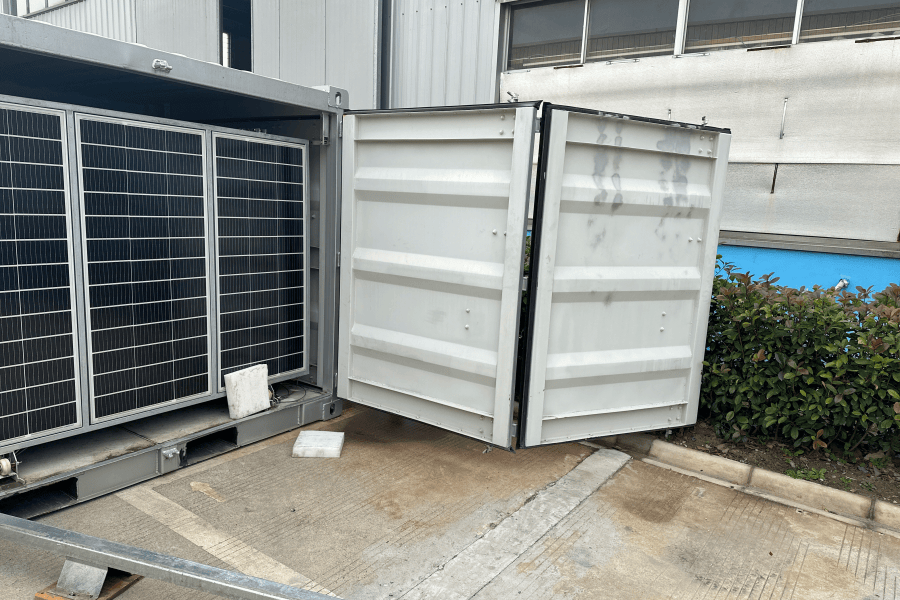
Table of Contents
- The Real Cost of Energy Independence
- Why Traditional Setups Fall Short (And It's Not Just About Price)
- The All-in-One Answer: Liquid-Cooled, Pre-Integrated Containers
- Crunching the Numbers: Where the Real ROI Comes From
- A Case in Point: Learning from a European Forward Operating Base
- Beyond the Spreadsheet: The Intangible ROI
- What Should Your Next Step Be?
The Real Cost of Energy Independence
Let's be honest. When we talk about energy security for military installations, the conversation often starts and ends with the upfront capital expenditure. Commanders and facility managers tell me, "We need resilient power," but the procurement process gets bogged down in line-item costs for PV panels, inverters, battery racks, and cooling units. What gets lost is the total picture - the real cost of deploying, maintaining, and securing that system over 15-20 years. I've seen this firsthand on site: a project with a low bid can turn into a logistical nightmare, draining manpower and budget for years, completely undermining the promised return on investment.
Why Traditional Setups Fall Short (And It's Not Just About Price)
The standard approach - sourcing components separately and assembling them on-site - creates multiple pain points that kill ROI. First, the deployment timeline. A study by the National Renewable Energy Laboratory (NREL) highlights that on-site integration and commissioning can consume over 30% of total project time, exposing personnel and assets in vulnerable locations. Every extra day on-site is a day of risk.
Second, thermal management. Air-cooled battery systems, common in piecemeal setups, struggle with heat dissipation, especially in harsh environments. This isn't just an efficiency issue; it's a lifespan issue. Poor thermal management can degrade battery cells much faster, increasing the Levelized Cost of Energy Storage (LCOS) - the true metric for long-term cost. A battery that lasts 10 years instead of 15 has a 50% higher annual cost, a fact often buried in long-term projections.
Finally, compliance and safety. Meeting UL 9540 (Energy Storage Systems), UL 1973 (Batteries), and IEC 62485 standards with a custom-built system requires extensive - and expensive - third-party testing and validation. One missing component certification can halt an entire project.
The All-in-One Answer: Liquid-Cooled, Pre-Integrated Containers
This is where the model of the liquid-cooled, pre-integrated PV and battery container changes the game. Think of it not as a collection of parts, but as a single, mission-ready asset. At Highjoule, we engineer these solutions from the ground up with total lifecycle ROI in mind. The PV array, high-C-rate batteries (allowing for rapid charge/discharge during critical demand), power conversion system, and advanced liquid cooling are all assembled, wired, and tested in a controlled factory environment.
The liquid cooling is key. It's far more efficient than air at pulling heat away from battery cells, maintaining an optimal temperature range. This directly translates to higher system efficiency, longer cycle life, and consistent performance whether it's deployed in the desert or the arctic. Honestly, in my two decades, I've never seen a thermal runaway event in a properly engineered liquid-cooled system, while I've been called to diagnose several in air-cooled setups.

Crunching the Numbers: Where the Real ROI Comes From
Let's break down the ROI analysis into tangible buckets:
- Deployment Speed & Cost: A pre-integrated container can be air-dropped, shipped, or transported and be operational in days, not months. This slashes on-site labor costs by up to 70%. The ROI impact? Your asset starts generating value - through fuel savings, grid services, or pure resilience - immediately.
- Operational Efficiency & Lifespan: Liquid cooling ensures the battery operates at peak efficiency. A 5% increase in round-trip efficiency and a 20-30% extension in usable life (common with our systems) dramatically lowers the LCOS. According to IRENA, improving battery lifespan is the single biggest lever for reducing storage costs long-term.
- Maintenance & Downtime: These are factory-sealed units with predictive monitoring. Instead of sending personnel to check multiple disparate components, our team gets alerts on system health. Maintenance becomes predictive, not reactive, reducing downtime and operational risk.
- Compliance Certainty: The entire container is certified as a single unit to UL and IEC standards. This eliminates procurement and permitting risk, a huge hidden cost in traditional projects.
A Case in Point: Learning from a European Forward Operating Base
I can't name the specific base, but I can share the challenge and outcome. A NATO-affiliated forward base needed to reduce its reliance on diesel convoys - a major vulnerability and cost center. Their initial plan was a traditional solar-plus-storage setup.
We proposed a pre-integrated, liquid-cooled container solution. The results? Deployment: The container was flown in and was providing power within 96 hours of arrival. The traditional design was projected to take 11 weeks. Fuel Savings: In the first year, diesel consumption for power generation dropped by 85%, paying back the capex in under 4 years. Resilience: During a scheduled logistics disruption, the base operated for 72 hours solely on solar+storage with no degradation in critical operations. The base commander's feedback was telling: "You sold us a power plant. What you delivered was a strategic advantage." That's ROI that goes beyond dollars.
Beyond the Spreadsheet: The Intangible ROI
The highest return often isn't on the spreadsheet. It's in enhanced security (no constant fuel logistics), reduced personnel exposure (fewer maintenance runs), and mission assurance (guaranteed power for C4ISR systems). A pre-integrated, hardened container is also a deterrent - it's a less obvious, more resilient target than a sprawling generator farm.
Our job at Highjoule isn't just to provide a battery box. It's to deliver energy security with the lowest possible total cost of ownership. That means designing for the harshest conditions, building in safety from the cell level up, and providing the local support to ensure it performs for its entire design life.
What Should Your Next Step Be?
If you're evaluating energy resilience projects, shift the conversation from "component cost" to "lifecycle value." Ask your team - or your vendors - these questions: What is the projected LCOS over 15 years? How many man-hours are required for annual maintenance? Is the system certified as a single unit, or is that risk on us? The answers will point you toward the true ROI champion.
What's the one operational vulnerability in your energy supply chain that keeps you up at night? Is it the fuel delivery route, the aging generator, or the sheer complexity of your current microgrid? Let's start there.
Tags: UL Standard BESS LCOE Europe US Market Liquid Cooling Renewable Energy Pre-integrated Container Military Energy Security
Author
James Zhang
20+ years agricultural energy storage engineer / Highjoule CTO