
ROI Analysis of Rapid Deployment Photovoltaic Storage for Eco-Resorts
Contents
- The Silent Cost of "Green" Hospitality
- Why Traditional ROI Calculations Stumble on Site
- The Rapid Deployment Advantage: More Than Just Speed
- Breaking Down Real ROI: The Numbers Behind the Container
- A Tale from the Field: California Coastal Retreat
- The Expert Corner: C-Rate, Thermal Runaway, and Your Wallet
- Beyond the Spreadsheet: The Intangible Returns
The Silent Cost of "Green" Hospitality
Let's be honest. If you're running an eco-resort, you're not just selling a bed for the night. You're selling an experience, a promise of sustainability and harmony with the environment. Your guests expect it. But here's the quiet problem I've seen firsthand from the Caribbean to the Alps: that promise gets incredibly expensive when the sun goes down or the grid gets shaky. Your beautiful photovoltaic array sleeps, and you're left buying power at peak rates, or worse, listening to the roar of a diesel generator that completely undermines your brand's core message. The financial and reputational friction here is real.
Why Traditional ROI Calculations Stumble on Site
The classic ROI model for a solar-plus-storage system often looks great on paper. But on the ground, assumptions crumble. Long, disruptive construction periods eat into your short seasonal revenue windows. Complex, one-off system integration turns into a nightmare of delays and change orders. I've sat with frustrated owners in California and Germany who were sold on a 5-year payback, only to watch it stretch to 8 or 9 because of "unforeseen" commissioning issues and soft costs that ballooned.
The real aggravation? Many of these systems aren't built for the resort's actual load profile. They're oversized for marketing specs or undersized to hit a price point, leading to poor battery health and degraded performance in just a few years. According to the National Renewable Energy Lab (NREL), improper system sizing and cycling can reduce a battery's useful life by up to 30% - a direct hit to your ROI that no one talks about at the signing table.
The Rapid Deployment Advantage: More Than Just Speed
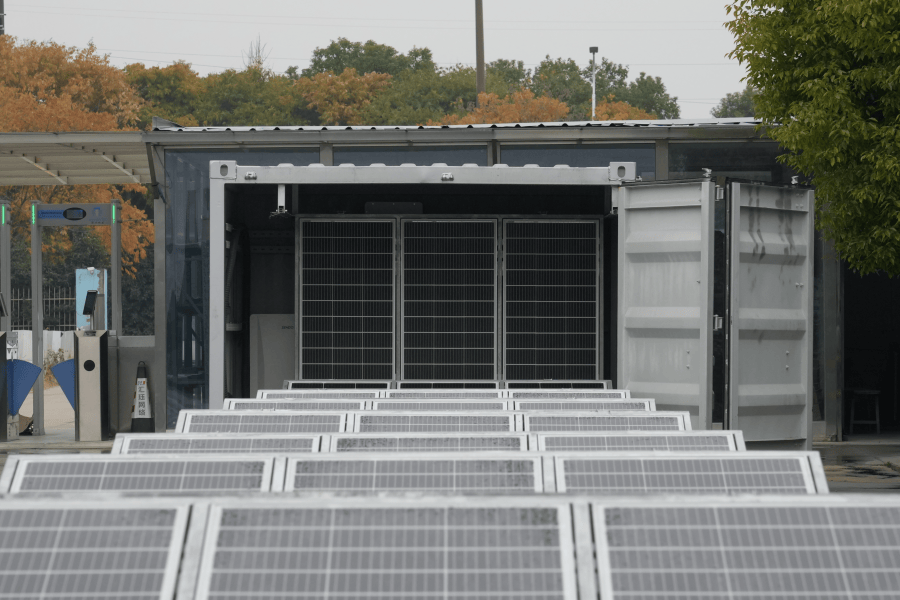
This is where the logic for a Rapid Deployment Photovoltaic Storage System gets compelling. We're not talking about just slapping things together faster. It's a fundamentally different approach. Think of it as a pre-engineered, pre-tested power plant in a container. All the core components - the battery racks, the thermal management system, the power conversion systems - are integrated and factory-tested against rigorous standards like UL 9540 and IEC 62933 before it ever arrives at your resort.
The ROI impact of this is profound. Site work shifts from a complex electrical construction project to a simpler placement and connection exercise. What used to take 6-8 months of on-site integration can be reduced to 8-10 weeks. That means you start saving on your energy bills in the same season you made the decision. For a seasonal business, this acceleration of the savings curve is everything.
Breaking Down Real ROI: The Numbers Behind the Container
So, let's move beyond theory. A robust ROI Analysis of a Rapid Deployment Photovoltaic Storage System for Eco-resorts must look at these concrete factors:
- Capital Expenditure (CapEx) Re-allocation: Yes, the unit cost might be comparable. But the certainty is the value. Fixed-price delivery eliminates integration risk. The saved engineering and construction management hours can be massive.
- Operational Expenditure (OpEx) Attack:
- Demand Charge Reduction: This is the big one for resorts with spas, pools, and AC. The system can be programmed to discharge precisely to shave those peak grid draws, often the largest line item on a commercial utility bill.
- Time-of-Use Arbitrage: Store cheap solar or off-peak grid power, use it during expensive peak periods.
- Fuel & Maintenance Savings: The direct replacement of diesel genset run-hours for backup power.
- Revenue Protection & Enhancement: Zero-downtime power during outages means no lost bookings or negative reviews. Furthermore, that "100% renewable-powered villa" story becomes a 24/7 reality, allowing for premium marketing and guest packages.
A Tale from the Field: California Coastal Retreat
I want to share a project that really cemented this for me. A high-end eco-lodge on the Big Sur coast was facing two issues: extreme peak demand charges from Pacific Gas & Electric and an unreliable grid that threatened their operations during fire-season outages.
They evaluated a traditional stick-built BESS. The timeline was prohibitive, and the site work (foundations, separate equipment shelters) was complex on their rugged terrain. We proposed a rapid-deployment, UL 9540-certified containerized system from Highjoule.
The unit arrived with our local partner, was placed on a simple prepared pad, and was connected. The commissioning was straightforward because we'd already done 95% of it in our factory. Within 72 hours of grid connection, it was actively managing their peak load. The result? A 40% reduction in their monthly demand charges from day one, and they now have 10 hours of full backup power. Their payback period, based on hard utility savings alone, is projected at 4.2 years. The owner told me last month, "The peace of mind is worth as much as the savings."

The Expert Corner: C-Rate, Thermal Runaway, and Your Wallet
Let's get technical for a minute, but I'll keep it in plain English. Two specs in your system's datasheet directly dictate your long-term ROI: C-Rate and Thermal Management.
The C-Rate is basically how fast you can charge or discharge the battery. A system with a higher discharge C-Rate can deliver more power instantly - perfect for knocking down those sudden demand peaks. But here's the catch: consistently pushing a battery at its max C-Rate stresses it, like always redlining your car's engine. It wears out faster. A quality rapid-deployment system, like ours at Highjoule, is engineered with a conservative, real-world C-Rate that ensures the battery cells last for their full cycle life, protecting your investment.
Thermal management is even more critical. Heat is the enemy of batteries. Poor cooling leads to accelerated degradation and, in worst-case scenarios, thermal runaway - a fire. Our systems use an active liquid cooling system that's been torture-tested. It keeps every cell within a tight, optimal temperature range no matter the outside climate. Honestly, I've opened service hatches on 5-year-old systems with this tech, and the cell consistency looks like new. That's how you achieve a low Levelized Cost of Storage (LCOS), the true measure of your cost per kWh over the system's entire life.
Beyond the Spreadsheet: The Intangible Returns
Finally, any good ROI Analysis must account for what you can't easily put in a spreadsheet. What's the value of your brand's integrity when you can truly claim to be off-fossil-fuels? What's the value of resilience when a storm takes out the regional grid and your resort remains a beacon of light and comfort? For your guests, that's not an operational detail - it's the core of their experience. For you, it's the ultimate return on your commitment to sustainability.
The question isn't really if you can afford a storage system. It's whether you can afford the continued friction of unpredictable costs and an unstable power supply. So, what's the one peak cost or operational risk that keeps you up at night? Maybe it's time we model that specific scenario.
Tags: UL Standard BESS LCOE Rapid Deployment Photovoltaic Storage Eco-Resort ROI
Author
James Zhang
20+ years agricultural energy storage engineer / Highjoule CTO