
How Tier 1 Pre-Integrated PV & BESS Containers Solve Grid-Scale Storage Challenges
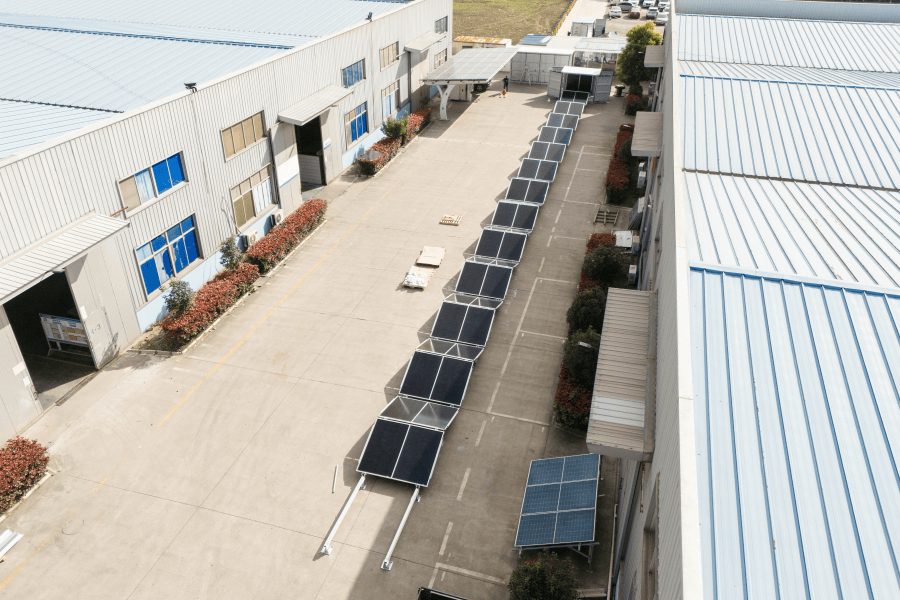
Table of Contents
- The Grid's New Puzzle: More Renewables, More Problems
- Why This Hurts: The Real Cost of "Making It Work On-Site"
- A Smarter Way Forward: The Pre-Integrated Powerhouse
- Case in Point: A 20MW/80MWh Story in the American Southwest
- The Tech That Makes It Work (Without the Jargon Overload)
- What This Means for Your Next RFP
The Grid's New Puzzle: More Renewables, More Problems
Hey there. If you're reading this, you're likely wrestling with the same challenge I see utility managers and project developers face every week: how to reliably and cost-effectively store gigawatt-hours of renewable energy. The goal is clear C balance the grid, provide resilience, and integrate that ever-growing solar and wind capacity. But honestly, the traditional path to getting a battery energy storage system (BESS) online? It's become a bit of a headache.
The industry standard, for a while, has been a kind of "Lego-block" approach. You source Tier 1 battery cells (a must for bankability), then you source the power conversion system (PCS), the thermal management unit, the fire suppression, the container, and the energy management software from a handful of different vendors. Then you ship it all to a site, often in the middle of nowhere, and hope your integration team can make it all sing in harmony. I've been on those sites. In the Texas heat and the German winter. You see the delays, the finger-pointing between suppliers, and the commissioning timelines stretching out.
Why This Hurts: The Real Cost of "Making It Work On-Site"
Let's agitate that pain point a little, because the financial and operational impact is real. This multi-vendor, field-integration model hits you in three key areas:
- Capital Costs (CapEx) Creep: You're managing multiple procurement contracts, logistics for disparate components, and financing becomes more complex. The National Renewable Energy Laboratory (NREL) has shown that balance-of-system (BOS) and soft costs can make up over 50% of a utility-scale BESS project's total cost. Every extra day of on-site labor eats into your budget.
- Safety & Compliance Risk: This is the big one. When systems from different manufacturers are cobbled together on-site, who owns the ultimate safety certification? A thermal runaway event doesn't care if the battery management system (BMS) was from Company A and the HVAC from Company B. Utilities in North America and Europe are under immense pressure to meet UL 9540 and IEC 62933 standards. A field-integrated system is a harder, riskier path to certification.
- Operational Uncertainty (OpEx): When something goes wrong post-commissioning, you get a support call chain that can look like a game of telephone. The O&M team is troubleshooting across multiple vendor interfaces. This complexity directly threatens your levelized cost of energy storage (LCOES) C the metric that ultimately determines if your project makes money.
I've seen this firsthand on site: a project delayed by six weeks because the communication protocol between the BMS and the PCS needed a custom firmware patch, and the two vendors were... let's say, not prioritizing each other.
A Smarter Way Forward: The Pre-Integrated Powerhouse
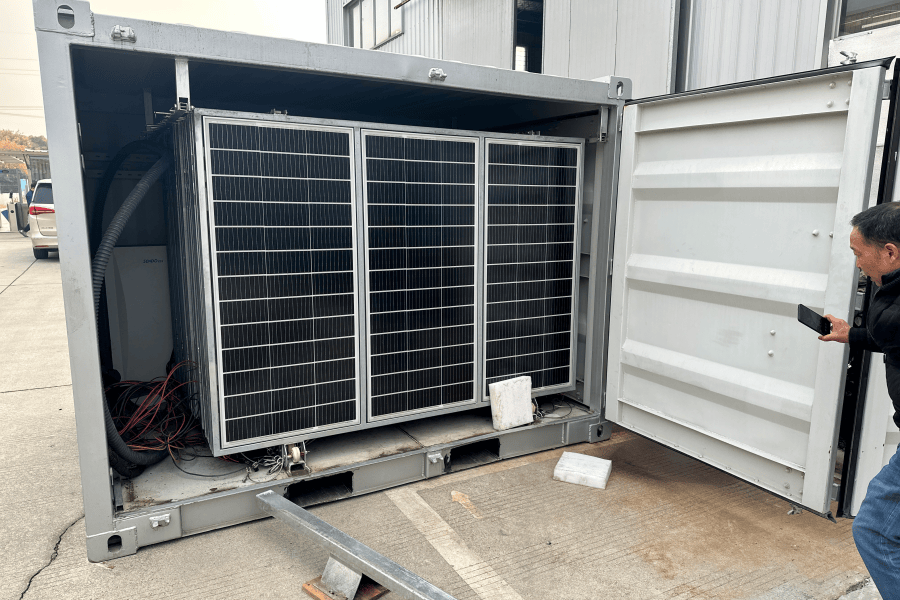
So, what's the solution we've been moving towards at Highjoule? It's the logical evolution: the Tier 1 battery cell pre-integrated PV container. Think of it not as a box of parts, but as a fully-tested, fully-certified "power plant in a box" that includes not just storage, but often the solar inverters and controllers too, ready for DC-coupled or AC-coupled PV.
The core idea is simple but powerful. We take the highest-quality, bankable Tier 1 cells (the heart of the system) and we marry them to the PCS, the liquid cooling or advanced air-cooling system, the fire safety, and the master controller under one roof, in our factory. This unit undergoes thousands of hours of cycle testing and validation as a complete system. Then, it's shipped to your site. Your job shifts from systems integration general contractor to plug-and-play installer.

Case in Point: A 20MW/80MWh Story in the American Southwest
Let me give you a real-world example, though I'll keep the client name confidential. A public utility in the Southwest US needed to add 80 MWh of storage to stabilize a grid corridor with high solar penetration. Their RFP demanded UL 9540 certification, a 20-year performance warranty, and an aggressive 10-month "from contract to commercial operation" timeline C a timeline that ruled out traditional field integration.
The challenge was the desert environment: huge daily temperature swings from 40C (104F) days to near-freezing nights. Consistent thermal management was non-negotiable for cycle life and safety. The solution was eight of our 2.5MW/10MWh pre-integrated containers, each with:
- Tier 1 LFP cells (the chemistry of choice for utility-scale due to safety and longevity).
- A factory-integrated, precision liquid cooling system with 100% redundancy.
- A unified controller managing both the BESS and the DC-coupled PV input.
- Full UL 9540 and UL 9540A certification for the entire assembly.
Because the units arrived as tested systems, the civil work (pads, conduit) and electrical interconnection became the critical path. Commissioning was a matter of system-level checks, not component-level debugging. The project achieved commercial operation in 9.5 months. The utility's project manager told me the single-point warranty and support from Highjoule was a "deal-clincher" for their board.
The Tech That Makes It Work (Without the Jargon Overload)
You don't need to be an electrochemist to get why this works. Let's break down two key terms:
C-rate: Simply put, it's how fast you charge or discharge the battery. A 1C rate means emptying a full battery in one hour. For grid services like frequency regulation, you need high C-rates (like 2C or 4C). Pre-integration allows us to perfectly match the cell chemistry, the cooling capacity, and the power electronics to deliver that high C-rate sustainably, without overheating. We design the system holistically for its duty cycle.
Thermal Management: This is the unsung hero. Batteries age faster when they're hot or have hot spots. In our factory, we can test the entire cooling loop - from the cell contact to the chiller - under load. We know exactly how it will perform in Arizona or Alberta before it leaves the dock. This precision is almost impossible to achieve with field-assembled components.
This holistic design is what drives down the LCOE (Levelized Cost of Energy). Higher efficiency, longer lifespan, lower O&M costs - all baked in from the start.
What This Means for Your Next RFP
The shift to pre-integrated, containerized solutions isn't just a tech trend; it's a risk mitigation and financial optimization strategy. When you're drafting your next utility-scale storage RFP, consider specifying "factory-integrated, pre-tested BESS units with Tier 1 cells and full UL/IEC system certification."
You'll change the game. You'll be evaluating vendors not just on cell cost per kWh, but on their system-level performance, safety pedigree, and their ability to be a true long-term partner for the 20-year life of the asset. At Highjoule, that's the conversation we prefer to have over coffee. It's less about selling you a container and more about ensuring your grid stability project is a definitive success, on time and on budget.
So, what's the biggest bottleneck you're anticipating in your next grid storage deployment? Is it the interconnection queue, the permitting, or the fear of integration hell? Let's talk shop.
Tags: UL Standard BESS Tier 1 Battery Cells PV Integration Utility-scale Storage
Author
James Zhang
20+ years agricultural energy storage engineer / Highjoule CTO