
1MWh All-in-One Solar Storage: The Streamlined Solution for US & EU Grid Challenges
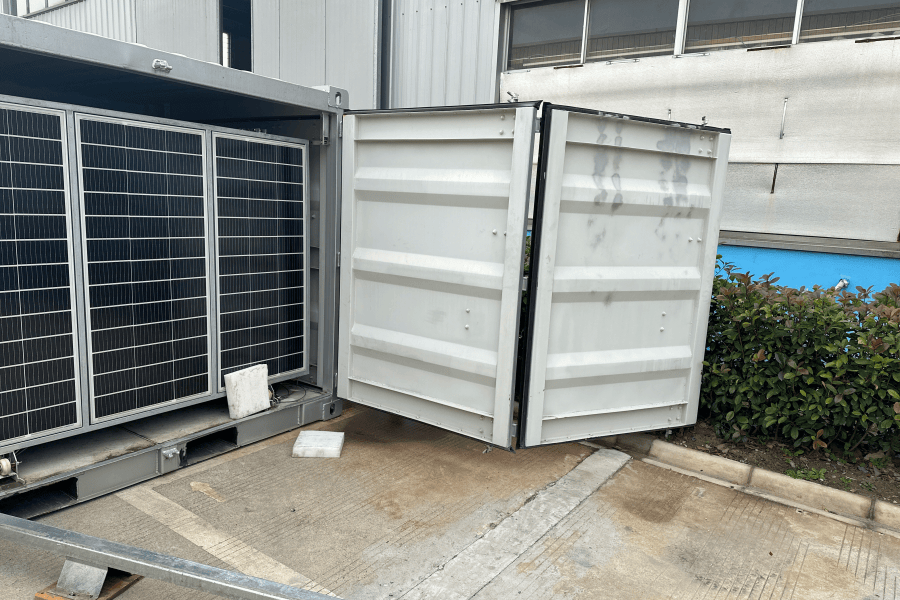
Table of Contents
- The Grid Balancing Act: A Universal Problem
- Why "On-Paper" Projects Stall in the Real World
- The Streamlined Answer: Learning from Off-Grid Success
- A Closer Look: What "All-in-One" Really Means for Your Bottom Line
- Beyond the Box: Making it Work in Your Market
The Grid Balancing Act: A Universal Problem
If you're reading this, you're likely wrestling with a familiar challenge: how to integrate more renewables reliably without breaking the bank or the grid. In California, it's managing the famous "duck curve." In Germany, it's balancing variable wind output. Honestly, the core problem is the same whether you're in Texas or the Philippines C we need massive, flexible storage capacity, and we need it deployed fast and safely.
The International Energy Agency (IEA) states that to meet net-zero goals, the world needs over 1,200 GW of grid-scale battery storage by 2030. That's a staggering number. But here's the rub I've seen firsthand on site: the path from procurement to a humming, revenue-generating asset is often far more complex and costly than the initial CAPEX suggests.
Why "On-Paper" Projects Stall in the Real World
Let me paint a picture from a project in the US Southwest. A 2MW/4MWh system looked perfect on the financial model. Then came reality: months of separate negotiations for containers, racks, PCS units, and climate systems. Thousands of individual components arrived on 20+ trucks over six weeks. The site looked like a chaotic puzzle, and the integration and commissioning phase? Let's just say it blew the timeline and contingency budget out of the water. The soft costs C engineering, labor, delays C ate into the projected LCOE (Levelized Cost of Energy, basically your lifetime cost per kWh).
This pain is universal. It boils down to three agitations:
- Integration Risk: Mismatched components from different vendors can lead to communication faults, thermal hotspots, and reduced system lifespan.
- Safety & Compliance Quagmire: Getting a custom-assembled system through UL 9540 or IEC 62933 certification is a marathon. Each component needs its own certification, and the assembly as a whole becomes a regulatory gray area.
- Sky-Hidden Soft Costs: On-site labor, extended commissioning, and complex maintenance protocols turn a sleek proposal into a logistical headache.
The Streamlined Answer: Learning from Off-Grid Success
This is where projects like the Step-by-step Installation of All-in-one Integrated 1MWh Solar Storage for Rural Electrification in Philippines are so instructive. In remote areas, you can't afford 20 trucks or months of on-site integration. The solution has to arrive ready to work. This necessity has perfected the "all-in-one" integrated system C a philosophy that solves the very same problems plaguing commercial and industrial deployments in the US and EU.
At Highjoule, we've taken this concept and engineered it for the demands of grid-connected markets. Our 1MWh all-in-one unit isn't just a container with stuff thrown in. It's a pre-engineered, pre-assembled, and pre-tested power plant in a box. Think of it like buying a certified, drivable car versus a warehouse of car parts.

A Closer Look: What "All-in-One" Really Means for Your Bottom Line
Let's get technical for a moment, but I'll keep it in plain English. The value isn't just in putting things in one box; it's in the intelligent integration.
- C-Rate & Thermal Management, Done Right: A battery's C-rate is basically how fast you can charge or discharge it. Mismatching a high C-rate battery with an undersized power conversion system is like putting a sports car engine in a chassis with bicycle brakes. Our all-in-one design ensures the battery cells, thermal management (liquid cooling, in our case), and power electronics are perfectly sized and controlled as one system. This prevents overheating, maximizes cycle life, and ensures you get the full performance you paid for.
- LCOE Killer: The biggest lever on LCOE isn't always cell cost. It's longevity and reliability. A thermally-stable, well-managed system lasts thousands more cycles. Combine that with a 75% reduction in on-site construction and a single UL 9540 certification for the entire unit, and your financial model becomes significantly more attractive C and predictable.
We proved this in a microgrid project in Northern Germany. The client needed frequency regulation and backup for a small manufacturing park. A traditional BESS bid had a 9-month lead time and a complex permitting path. Our all-in-one 1MWh unit was deployed in under 12 weeks from order. Because it arrived as a single UL/IEC-compliant asset, local authorities treated it like a piece of grid equipment, not a construction site, speeding up approval.
Beyond the Box: Making it Work in Your Market
The hardware is half the story. The other half is making it work in your specific context. A solution for the Philippines needs to be robust and simple. For the EU and US, it needs to be compliant and connected.
That's where our approach differs. We don't just ship a box. We provide the digital twin, the grid connection studies, and the local service partnership to ensure your 1MWh asset is an operational success from day one. Our systems are designed from the ground up to meet IEEE 1547 for grid interconnection and have all the necessary cybersecurity protocols built in C non-negotiable for any utility or large commercial buyer today.
So, while the inspiration comes from solving electrification challenges abroad, the application is solving the cost, speed, and safety challenges right here. The question isn't whether we need storage, but how we can deploy it without the traditional headaches. Maybe it's time we applied the lessons of simplicity from remote villages to our own complex grids.
What's the single biggest bottleneck you're facing in your next storage deployment timeline?
Tags: UL Standard BESS LCOE Solar Storage US EU Market
Author
James Zhang
20+ years agricultural energy storage engineer / Highjoule CTO