
Scalable 5MWh BESS ROI: Lessons from Rural Grids for Your Utility Project
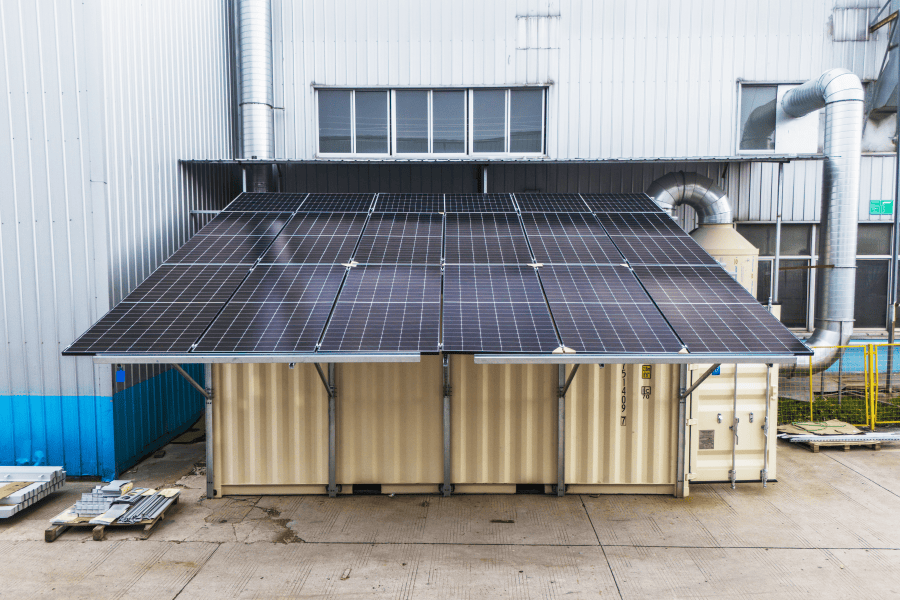
Table of Contents
- The ROI Puzzle: Why Bigger Isn't Always Better, Even in the US or Germany
- The Philippines Case: A Blueprint for Scalable, Profitable Grids
- The Modular Advantage: Future-Proofing Your Capital Investment
- Safety & Standards: The Non-Negotiable Pillars of Positive ROI
- Beyond the Spreadsheet: The Real-World Value of a Resilient Grid
The ROI Puzzle: Why Bigger Isn't Always Better, Even in the US or Germany
Let's be honest. When you're looking at a utility-scale battery storage project, the pressure is on to show a clear, fast return on investment. The board wants numbers, the investors want timelines, and you're stuck navigating a maze of capital expenditure, operational complexities, and ever-shifting market rules. I've sat in those meetings, both in Houston and Hamburg. The common mistake I see? An obsession with sheer size - aiming for the single, massive 100+ MWh system right out of the gate - without fully appreciating the financial and operational risks that come with that "big bang" approach.
The pain point isn't a lack of ambition; it's a lack of flexibility. You're essentially betting millions on a single technology snapshot and a perfect demand forecast for the next 15 years. What happens if load growth is slower? Or if new revenue streams like frequency regulation become more lucrative than you planned? A rigid, monolithic system locks you in. According to the National Renewable Energy Laboratory (NREL), optimizing storage value requires adaptability to multiple grid services, something a one-size-fits-all plant struggles with. The result? Stranded assets, or a ROI timeline that stretches frustratingly into the future.
The Philippines Case: A Blueprint for Scalable, Profitable Grids
Now, you might wonder what a project aimed at Rural Electrification in Philippines has to teach us about grid-edge projects in California or community storage in the EU. Honestly, everything. These off-grid or weak-grid environments are the ultimate stress test for ROI. Every kilowatt-hour is precious, every component must be ultra-reliable, and the system has to pay for itself without the cushion of a massive, interconnected grid.
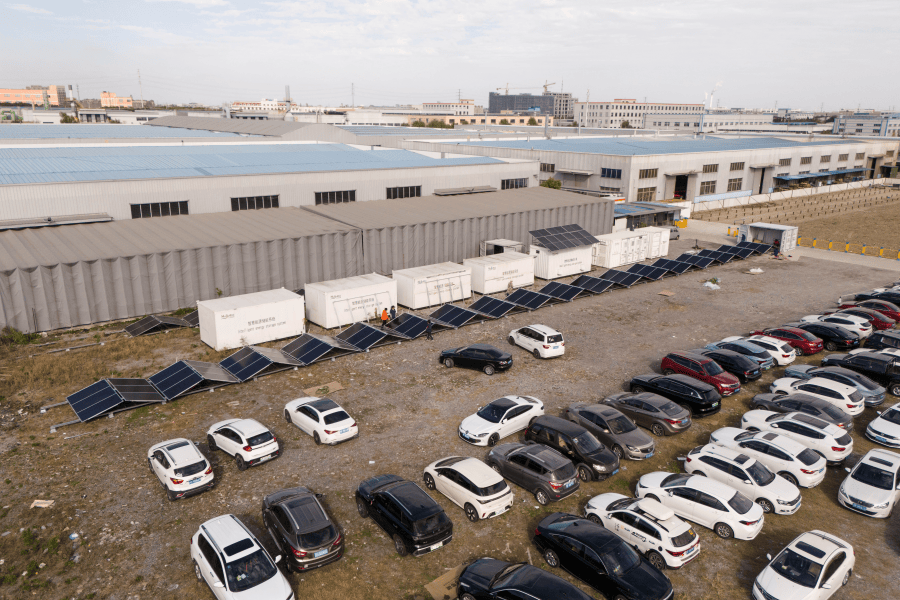
The core insight from analyzing a scalable modular 5MWh Utility-scale BESS in this context is about phased growth. You start with a core 5MWh unit that stabilizes the local mini-grid, integrates solar PV, and displaces expensive diesel generation. The positive cash flow starts immediately. Then, as more households connect or a small factory opens, you add another identical 5MWh modular block. It's like building with LEGO. The initial CapEx is lower and less risky, and you can align additional investment with proven, realized demand - not just projections.
I've seen this firsthand on site. A project in Northern Luzon didn't have to wait for a central government mega-project. They started small, proved the model, and scaled block-by-block. Their ROI wasn't a distant promise; it was a living, growing metric. This logic is directly transferable to, say, a commercial & industrial park in Texas or a wind farm in Scotland looking to firm its output. You deploy a base BESS to handle peak shaving today, and add capacity as you sign on new tenants or as curtailment issues grow.

The Modular Advantage: Future-Proofing Your Capital Investment
This is where the technical rubber meets the financial road. A scalable modular design isn't just about adding more boxes. It's about protecting your Levelized Cost of Storage (LCOS, similar to LCOE for energy). Let's break down two key factors:
- C-rate and Duty Cycles: A system sized for one duty (like solar smoothing) might use a 0.5C rate. But if market signals change and you need to pivot to fast-response frequency regulation (a 1C+ application), a monolithic system not designed for it will degrade rapidly, killing your ROI. A modular system allows you to designate specific blocks for specific, optimized duties. You can even use different battery chemistries in different blocks as tech evolves.
- Thermal Management: This is a huge one for longevity and safety. I've opened up poorly designed containers where hot spots were already degrading cells. A modular design with independent, UL- and IEC-compliant thermal management systems per module isolates risk and ensures each battery block operates at its peak efficiency for its entire lifespan. At Highjoule, we design our modular stacks with this in mind - segregated climate control isn't an add-on, it's baked into the architecture. This directly translates to more cycles over the system's life, which is the ultimate driver of positive ROI.
Safety & Standards: The Non-Negotiable Pillars of Positive ROI
No discussion of ROI is complete without talking about risk mitigation. A fire or major failure doesn't just incur repair costs; it incurs massive reputational damage, insurance premium hikes, and regulatory scrutiny that can stall a project for years. The ROI analysis that ignores safety is fantasy.
This is why the standards we adhere to - UL 9540 for the system, UL 1973 for the batteries, IEC 62933 - aren't just checkboxes for us. They're the foundation of a bankable asset. When we deploy a system, whether in the Philippines or Poland, the core safety philosophy is the same: compartmentalization, continuous gas detection, and passive fire protection at the module level. This gives financiers and insurers confidence, which lowers your cost of capital. That's a direct, positive impact on your NPV that many off-the-shelf solutions can't match.
Beyond the Spreadsheet: The Real-World Value of a Resilient Grid
Finally, let's talk about the ROI you can't always put in a spreadsheet but is increasingly valuable. In Europe and North America, resilience is becoming a premium service. A scalable modular BESS provides that. For a municipality, the ability to keep critical services online during an outage is priceless. For a data center, it's existential.
Look at the approach in Germany's North Rhine-Westphalia region, where industrial parks are deploying modular storage not just for arbitrage, but as a guaranteed backup for critical processes. They started with a base capacity for daily optimization and are now scaling up to provide full "island mode" capability. The modular design meant they could phase this ambitious plan, matching investment to a clear value progression.
The lesson from analyzing these diverse projects is universal. Whether you're electrifying a remote village or reinforcing a suburban feeder, the principles of flexible, phased deployment, unwavering safety, and adaptability to change are what unlock true, durable ROI. So, the next time you're modeling a project's financials, ask yourself: is my design as agile as my business plan needs to be?
What's the single biggest uncertainty in your next storage project's revenue stack? Maybe a modular approach is the hedge you need.
Tags: UL Standard BESS LCOE Renewable Integration ROI Analysis Utility-Scale Energy Storage Grid Stability Modular Design
Author
James Zhang
20+ years agricultural energy storage engineer / Highjoule CTO