
ROI Analysis of Smart BMS Monitored Solar Container for Agricultural Irrigation
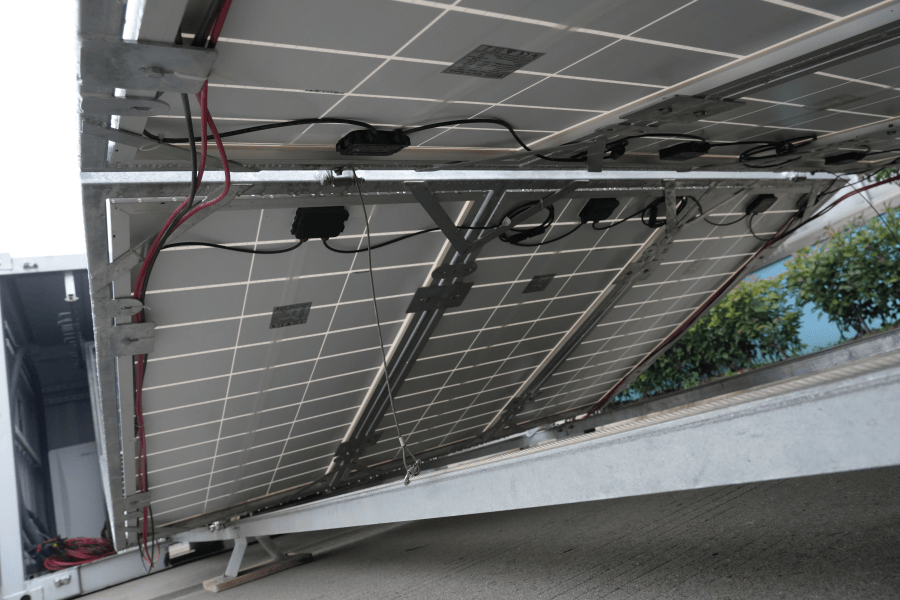
Table of Contents
- The Hidden Cost of "Set and Forget" Solar for Farms
- Data Doesn't Lie: The Efficiency Gap in Agri-Energy
- The Game-Changer: It's All About the Brains, Not Just the Brawn
- Case in Point: A California Vineyard's Transformation
- Decoding the Tech: C-Rate, Thermal Runaway, and Your Bottom Line
- Beyond the Box: The Real ROI is in Long-Term Partnership
The Hidden Cost of "Set and Forget" Solar for Farms
Let's be honest. Over my 20-plus years on sites from Texas to Bavaria, I've seen a common, costly pattern in agricultural solar+storage. A farm invests in a solar container system for irrigation, breathes a sigh of relief at lowering their grid dependence, and then... basically forgets about it. The mindset is, "It's making power, the pumps are running, job done." But here's the painful truth I've witnessed firsthand: that passive approach is silently burning cash and eroding your return on investment. The real problem isn't generating solar energy; it's managing and preserving every single kilowatt-hour you generate, especially when your water pumps need to run at dawn or on a cloudy day. That's where the classic setup falls short, and that's the core problem a smart Battery Management System (BMS) is built to solve.
Data Doesn't Lie: The Efficiency Gap in Agri-Energy
The numbers paint a stark picture. According to the National Renewable Energy Laboratory (NREL), poor system integration and suboptimal battery cycling can slash the usable capacity of a storage system by 20% or more over time. For a farmer, that's like buying a 1000-gallon water tank that slowly shrinks to 800 gallons, but you're still paying for the full size. In irrigation, timing is everything. Missing the optimal irrigation window due to insufficient stored energy can impact yield. A basic system might tell you the battery is "50% full," but a smart BMS tells you exactly how much usable energy that 50% represents after accounting for temperature, age, and discharge rate - critical data for planning your next irrigation cycle. This granular visibility is what transforms a cost center into a strategic asset.
Why This Hurts More in the US and EU
Our markets have unique pressures. Grid interconnection rules (like IEEE 1547 in the US) are getting stricter. Safety standards like UL 9540 and IEC 62619 aren't just checkboxes; they're your insurance policy. A non-compliant or poorly monitored system isn't just a financial risk - it's a liability. I've been called to sites where thermal hotspots were found purely by chance during routine maintenance. That's a gamble no farm owner should take.

The Game-Changer: It's All About the Brains, Not Just the Brawn
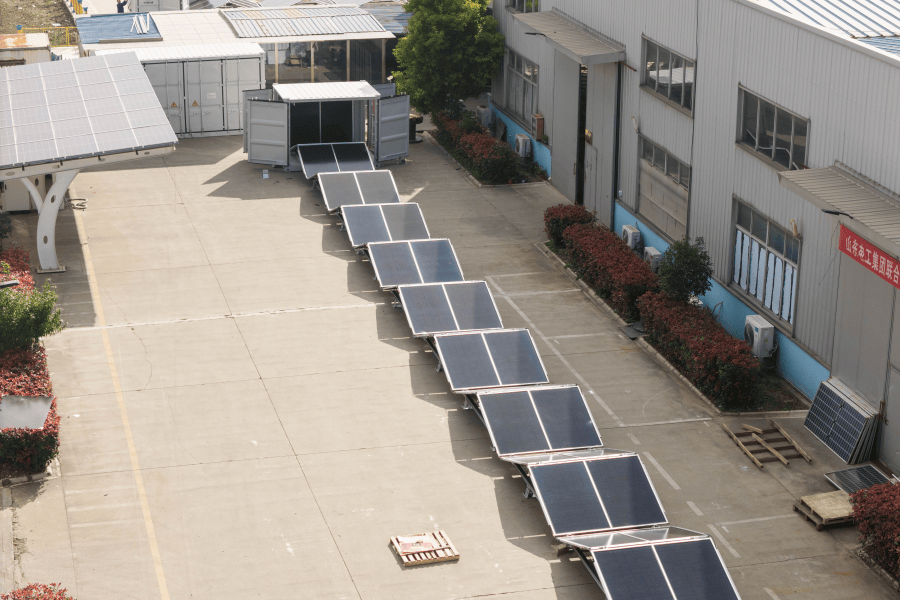
So, what's the solution? It's shifting from a simple solar container to a Smart BMS Monitored Solar Container. Think of it this way: the solar panels and battery packs are the muscles, but the smart BMS is the central nervous system and the brain. It doesn't just prevent overcharge; it actively learns your farm's energy patterns - your peak irrigation times, your seasonal shifts - and optimizes charge/discharge cycles to maximize battery life and energy availability. This isn't theoretical. At Highjoule, when we design a system for, say, a dairy farm in Wisconsin or an almond orchard in Spain, this intelligence is baked in from day one. We're not just selling a container; we're deploying a proactive energy manager.
Case in Point: A California Vineyard's Transformation
Let me share a scenario from a project in Sonoma County. The client had an existing solar setup, but diesel backup usage was still high during critical frost-protection periods in spring. Their challenge was predictability. They never knew for sure if the stored energy would last the entire, critical night.
We deployed one of our UL 9540-certified containerized BESS units with an integrated, cloud-connected Smart BMS. The result? The system didn't just store energy. It analyzed weather forecasts, predicted the energy needed for frost fans, and created a guaranteed reserve. In the first year, it reduced diesel consumption by 92% during those periods. But the real ROI insight came from the BMS data: by maintaining the battery at an optimal 25C (77F) through its active thermal management and avoiding deep discharges, the projected battery lifespan increased from 10 to likely 15 years. That singlehandedly changed the project's entire Levelized Cost of Energy (LCOE) calculation, making the upfront investment far more attractive.
Decoding the Tech: C-Rate, Thermal Management, and Your Bottom Line
I know, terms like C-rate sound like engineer jargon. Let's break it down simply. A battery's C-rate is basically how fast you charge or discharge it. For irrigation, you might need a big burst of power (a high discharge C-rate) to start all your pumps at once. A cheap battery might do it, but it degrades quickly under that stress. A smart BMS manages that surge intelligently, protecting the battery. Thermal Management is even more critical. Batteries hate extreme heat or cold. Every 10C above room temperature can halve battery life. Our systems have climate control that's as sophisticated as a data center's, because that's what's inside - critical data in the form of stored energy.
Honestly, this is where many container solutions cut corners. They pack cells into a box without proper zoning or cooling. On-site, I've opened up competitor units and felt significant temperature gradients from one battery rack to another. That inconsistency is a killer for long-term ROI. Our design, compliant with both UL and IEC standards, ensures uniform temperature, which means uniform aging and predictable performance.
Beyond the Box: The Real ROI is in Long-Term Partnership
The ultimate value of a smart monitored system isn't just in the hardware you install on day one. It's in the continuous optimization. We provide our clients with a dashboard that shows more than just "battery full." It shows cycle life degradation, insulation resistance, cell voltage balance, and efficiency trends. This turns your energy storage from a black box into a transparent, manageable asset. For a farm manager or owner, this means you're making decisions based on data, not guesswork. You can plan your capital expenditures for battery refresh years in advance. You have a verifiable safety log for insurers.
That's the Highjoule difference. It's not just about meeting UL 9540 or IEC 62619; it's about building a system whose entire lifecycle - from installation to eventual decommissioning - is managed for maximum economic and operational return. The question for any farm considering solar irrigation isn't just "What's the cost per kWh?" but "What's the managed and guaranteed cost per kWh over 15 years?" That's the analysis that truly matters.
What's the one energy predictability challenge in your operation that keeps you up at night?
Tags: UL Standard BESS LCOE Europe US Market Solar Irrigation Renewable Energy Smart BMS
Author
James Zhang
20+ years agricultural energy storage engineer / Highjoule CTO