
The Ultimate Guide to 20ft High Cube Container for Data Center Backup Power
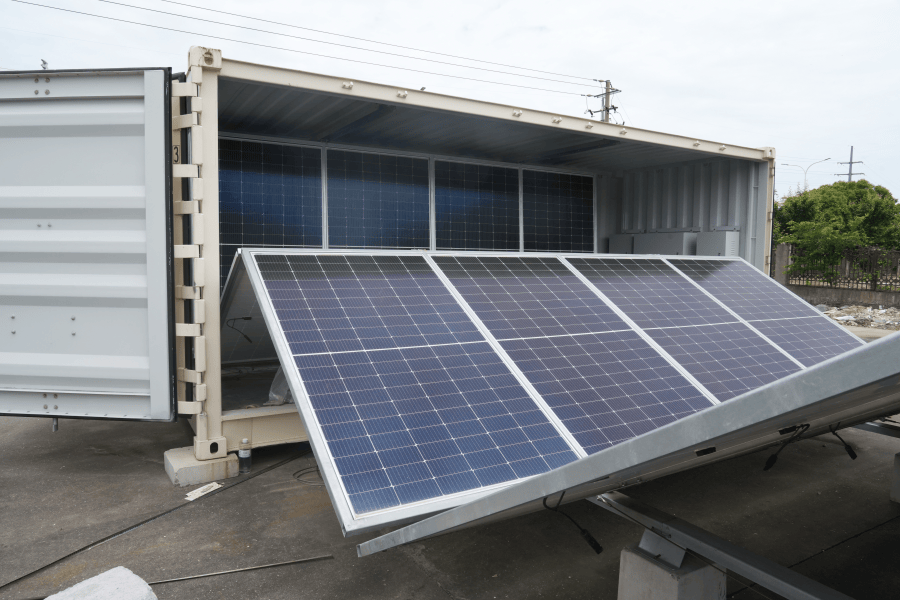
Table of Contents
- The Silent Panic in the Server Room
- When "Good Enough" Backup Isn't Good Enough
- Why the 20ft High Cube Container is the Modern Answer
- Beyond the Box: The Tech That Makes It Work
- A Real-World Walkthrough: A Project in Northern Virginia
- So, What's Your Next Move?
The Silent Panic in the Server Room
Let's be honest. When you're in a data center, the hum of servers is the sound of business. But there's another sound, or rather, the fear of its absence: silence. A grid outage that lasts more than the 30 seconds your traditional UPS can handle isn't just an IT problem; it's an existential threat. I've been on site during controlled tests, and honestly, watching the clock tick down on a diesel genset's startup time is a special kind of stress. The problem we face today isn't just about backup; it's about resilient, scalable, and intelligent backup that aligns with sustainability goals and doesn't eat up your capital budget for breakfast.
When "Good Enough" Backup Isn't Good Enough
Here's the agitating truth many facility managers discover too late. Legacy systems - massive banks of lead-acid batteries, noisy diesel generators - are becoming liabilities. They're space-hogs, require meticulous environmental control, and their operational cost is a black box. The National Renewable Energy Lab (NREL) has shown that unplanned downtime for critical infrastructure can cost upwards of $9,000 per minute. But the cost isn't just in downtime. It's in the real estate they consume, the maintenance contracts, the fuel logistics, and the carbon footprint that's increasingly under scrutiny from investors and customers.
I've seen this firsthand: a client in Germany had a dedicated, climate-controlled room for their backup batteries. The CapEx was one thing, but the ongoing OpEx for cooling and replacement cycles was bleeding them dry. They weren't managing data; they were managing a finicky, expensive power plant.
Why the 20ft High Cube Container is the Modern Answer
This is where the industry has pivoted, and for good reason. The 20ft High Cube Energy Storage Container isn't just a bigger battery box. It's a pre-engineered, plug-and-play power asset. Think of it as a data center for power: self-contained, secure, and smart. Its standardized dimensions make it logistically beautiful - it ships globally, fits on a standard pad, and can be positioned where you need it, often outdoors, freeing up that precious white space for revenue-generating servers.
For us at Highjoule, this form factor is the cornerstone of our deployable solutions. We build them not just to IEC standards, but to the more stringent UL 9540 and UL 1973 standards that are the gold standard in North America. This isn't a checkbox exercise; it's about designing for the safety expectations of local AHJs (Authority Having Jurisdiction) from day one.
Beyond the Box: The Tech That Makes It Work
Okay, let's get technical for a moment, but I'll keep it in plain English. The magic of a modern BESS container like ours lies in three key areas:
- Thermal Management: This is the unsung hero. Lithium-ion batteries perform best and last longest within a tight temperature range. A "container" conjures images of a hot metal box, but a proper system has an integrated, HVAC-grade thermal management system. We don't just cool the air; we design the airflow to directly manage cell temperature, which dramatically reduces degradation. Honestly, poor thermal design is the number one reason I see for premature capacity fade.
- C-rate Intelligence: C-rate is essentially how fast you charge or discharge the battery. A 1C rate means using the full capacity in one hour. For data center backup, you don't always need a super-high discharge rate (like for grid frequency regulation), but you need it to be reliable and predictable. The system's BMS (Battery Management System) intelligently manages this, ensuring you have the power when you need it without stressing the cells.
- The LCOE Winner: Levelized Cost of Energy (LCOE) is the total lifetime cost divided by energy output. Here's the win: by integrating high-cycle life cells, superior thermal management, and smart controls that can also participate in grid services (where allowed) during normal operation, a containerized BESS can significantly lower your LCOE compared to a static, single-purpose backup system. It transforms a cost center into a potential revenue or savings center.

A Real-World Walkthrough: A Project in Northern Virginia
Let me give you a concrete example from our portfolio. We deployed a 20ft High Cube container for a colocation data center in Northern Virginia, a market with both high reliability demands and attractive grid service programs.
The Challenge: The client needed to extend their backup duration to meet new Tier III compliance goals, but their substation capacity and indoor space were maxed out. They also wanted to explore demand charge reduction.
The Highjoule Solution: We provided a turnkey UL 9540-certified container. It was delivered, connected to their medium-voltage switchgear, and commissioned in under three weeks. The container sits on a concrete pad adjacent to the facility. Its integrated systems handle all climate control autonomously.
The Outcome: Beyond providing the required 4 hours of critical backup, the system's software is programmed to discharge during the utility's peak demand windows, slashing the facility's demand charges. The projected savings from this alone will pay for a significant portion of the system's cost over its life. The facility manager told me it was the first "backup" system that his finance department didn't groan about.
So, What's Your Next Move?
Look, the transition from passive backup to active energy storage is happening. The 20ft High Cube container is the workhorse making it possible. The question isn't really if this technology is right for data centers - the International Energy Agency (IEA) tracks soaring global BESS deployments - it's about how to implement it correctly for your specific load profile, regulations, and site constraints.
That's where the real engineering begins. It's not about selling you a box. It's about designing the system inside that box - the cell selection, the BMS logic, the safety protocols, the grid interconnection intelligence - and then standing behind it with local service and support. What's the one constraint in your next data center project that keeps you up at night? Is it space, grid capacity, or that elusive balance between sustainability and resilience?
Tags: Energy Storage Container UL Standard BESS LCOE Data Center Backup Power Renewable Energy
Author
James Zhang
20+ years agricultural energy storage engineer / Highjoule CTO