
Air-Cooled 1MWh BESS Safety: The Critical EV Charging Station Regulations You Need
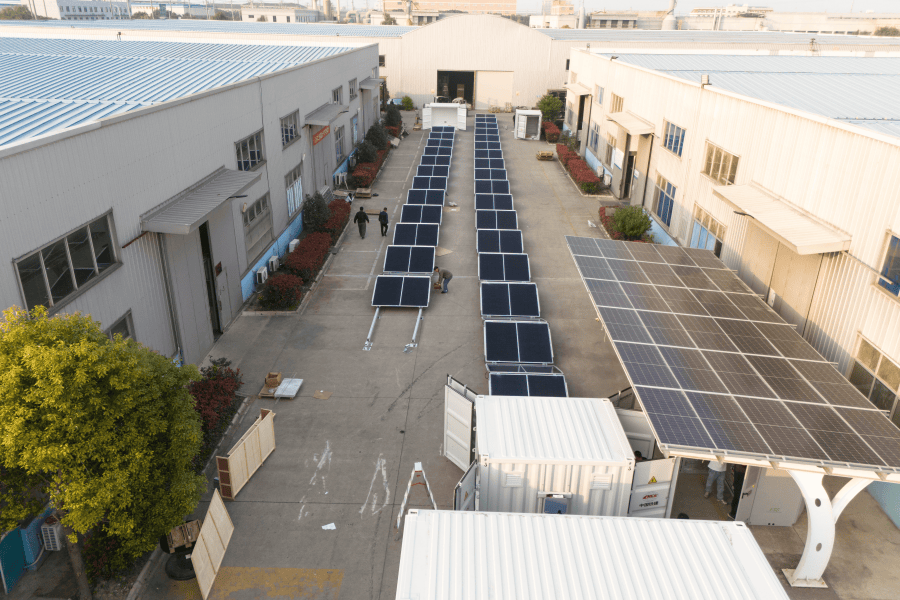
Table of Contents
- The Silent Challenge: Safety as the Hidden Project Killer
- Beyond the Checklist: Why "Compliance" Isn't Enough
- The Air-Cooled 1MWh Unit: A Perfect Fit for EV Charging?
- Navigating the Regulatory Framework: UL, IEC, and Local Fire Codes
- A Real-World Case: Fast-Charging Corridor in Southern Germany
- The Heart of the Matter: Thermal Management and C-Rate in Real-World Use
- Making It Work: A Pragmatic Approach for Project Developers
The Silent Challenge: Safety as the Hidden Project Killer
Honestly, when we sit down to plan a solar-powered EV charging station with integrated storage, the conversation usually starts with power output, charge times, and of course, the all-important Levelized Cost of Energy (LCOE). But in my 20+ years on sites from California to North Rhine-Westphalia, I've seen a single, often-underestimated factor derail more projects than any technical failure: safety regulations for the battery energy storage system (BESS). Specifically, for the increasingly popular air-cooled 1MWh units that are a sweet spot for these applications. The problem isn't a lack of standards - it's the maze of them, and the real-world cost of getting it wrong.
Beyond the Checklist: Why "Compliance" Isn't Enough
Agitation comes when you realize that a simple "yes, it's certified" isn't the end of the story. I've seen firsthand on site a project where the 1MWh container itself had the right UL certification, but its placement failed the local fire department's clearance requirements by two meters. The result? A three-month delay for redesign and repositioning, skyrocketing soft costs. The International Energy Agency (IEA) highlights that streamlined permitting and clear safety protocols are key to accelerating energy storage deployment. This regulatory friction directly hits your project's bottom line and timeline. It's not just about preventing a thermal event; it's about preventing financial and schedule meltdowns.
The Core Dilemma for EV Charging
EV charging stations present a unique use case. The battery isn't just cycling once or twice a day. During peak travel times, it might be undergoing rapid, high-power discharges (what we call a high C-rate) to feed multiple ultra-fast chargers, followed by quick recharges from the solar array. This irregular, demanding duty cycle stresses the thermal management system of an air-cooled BESS far more than a steady, grid-support application. If the safety regulations and the system design don't account for this real-world profile, you're looking at accelerated degradation or, worse, safety system triggers shutting down your revenue-generating asset during peak hours.
The Air-Cooled 1MWh Unit: A Perfect Fit for EV Charging?
So, why choose an air-cooled 1MWh system for this job? The solution, when done right, is elegant. It offers a fantastic balance of capacity, scalability, and simplicity. For a distributed network of EV charging plazas, you want something that's relatively modular, easier to install than complex liquid-cooled systems, and cost-effective. The 1MWh size is often the "just right" unit to buffer solar generation and manage demand charges for a mid-sized charging hub. But its suitability hinges entirely on a safety-by-design approach that anticipates the EV charging reality.

Navigating the Regulatory Framework: UL, IEC, and Local Fire Codes
Let's break down the key regulatory pillars. In the US, UL 9540 is the overarching standard for energy storage systems, and UL 9540A is the critical test method for evaluating thermal runaway fire propagation. For the power conversion side (PCS), UL 1741 is key. In Europe and many international markets, IEC 62933 series is your go-to. But here's the insight from the field: these are product standards. The real hurdle is the installation.
Your air-cooled 1MWh unit must be installed in compliance with local building and fire codes, like the NFPA 855 in the US or specific national annexes to IEC standards in Europe. NFPA 855 dictates everything from separation distances between units and from building walls, to fire suppression requirements. For example, it has specific rules for "walk-in" versus "non-walk-in" enclosures that can drastically affect your site layout. I always advise clients to engage with the Authority Having Jurisdiction (AHJ) - the local fire marshal - before the equipment arrives on site. A cup of coffee with them early on is cheaper than a crane sitting idle later.
A Real-World Case: Fast-Charging Corridor in Southern Germany
Let me share a case from last year. We were deploying a string of four 1MWh air-cooled Highjoule systems along a highway corridor in Bavaria, each paired with a large solar canopy and six 300kW EV chargers. The challenge wasn't the German national regulations (based on IEC), but the specific requirements of the L?nder (state) and the utility's interconnection rules regarding fault current contribution and grid support functions.
The solution involved a pre-emptive, three-layer approach: 1) Choosing a BESS product platform (like our own) that was pre-certified to the relevant IEC standards with full documentation packs, 2) Working with a local engineering partner to create site plans that exceeded the minimum fire clearance distances, building in future expansion space, and 3) Designing the battery management system's (BMS) logic to have a "boost mode" that could handle the simultaneous demand of three chargers hitting full power, while keeping cell temperatures within a strict safety buffer. This proactive thermal management, governed by the right safety logic, prevented nuisance shutdowns during the Oktoberfest travel rush.
The Heart of the Matter: Thermal Management and C-Rate in Real-World Use
This brings us to the core technical insight. Thermal management in an air-cooled system is everything. Think of C-rate as how hard you're asking the battery to work. A 1C rate means discharging the full 1MWh in one hour. Fast EV charging might require bursts at or above this rate. Every time you do that, you generate heat inside the battery cells. The air-cooling system's job is to whisk that heat away uniformly. If the safety design and regulations only consider steady-state operation, the cells in the middle of the rack can overheat relative to the edges, leading to imbalance and stress.
At Highjoule, when we engineer for these Safety Regulations for Air-cooled 1MWh Solar Storage for EV Charging Stations, we don't just test to the standard profile. We model and test against real EV station load profiles. This ensures our cell spacing, airflow design, and BMS safety algorithms (which will throttle output before a critical point) are all aligned. This proactive approach is what turns a compliant product into a resilient, profitable asset for the owner. It directly optimizes the LCOE by maximizing available cycles and preventing downtime.

Making It Work: A Pragmatic Approach for Project Developers
So, what's the actionable takeaway? Treat safety regulations not as a last-minute box-ticking exercise, but as a foundational design parameter. Here's a simple list I follow:
- Start Local: Engage your AHJ and utility first. Understand their interpretation of NFPA 855 or the local equivalent.
- Demand Duty-Cycle Data: Ask your BESS provider for test data or simulations of their air-cooled system under high, intermittent C-rate loads like EV charging, not just smooth grid cycles.
- Plan for Access & Service: Regulations require safe access for maintenance and firefighting. Factor this into your site footprint from day one. A cramped installation is a future headache.
- Look for Integrated Expertise: Choose a partner whose technical support understands both the product standards and the installation codes. They should help you bridge the gap between the factory test report and the fire marshal's final inspection.
The goal is a charging station that's not only safe but also robust and reliable. Getting the safety regulations right for your air-cooled 1MWh storage is the unsung hero that makes that possible. It's the difference between a project that's a reference site and one that's a cautionary tale. What's the one safety or compliance hurdle that's currently causing you the most friction in your planning?
Tags: UL Standard BESS Europe US Market EV Charging Infrastructure Renewable Energy IEC Standard
Author
James Zhang
20+ years agricultural energy storage engineer / Highjoule CTO