
Wholesale Price of Black Start BESS for EV Charging: A Real-World Cost & Resilience Breakdown
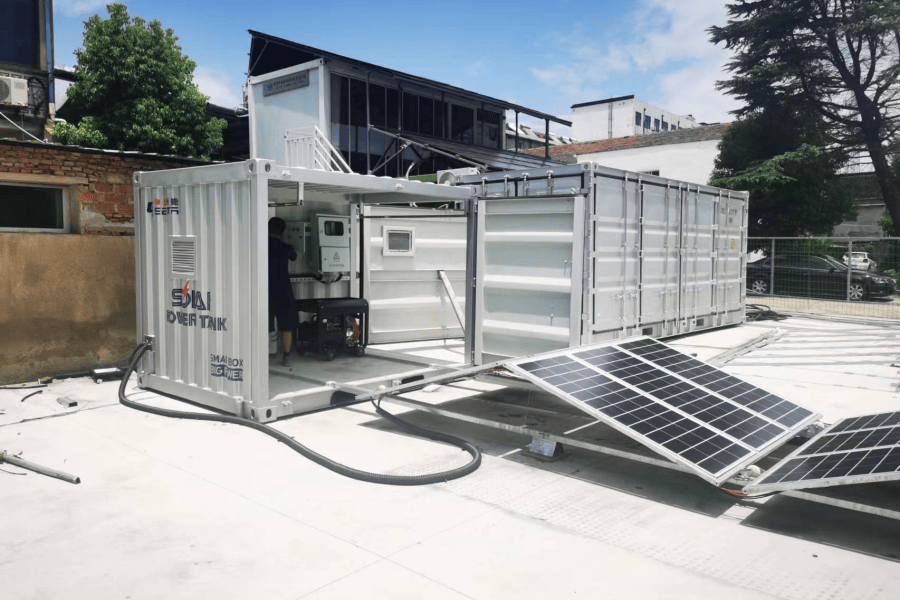
Let's Talk About Keeping the Lights (and Chargers) On
Honestly, if I had a dollar for every time a client asked me, "What's the real price for a battery system that can restart my EV charging hub from scratch?" I'd probably be retired on a beach somewhere. But I'm not, because this question C about the Wholesale Price of Black Start Capable BESS for EV Charging Stations C is where the rubber meets the road in our industry. It's not just about buying a battery; it's about buying resilience, business continuity, and a whole new level of grid independence. Let's grab a coffee and dive into what this actually means on the ground, from California to North Rhine-Westphalia.
Quick Navigation
- The Real Problem: It's Not Just About Outages
- The Black Start Cost Puzzle: More Than $/kWh
- A Case in Point: The Texas Lesson
- Breaking Down the Wholesale Price Tag
- The Highjoule Difference: Engineering for Reality
- Your Next Step: Questions to Ask Your Supplier
The Real Problem: It's Not Just About Outages
We all know the grid is getting, well, interesting. More renewables (a good thing!), more demand from EVs, and more frequent extreme weather events. The problem for a commercial EV charging station operator isn't just a power flicker. It's a complete "black site" scenario. Imagine a substation fault or a severe storm knocks out your grid connection. A standard BESS will ride through brief outages, but when the grid goes dark completely, it can't just magic itself back online. It needs the grid as a reference signal to restart. Without black start capability, your multi-million dollar charging hub is a silent, revenue-losing parking lot until the utility crew shows up C which could be hours or even days. I've seen this firsthand on site, and the financial bleed is brutal.
The Black Start Cost Puzzle: More Than $/kWh
So you look at a wholesale price quote. The base $/kWh for the battery cells is one line item. But for a true black start system, that's maybe 60% of the story. The aggravation, the real cost drivers, are in the extras:
- The Brain & The Brawn: You need a more sophisticated inverter and control system that can independently establish voltage and frequency (creating a mini-grid), not just follow the grid's lead. This isn't off-the-shelf software.
- Thermal Management on Steroids: A black start sequence pulls a huge, sudden load (C-rate) to energize transformers and balance the local microgrid. Your battery's thermal management system has to be over-engineered to handle that surge without tripping on safety limits. Poor thermal design is the number one cause of premature degradation I see in field audits.
- Compliance & Interconnection: In the US, you're looking at UL 9540 for the system and critically, UL 1741 SB (Supplement B) for grid-forming inverters, which is essential for black start. In the EU, it's IEC 62933 and grid codes that vary by country. Getting this wrong means your system sits in a container, not earning a cent, while you redo paperwork and testing.
A recent NREL report highlighted that grid-forming inverter costs, while falling, still add a 15-25% premium to the power conversion system (PCS) C a key component often buried in the wholesale price.
A Case in Point: The Texas Lesson
Let me give you a real example. We worked with a logistics fleet operator in Texas (I'll keep the name out of it) with a depot of 20 fleet charging bays. Their core requirement was 24/7 uptime. During Winter Storm Uri in 2021, their grid was down for 86 hours. Their standard, grid-following BESS was useless after its backup duration expired.
We deployed a 2 MWh black-start capable BESS for them. The wholesale price? Sure, it was about 22% higher than a standard system of the same capacity. But here's the kicker: during a subsequent localized fault last summer, their site black-started in under 90 seconds. They kept charging their delivery vans, while the industrial park next door was down for 8 hours. They calculated the avoided loss C in delayed deliveries and contract penalties C at over $180,000 for that single event. The "premium" for black start paid for itself instantly. Their Levelized Cost of Energy (LCOE) calculation transformed from a simple payback on energy arbitrage to a resilience insurance model.

Breaking Down the Wholesale Price Tag
So, what are you actually paying for in that wholesale price for a black start BESS? Let's think in modules:
| Component/Service | Standard BESS | Black Start Capable BESS | Key Difference |
|---|---|---|---|
| Core Battery Rack (per kWh) | Base Cost | ~Same Base Cost | Cell cost is similar; cycle life requirement may be higher. |
| Power Conversion System (PCS) | Grid-Following Inverter | Grid-Forming Inverter | 15-25% cost premium for advanced controls & hardware. |
| Control Software & EMS | Basic Energy Management | Islanding & Black Start Sequencing | Custom logic, extensive modeling & testing required. |
| System Integration & Testing | Standard Factory Acceptance Test (FAT) | FAT + Extended Black Start Protocol Test | More engineering hours, specialized test load banks. |
| Compliance & Certification | UL 9540 / IEC 62933 | + UL 1741 SB / Local Grid Code Certification | Longer timeline, potential for third-party validation costs. |
The magic C and the fair price C lies in the seamless integration of these components. A cheap grid-forming inverter bolted to a battery with weak thermal management will fail on its first real black start. Guaranteed.
The Highjoule Difference: Engineering for Reality
At Highjoule, with our 20 years in the field, we don't just sell black start as a checkbox. We engineer for the surge. Our systems, like the HJT-ION GridForm series, are designed from the cell up for the high C-rate discharge demands of black start. We use a liquid-cooled thermal system that's frankly over-specced for daily cycling, because we know the one time you need it most, it has to perform flawlessly.
More importantly, our price includes what happens after "go-live." We run the black start sequence with you during commissioning C not just on a simulator, but on your actual site loads. We train your staff on the restart procedure. And because we've deployed these systems from Germany to California, we navigate the UL and IEC maze for you. It's baked into the project. This holistic approach is what delivers a lower real LCOE over the system's life, even if the initial wholesale price line item isn't the absolute lowest on a spreadsheet.
Your Next Step: Questions to Ask Your Supplier
Before you get fixated on a single $/kWh figure, have a conversation with your potential supplier. Ask them:
- "Can you walk me through a recent black start project timeline, from design to certification?"
- "What is the specific C-rate your system can sustain for a full black start sequence, and how does your thermal management ensure cell health during that?"
- "Show me the compliance roadmap for my specific location (e.g., CA Rule 21, or German VDE-AR-N 4110). Is this included in the price?"
The right wholesale price for a Black Start Capable BESS isn't the cheapest. It's the one that includes the engineering, the compliance, and the proven reliability to turn your EV charging station from a grid-dependent cost center into a truly resilient, revenue-protecting asset. What's the cost of not having that capability for your next outage?
Tags: UL Standard BESS LCOE Black Start Microgrid EV Charging US EU Market
Author
James Zhang
20+ years agricultural energy storage engineer / Highjoule CTO