
Safety Regulations for Rapid Deployment 1MWh Solar Storage for Agricultural Irrigation
Getting Farm Energy Storage Right: Why Safety Isn't Just a Checkbox for Your 1MWh System
Honestly, after 20 years of deploying battery systems from the sun-baked fields of California to the rolling farms of Germany, I've learned one thing: when it comes to energy storage for agriculture, speed and safety aren't trade-offs. They're two sides of the same coin. I've seen firsthand on site how a rushed deployment, cutting corners on safety protocols, can turn a promising irrigation solution into a costly, dormant asset. Today, let's talk about the real-world Safety Regulations for Rapid Deployment of 1MWh Solar Storage for Agricultural Irrigation. This isn't about red tape; it's about building a system that lasts, protects your investment, and lets you sleep at night.
Quick Navigation
- The Real Cost of "Fast and Cheap"
- Why Farms Are Uniquely Challenging
- Building Safety into the Deployment DNA
- A Lesson from the Field: California Almonds
- The Expert's Corner: C-Rate, Heat, and Your Wallet
The Real Cost of "Fast and Cheap"
Here's the common scenario I see: a farm needs to offset high grid costs for running massive irrigation pumps, especially during peak seasons. Solar is a no-brainer, but to make it work around the clock, you need storage - say, a 1MWh system. The pressure is on to get it installed before the next irrigation cycle. The temptation? To treat the BESS like any other piece of farm equipment and just "get it in the ground."
This is where the aggravation begins. A system deployed without a rigorous safety-first framework might pass initial commissioning. But six months down the line, you might face thermal runaway events because of poor ventilation, or find your warranty void because local fire codes weren't meticulously followed. The retrofit costs are staggering. Suddenly, that "cheap, fast" deployment has skyrocketed your Levelized Cost of Energy (LCOE). The system is offline during a critical drought period, and you're facing not just financial loss, but a real operational crisis.
Why Farms Are Uniquely Challenging
Agricultural settings aren't like a controlled industrial park. According to a National Renewable Energy Laboratory (NREL) report on distributed storage, remote locations, dust, wide temperature swings, and limited on-site technical expertise amplify risks. A 1MWh battery bank contains significant energy density. In a remote field, emergency response times are longer, making proactive, design-in safety absolutely critical from day one.
The industry standard isn't a suggestion. In the US, UL 9540 (the standard for Energy Storage Systems and Equipment) and UL 9540A (test method for thermal runaway fire propagation) are becoming the bedrock of fire safety compliance. In Europe, the IEC 62933 series provides the framework. For rapid deployment, the trick isn't to bypass these, but to have a system and process engineered to comply with them seamlessly.
Building Safety into the Deployment DNA: The Highjoule Approach
So, how do you achieve rapid deployment without compromising an ounce on safety? The solution lies in pre-engineering and a regimented field process focused on Safety Regulations for Rapid Deployment of 1MWh Solar Storage for Agricultural Irrigation.
At Highjoule, we treat "rapid" as a function of preparation, not on-site improvisation. For a 1MWh agricultural system, this means:
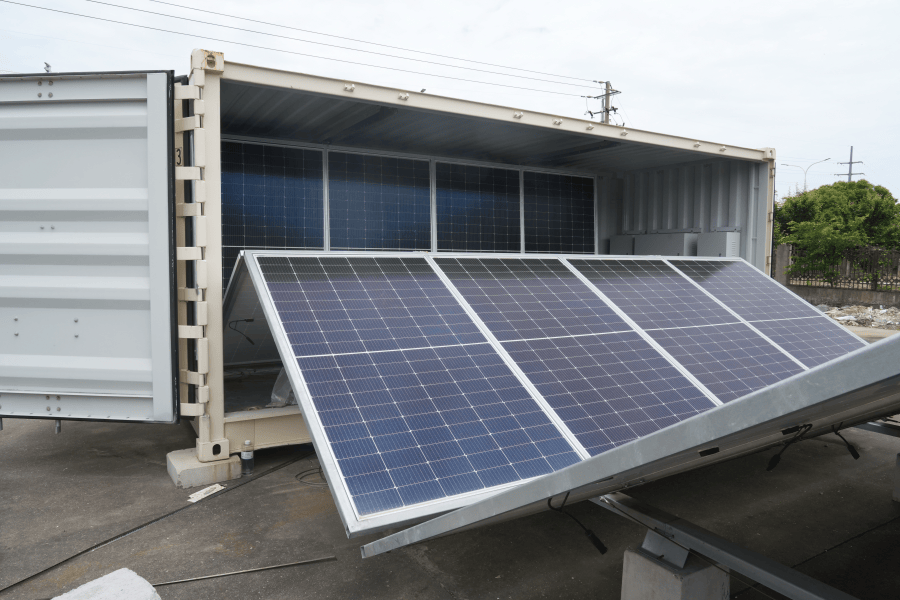
- Pre-certified, Containerized Solutions: Our 1MWh+ units are factory-assembled and tested as complete units, with UL/IEC certifications in hand. This turns weeks of on-site assembly and testing into a matter of days for placement and connection.
- Site-Specific Safety Dossier: Before a single cable is laid, our team works with your planners to develop a safety dossier covering fire suppression access, thermal management zoning (considering those hot, dusty days), and clear emergency shutdown procedures tailored for farm staff.
- Automated Compliance Checks: Our system's Battery Management System (BMS) is pre-configured with safety thresholds that align with IEEE 1547 for grid interconnection and local AHJ (Authority Having Jurisdiction) requirements. It's a set-it-and-forget-it approach for compliance.
This methodology is what allows us to deliver a robust, safe system quickly. The speed comes from the homework done upfront, not from skipping steps.
A Lesson from the Field: California Almonds
Let me share a case from California's Central Valley. A large almond grower needed a 1.2MWh system to power irrigation pumps, aiming to reduce demand charges and ensure water access during grid outages (a growing concern). The initial bid from a competitor promised a 4-week deployment.
Our team proposed a 5-week plan with a detailed safety and commissioning protocol. The client was skeptical about the "extra" week. We showed them data: in arid climates, improper thermal management can degrade battery lifespan by up to 30% prematurely. We won the project by focusing on total lifecycle cost, not just deployment speed.
The deployment included a pre-fabricated, UL 9540-listed container with an integrated, liquid-cooled thermal system. We conducted a full UL 9540A hazard mitigation review with the county fire marshal before shipment. On-site work was streamlined to foundation, electrical interconnection, and a pre-defined 87-point safety and performance verification checklist.

The result? The system passed inspection on the first try. It's now been operating for two years, seamlessly managing through multiple heatwaves. The grower's LCOE is 22% lower than their original grid-reliant model, and they have a compliance certificate that simplifies insurance underwriting. That "extra" week of planning saved potential months of future headaches.
The Expert's Corner: C-Rate, Heat, and Your Wallet
Let's get a bit technical, but I'll keep it simple. When you're running a big irrigation pump, the battery needs to discharge power quickly. This speed is called the C-rate. A high C-rate is great for power, but it generates immense heat inside the battery cells.
Here's my on-site insight: Thermal Management isn't just about preventing fires (though that's job one!). It's the single biggest factor in your battery's lifespan and, therefore, your LCOE. A poorly managed battery operating at high C-rates in a 40C (104F) field will degrade much faster than one kept in a stable, cool environment.
That's why, for agricultural Safety Regulations for Rapid Deployment of 1MWh Solar Storage, we obsess over thermal design. A system with robust, active cooling might have a slightly higher upfront cost, but it protects the heart of your investment. It ensures your 1MWh system delivers its promised capacity year after year, drought after drought, making the economics work for the long haul.
So, the next time you evaluate a storage solution for your farm, look beyond the price per kWh and the installation timeline. Ask about the safety protocol embedded in the deployment process. Ask to see the UL 9540 certification. Ask how the thermal system is designed for your specific climate. Because in the world of farm energy resilience, the safest path is also the fastest and most economical one to true, worry-free operation.
What's the biggest energy reliability challenge your farm is facing this season?
Tags: UL Standard BESS Europe US Market Agricultural Irrigation Solar Storage Safety Regulations
Author
James Zhang
20+ years agricultural energy storage engineer / Highjoule CTO