
Safety Regulations for Air-cooled Off-grid Solar Generator for Construction Site Power: A Site Engineer's View
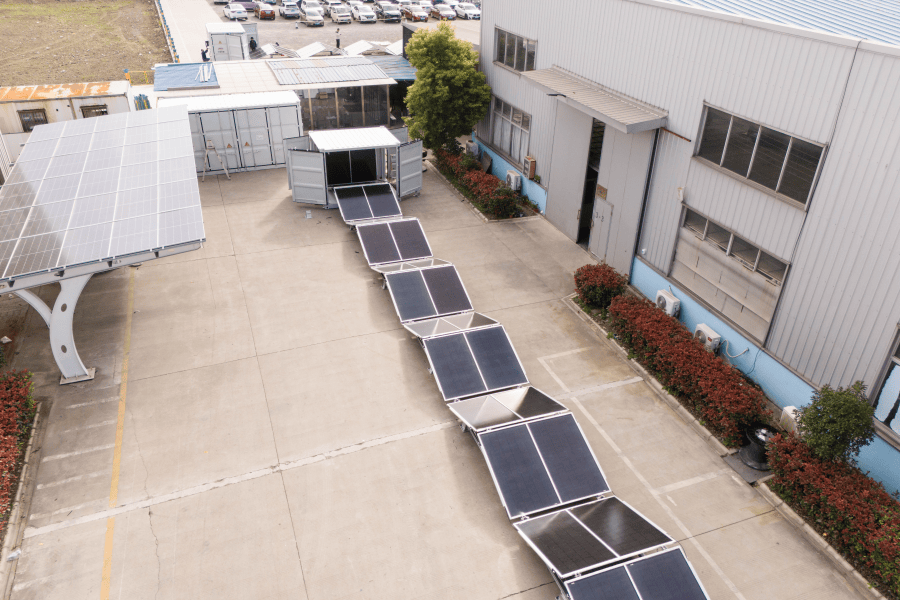
Let's Talk About Keeping Your Construction Site Safe (And Powered)
Honestly, over my twenty-plus years hauling batteries and inverters around job sites from Texas to Bavaria, one thing's become crystal clear: when we talk about Safety Regulations for Air-cooled Off-grid Solar Generator for Construction Site Power, most folks aren't worried about the rulebook itself. They're worried about the Monday morning phone call. The one about a fire, an injury, or a project that's dead in the water because the "temporary" power solution failed its one job.
It's a different world out there on a construction site. It's not a nice, clean data center or a fenced-off utility substation. It's dust, vibration, temperature swings, and crews focused on building, not babysitting a power unit. The regulations aren't bureaucracy - they're the distilled wisdom of what can go wrong. Let's walk through what you, as the decision-maker, really need to know.
Quick Navigation
- The Real Problem Isn't the Paperwork
- Why "Good Enough" Isn't Good Enough: Costly Consequences
- Decoding the Rules: UL, IEC, and What They Actually Mean On-Site
- The Air-Cooling Question: Simplicity vs. Safety
- A Case in Point: What Compliance Looks Like on the Ground
- Your Next Step: Questions to Ask Any Supplier
The Real Problem Isn't the Paperwork
The core pain point I've seen firsthand? It's the gap. The gap between a product that's "designed to a standard" in a lab and a system that lives to that standard in a muddy, chaotic, high-demand environment. You might see a unit with a UL listing, but does that listing cover the entire energy storage system (ESS) as deployed, or just a component? The NREL has highlighted that system-level safety, especially for thermal events, is a critical focus area that goes beyond component certification.
On a construction site, your air-cooled off-grid system isn't just a generator. It's a piece of critical equipment that sits next to fuel tanks, portable offices, and high-value materials. A thermal runaway event here isn't just an equipment loss; it's a potential site-wide catastrophe.
Why "Good Enough" Isn't Good Enough: Costly Consequences
Let's agitate that pain point a bit. Choosing a system based only on upfront cost or basic specs, without deep-diving into its safety pedigree, is a huge financial risk. I'm not talking about a fine from an inspector (though that happens). I'm talking about:
- Project Delay: A safety incident shuts down the entire site. The delay costs from lost labor and missed milestones dwarf the cost of any power system.
- Insurance & Liability: Your insurer will ask about equipment certifications. A non-compliant system can void coverage or skyrocket premiums. And in the event of an incident, liability falls squarely on the site manager.
- Reputational Damage: News travels fast. A fire on your site makes headlines and makes winning the next bid much harder.
The solution isn't to avoid the technology - it's to embrace the right technology, where safety regulations are baked into the core design, not just checked off as a final step.
Decoding the Rules: UL, IEC, and What They Actually Mean On-Site
So, what are these rules we keep mentioning? For the US market, UL 9540 is the gold standard for ESS safety. It tests the entire system - battery, inverter, cooling, controls - as a single unit. For international projects, IEC 62933 series is key. But here's my on-site insight: compliance isn't a checkbox.
Think about C-rate - basically, how fast you charge or discharge the battery. A site might need high power for tools (a high discharge C-rate). A system not designed for this sustained demand will overheat. Air-cooling has to work overtime, and if it's undersized or poorly designed, it fails. That's where thermal management becomes a safety function, not just a performance one.
At Highjoule, when we engineer a system, we start with the environmental and demand stress of a construction site. Our air-cooled units aren't just repurposed telecom batteries; they're built with higher-grade components, wider thermal operating margins, and monitoring that watches for the precursors of failure, not just the failure itself. It's the difference between a system that meets UL 9540 and one that's built from the ground up to exceed it for your specific use case.
The Air-Cooling Question: Simplicity vs. Safety
Air-cooling is popular for off-grid sites for a reason: it's simpler, has fewer parts to fail, and is easier to maintain than liquid cooling. But "air-cooled" shouldn't mean "passively ventilated."
A robust, safety-focused air-cooled system for construction needs:
- Redundant Fans & Sensors: If one fan fails, others pick up the load, and the control system is alerted.
- Dust Filtration: Construction dust is a killer for electronics and battery cells. Proper ingress protection (IP rating) and filters are non-negotiable. I've seen too many units sucking in concrete dust like a vacuum.
- Compartmentalization: Battery racks should be in sealed, fire-resistant compartments within the container, with independent smoke and heat detection. This isolates any potential event.

A Case in Point: What Compliance Looks Like on the Ground
Let me give you a real example. We deployed a 500kWh air-cooled off-grid system for a large logistics warehouse construction in Germany's North Rhine-Westphalia region. The challenge? Zero grid connection for phase one, strict German Baustellenverordnung (construction site regulations), and a tight schedule.
The client's initial cheaper option claimed IEC compliance. But when we dug in, its battery management system (BMS) couldn't handle the peak simultaneous demand of three tower cranes and the welding stations, risking overload and thermal shutdown. Our solution centered on a UL 9540/IEC 62933-compliant system with an oversized, smart air-handling system. The BMS was programmed with a site-specific power profile that prioritized loads and prevented unsafe C-rates. The local inspector recognized the system-level certification, which sped up approval. The project kept its power, avoided any thermal scares, and the client now uses that same unit on new sites - it became a trusted asset.
The takeaway? True compliance delivered operational reliability and peace of mind, turning a cost center into a value center.
Your Next Step: Questions to Ask Any Supplier
So, when you're evaluating an Air-cooled Off-grid Solar Generator for Construction Site Power, move beyond the spec sheet. Have a coffee with their engineer (someone like me) and ask:
- "Can you show me the system-level safety certification (UL 9540, IEC 62933-5-2) report for this exact configuration?"
- "How does the thermal management system specifically account for high ambient temps and full dust load? What's the failure mode if a fan dies?"
- "What's the projected LCOE (Levelized Cost of Energy) for my site profile?" This tells you the true cost, including lifespan and efficiency, not just the sticker price. A safer, better-built system almost always wins on LCOE.
- "What's included in your remote monitoring? Can I see cell-level voltage and temperature trends to spot issues weeks before they become problems?"
Your goal isn't to become a battery expert. It's to find a partner whose expertise is woven into the product, making the complex web of Safety Regulations for Air-cooled Off-grid Solar Generator for Construction Site Power something you don't have to worry about on a Monday morning. What's the one safety concern keeping you up at night on your current or upcoming project?
Tags: Construction Site Power UL Standard BESS Off-grid Solar Safety Regulations Air-cooled ESS
Author
James Zhang
20+ years agricultural energy storage engineer / Highjoule CTO