
Navigating Safety Regulations for Black Start Mobile Power in Agricultural Irrigation
Contents
- When the Power Fails and the Crops Thirst
- The Hidden Risks in "Simple" Power Solutions
- The Safety Blueprint: More Than Just a Checklist
- A Real-World Walkthrough: From Blueprint to Boots on the Ground
- The Tech Behind the Trust: Making Safety Tangible
When the Power Fails and the Crops Thirst
Picture this: it's peak irrigation season in California's Central Valley or the plains of Nebraska. A sudden grid outage hits C maybe a heatwave-induced overload, maybe a fault on a rural line. Your pumps go silent. Every minute without water isn't just an inconvenience; it's a direct threat to yield and revenue. This is where black-start capable mobile power containers become more than just backup; they're the lifeline for your operation. But honestly, I've seen too many operations rush to deploy any power source, treating these complex systems like oversized diesel generators. The real conversation we should be having over coffee isn't just about having power, but about having power you can trust implicitly when everything else has gone dark. That trust is built entirely on a foundation of rigorous, non-negotiable safety regulations.
The Hidden Risks in "Simple" Power Solutions
Let's agitate that pain point a bit. The initial temptation is to see a mobile BESS as a "plug-and-play" box. You haul it in, connect it to your pumps, and hit go. The problem? Agricultural settings are some of the harshest environments for electrical equipment. We're talking dust, humidity, wide temperature swings, and often, remote locations far from immediate fire or emergency services. A standard, non-compliant unit might work... until it doesn't. And when it fails during a black start sequence C the critical process of bootstrapping a microgrid from a dead state C the consequences compound. You're not just without power; you might be dealing with a thermal runaway event, an arc flash hazard, or a system that refuses to synchronize safely with the returning grid.
The financial impact is staggering. According to the National Renewable Energy Laboratory (NREL), power interruptions cost U.S. businesses over $150 billion annually. For a large-scale farm, an outage during a critical irrigation window can mean losses in the hundreds of thousands from crop stress alone. Now, add a liability lawsuit from a safety incident? That's a existential risk. The core issue is a mismatch: the complexity of a black-start capable BESS C with its bi-directional inverters, complex control logic, and dense energy storage C is often underestimated, especially when deployments are driven by urgency rather than diligence.
The Safety Blueprint: More Than Just a Checklist
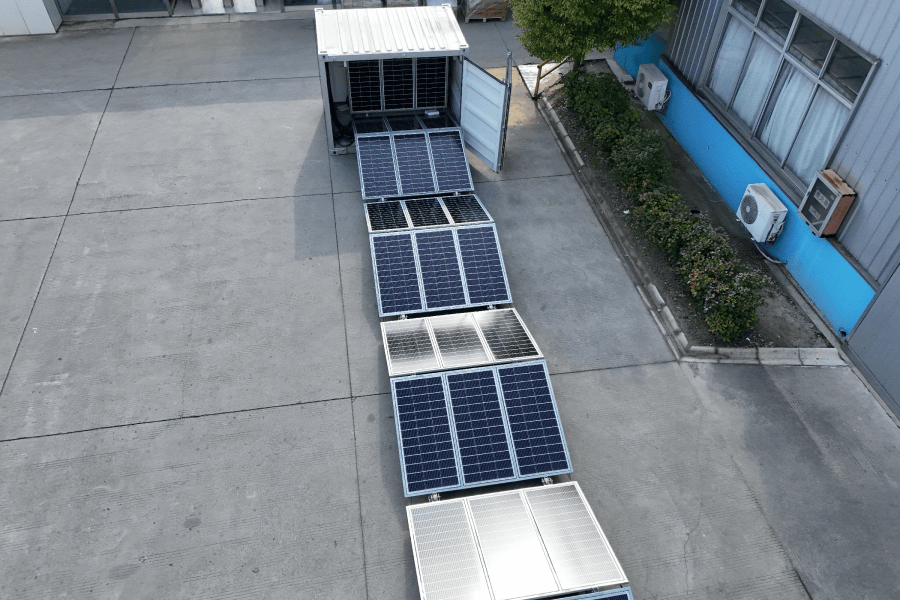
So, what's the solution? It's embracing Safety Regulations for Black Start Capable Mobile Power Container for Agricultural Irrigation not as a bureaucratic hurdle, but as the essential engineering blueprint for resilience. This isn't about one single rule, but an interlocking system of standards that govern every aspect of safe operation.
At Highjoule, we view this through a three-layer lens, shaped by two decades of field deployments:
- The Hardware Layer (The "Body"): This is about the container itself. It must be built to specific environmental and mechanical standards. Think UL 9540 for the overall energy storage system, UL 1973 for the batteries, and robust ingress protection (like IP54 or better) to keep out dust and moisture. The battery racks need seismic bracing, even in non-seismic zones, because a mobile container gets transported on rough farm roads. Cabling, disconnect switches, and ventilation C all need to be over-engineered for the field, not just the lab.
- The Software & Control Layer (The "Brain"): This is the heart of black start safety. The system's control logic must comply with IEEE 1547 for interconnection and islanding. It needs sequenced, fail-safe protocols to ensure when it starts an isolated microgrid, it does so without surging connected motors (your pumps) and with stable voltage/frequency. I've seen firsthand on site how a poorly configured soft-start sequence can trip protective devices or damage pump windings. The regulations here ensure the "brain" makes safe decisions autonomously, every single time.
- The Human & Procedural Layer (The "Protocol"): This is what bridges the tech with your team. It mandates clear labeling (per NEC/NFPA 70), emergency stop procedures, and built-in safety disconnects. It requires that a system like ours from Highjoule comes with operator training not just on how to start it, but on how to safely isolate it, what alarms mean, and what not to do. A safe container is one that communicates clearly with the people around it.
A Real-World Walkthrough: From Blueprint to Boots on the Ground
Let me give you a concrete example from a project we completed last year for a large almond grower in California's San Joaquin Valley. Their challenge was classic: unreliable grid power during summer fire-prevention shutoffs, coupled with a need to run high-power irrigation pumps for precise water schedules. They needed a black-start capable mobile unit that could be trucked between different orchard blocks.
The deployment details are where regulations came alive. We didn't just drop off a container. Our engineering team conducted a full site-specific hazard analysis. We designed custom cabling trenches and connection points to meet OSHA clearances. The container itself was a UL 9540 certified system, with an integrated safety system that included continuous gas monitoring (for off-gassing), thermal runaway propagation prevention between modules, and a NEMA 4X rated exterior panel for hose-down cleaning.
The real test came during commissioning. We simulated a total grid blackout. The system's black start controller first verified the grid was truly dead and islanded the critical load panel. Then, it initiated a staged ramp-up of power, bringing the pumps online one by one in a controlled manner to avoid a massive inrush current that could destabilize the newly formed microgrid. This sequenced start, governed by the safety logic, is what differentiates a compliant BESS from a simple power bank. It worked flawlessly. That grower now has a asset they use with confidence, not anxiety.

The Tech Behind the Trust: Making Safety Tangible
For the non-engineer decision-maker, let's break down a few key terms you'll hear, and why they matter for safety and your bottom line.
- C-rate: Think of this as the "throttle" for battery power. A 1C rate means a battery can discharge its full capacity in one hour. For black start, you need a high C-rate to deliver the massive surge of power to start large pump motors. But a high C-rate also generates more heat. Safe regulations dictate the thermal management system (fans, liquid cooling) must be sized to handle this peak demand without overheating, which is a primary fire risk. Our designs at Highjoule always match the C-rate capability with an even more robust cooling system.
- Thermal Management: This is the unsung hero. It's not just about cooling; it's about even temperature distribution across all battery cells. A 15C difference between the top and bottom of a rack can degrade battery life by half. Regulations push for systems that maintain a tight temperature band. This directly lowers your long-term Levelized Cost of Energy (LCOE) from the BESS because the batteries last through more cycles. Safe operation is, inherently, more economical operation.
- Grid Re-synchronization: Perhaps the most critical safety moment. When grid power returns, the BESS must seamlessly and safely re-connect. The regulations (IEEE 1547) require it to match the grid's voltage, frequency, and phase angle within tight tolerances before closing the switch. A bad sync can cause a catastrophic fault. This isn't something you can see, but it's software and hardware working to a certified standard, protecting both your equipment and the utility's workers.
Ultimately, navigating these regulations isn't a burden we place on you. At Highjoule, it's our core expertise. We engineer compliance into the product from the first CAD drawing. We handle the local permitting and utility interconnection studies, referencing the very standards that ensure safety. We provide the documentation pack that makes your insurance underwriter breathe easier. What you get is peace of mind in a container C a power asset that lets you focus on your crops, not on catastrophic risks.
So, the next time you evaluate a mobile power solution for irrigation, ask the vendor: "Walk me through your black start sequence safety protocol under UL 9540 and IEEE 1547." Their answer will tell you everything you need to know. What's the one safety concern keeping you up at night about your current power setup?
Tags: UL Standard BESS Black Start Agricultural Irrigation Microgrid IEC Standard Mobile Power Container Safety Regulations
Author
James Zhang
20+ years agricultural energy storage engineer / Highjoule CTO