
Grid-Forming BESS Safety & Compliance: Lessons from Rural Electrification for US & EU Markets
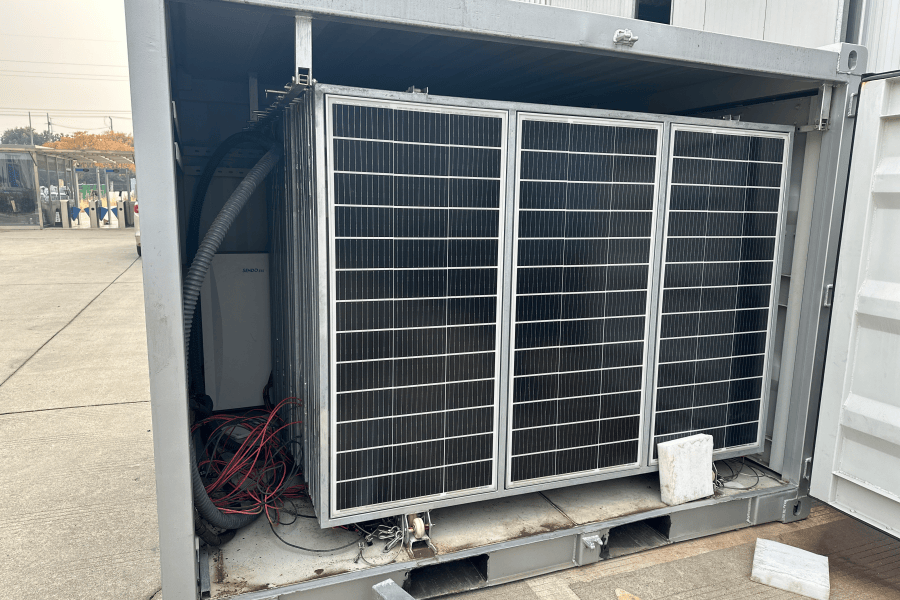
Table of Contents
- The Safety & Compliance Gap in "Plug-and-Play" BESS
- Why It Matters: Cost, Risk, and Project Viability
- A Lesson from the Field: The Philippines' Mobile Container Standard
- Beyond the Checklist: Thermal Runaway and Real-World Grid Support
- Localizing the Solution for US & EU Grids
- Your Next Step: Asking the Right Questions
The Safety & Compliance Gap in "Plug-and-Play" BESS
Hey there. Let's be honest for a minute. Over my twenty-plus years on sites from Texas to Bavaria, I've seen a worrying trend. The push for faster, cheaper, and more flexible energy storage, especially for grid-support and microgrids, is sometimes outpacing a deep, fundamental focus on integrated safety. We see containerized, "grid-forming" BESS units marketed as plug-and-play solutions. The promise is fantastic: roll it off the truck, connect it, and you have a stable microgrid or a source of grid inertia. But the reality on the ground - especially in harsh or remote environments - can be a different story. The safety philosophy baked into the product from day one is what separates a future-proof asset from a liability.
Why It Matters: Cost, Risk, and Project Viability
This isn't just about ticking boxes for a permit. It's about real money and real risk. A 2023 NREL report highlighted that unforeseen compliance hurdles and safety retrofits can balloon project soft costs by 15-30%. I've seen this firsthand. A commercial storage project in the Midwest got delayed for six months because the container's fire suppression system wasn't recognized by the local AHJ (Authority Having Jurisdiction). The agitation? That's lost revenue, strained contractor relationships, and a bruised reputation. For a grid-forming unit that's meant to be a bedrock of reliability, any safety compromise isn't just an equipment failure - it's a potential grid disturbance event.
The Core Tension: Mobility vs. Resilience
This is the heart of the challenge. A mobile power container needs to be, well, mobile. It gets transported over rough roads, sits in a coastal environment one year and a dusty desert the next. But grid-forming functionality demands rock-solid stability and millisecond-level precision. The safety regulations can't just be a copy-paste from a stationary plant. They must account for vibration, variable climate stress, and potentially less-frequent on-site maintenance. This is where a lot of off-the-shelf units built for benign conditions fall short when deployed in demanding scenarios.
A Lesson from the Field: The Philippines' Mobile Container Standard
Now, here's where it gets interesting. We can learn a tremendous amount from markets that have been forced to tackle this problem head-on. Take the recent Safety Regulations for Grid-forming Mobile Power Container for Rural Electrification in Philippines. This isn't just another bureaucratic document. It's a response to extreme, real-world conditions: typhoons, humidity, remote islands with no fire department, and a critical need for reliable power.
These regulations force a holistic design approach. They don't just say "meet UL 9540." They ask: How does the battery's C-rate management prevent thermal runaway when the container is sitting in 40C ambient heat? How are the power electronics cooled and protected from salt spray? What's the fail-safe communication protocol between the grid-forming inverters and the protection relays if the primary link fails? It mandates that safety isn't a subsystem - it's the core system architecture.

Beyond the Checklist: Thermal Management and Real-World Grid Support
Let me translate some key technical takeaways into plain English, from an engineer who's opened these containers after a 2-year deployment.
- Thermal Management is Everything: High C-rate (charge/discharge speed) capability is great for grid services. But in a sealed container, the heat has to go somewhere. The Philippine-style mindset demands a liquid cooling system that's redundant and can handle prolonged peak output and high ambient temperature. It's not about the spec sheet peak; it's about sustained, safe operation. This directly protects your battery lifespan and your Levelized Cost of Energy (LCOE).
- Grid-Forming is a Safety Function: A true grid-forming BESS doesn't just follow the grid; it can create a stable voltage and frequency "signal" for other assets to follow. In a blackout, this is critical. The safety link is that the system must have flawless, ultra-fast detection of grid loss (anti-islanding) and then a seamless, safe transition into forming a microgrid without causing voltage spikes that could damage connected equipment. This requires a deep integration of the inverter controls with the overall container safety management system.
At Highjoule, when we developed our Mobile GridForm+ series, this integrated philosophy was our starting point. We didn't just take a standard battery rack and put it in a shipping container. We designed the container as the safety enclosure from the ground up, with compartmentalization, proactive gas detection that triggers ventilation before a fault escalates, and grid-forming controls that are UL 1741-SB and IEEE 1547 certified, but tested under the kind of environmental stress you'd see in a tropical climate.
Localizing the Solution for US & EU Grids
So, how does this apply to a solar-plus-storage farm in California or a wind-balancing unit in Germany? The principles are universal.
Think about the 2020 CAISO events or the need for frequency stability in the UK grid. Your BESS is a grid asset, not just a revenue tool. A mobile container solution that can be deployed quickly to a grid-stressed location must have the inherent resilience of those Philippine-grade standards, even if your local AHJ hasn't explicitly demanded it yet. It's about future-proofing.
Our approach is to build to the most stringent convergence of standards we see globally - UL, IEC, and the practical lessons from harsh deployments. This means when we partner on a project in, say, North Carolina, our units come with not just the certifications, but a documented safety philosophy that speeds up the approval process with utilities and fire marshals. We've done the integration work upfront, so you don't have to be the on-site integration lab.

Your Next Step: Asking the Right Questions
If you're evaluating a mobile, grid-forming BESS, move beyond the basic spec sheets. Ask your provider:
- "Can you show me the integrated safety case that links the battery management, thermal system, fire suppression, and grid-forming controls?"
- "How was this container tested for environmental stress and grid compliance simultaneously?"
- "What's the real-world expected LCOE impact of your thermal management design over 10 years?"
The market is moving fast. Choosing a partner that views rigorous, field-informed safety as the foundation of performance is the smartest way to de-risk your investment. What's the one safety or compliance concern keeping you up at night about your next BESS deployment?
Tags: UL Standard BESS Rural Electrification IEEE 1547 Grid-forming Safety Regulations Energy Storage Compliance
Author
James Zhang
20+ years agricultural energy storage engineer / Highjoule CTO