
Safety First: Why Grid-Forming Pre-Integrated PV Containers Are the Future of Agricultural Irrigation
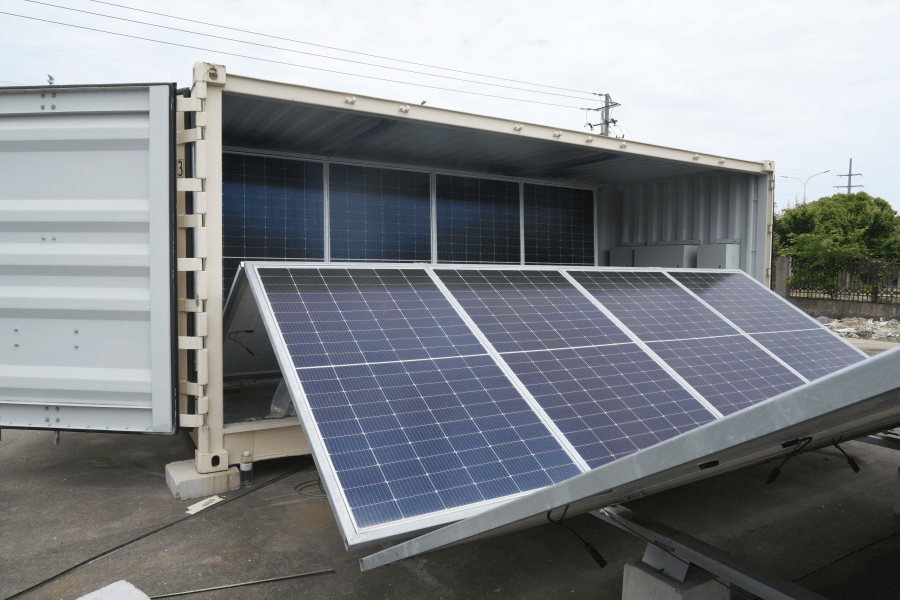
Table of Contents
- The Remote Farm's Power Dilemma: More Than Just Kilowatt-Hours
- When Safety Isn't a "Feature" C It's the Foundation
- The Pre-Integrated Container: Your Safety Blueprint, Delivered
- A Case from the Field: California Almonds and Grid-Forming Resilience
- Beyond the Spec Sheet: What Your Engineer Wants You to Know
The Remote Farm's Power Dilemma: More Than Just Kilowatt-Hours
Let's be honest. When you're planning a solar-plus-storage system for irrigation, the first things that come to mind are probably water output, pump size, and, of course, the return on investment. The hardware specs - panel wattage, battery kilowatt-hours - get all the attention. But over two decades of deploying these systems from California's Central Valley to the farmlands of Germany, I've seen a pattern. The make-or-break factor, the one that determines if a system runs reliably for 15+ years or becomes a costly headache, often isn't on the glossy brochure. It's in the Safety Regulations for Grid-forming Pre-integrated PV Container for Agricultural Irrigation.
Think about it. These aren't simple rooftop systems. We're talking about containerized power plants in the middle of nowhere, powering critical water pumps. They face dust, heat, cold, and sometimes minimal on-site oversight. A failure here isn't just an inconvenience; it's a threat to an entire season's crop. According to the National Renewable Energy Laboratory (NREL), integrating storage with renewables can boost reliability dramatically, but they also stress that "system safety and interoperability are foundational." That's a polite way of saying that if the safety architecture isn't baked in from the start, you're building on shaky ground.
When Safety Isn't a "Feature" C It's the Foundation
So, what are we really agitating about? It's the hidden costs of non-compliance. I've been on site after a thermal runaway scare in a poorly ventilated battery compartment. Honestly, it's not just about the immediate fire risk - which is paramount - it's about the cascading effects. Local fire departments in rural areas may not have protocols for lithium-ion battery fires. Permitting gets held up indefinitely. Insurance premiums skyrocket, or coverage is denied outright. Your "low-cost" system suddenly has an infinite levelized cost of energy because it's not operating.
The pain is amplified with grid-forming technology. This brilliant tech allows your solar container to "form" a stable grid, essentially acting as a microgrid when the main utility goes down. But with great power comes great responsibility. A grid-forming inverter is managing voltage and frequency in real-time. If its safety protocols aren't in lockstep with the battery management system (BMS) and the overall container design, you risk creating an unstable "island" that can damage every pump and motor connected to it. The safety regulations for these pre-integrated systems are the rulebook that prevents this, covering everything from fault current response to anti-islanding protection.

The Pre-Integrated Container: Your Safety Blueprint, Delivered
This is where the solution comes into clear focus. A pre-integrated PV container built to rigorous safety regulations isn't just a product; it's a de-risked asset. The key is that "pre-integrated" part. It means that at Highjoule, we don't just source a battery from vendor A, an inverter from vendor B, and stuff them in a box. The entire system - the structural design, thermal management, fire suppression, electrical safety interlocks, and grid-forming software - is engineered as one cohesive unit before it leaves our facility.
This approach directly targets the core pain points:
- Permitting & Insurance: The system is pre-certified to relevant UL (like UL 9540 for ESS) and IEC standards. It gives AHJs (Authority Having Jurisdiction) and insurers a clear, single point of compliance, drastically speeding up approval.
- Thermal Management: We design for the specific ambient conditions of agricultural settings. A proper liquid-cooled or forced-air system isn't an add-on; it's sized for the worst-case scenario thermal load, keeping the battery at its optimal C-rate for efficiency and longevity.
- Service & Safety: With everything pre-wired and tested, on-site installation is faster and safer. More importantly, our remote monitoring can track system health against the very safety parameters it was built to, allowing for predictive maintenance.
A Case from the Field: California Almonds and Grid-Forming Resilience
Let me give you a real example. We deployed a system for a 500-acre almond orchard in California's San Joaquin Valley. Their challenge was brutal: peak irrigation needs coincided with peak grid demand (and peak electricity prices), and they faced frequent Public Safety Power Shutoffs (PSPS) due to wildfire risk.
The grid-forming pre-integrated container was the answer. But the client's management team was rightly focused on safety, given the remote location. Our entire discussion centered on how the system met NEC, UL, and local fire marshal requirements. We walked through the built-in seismic bracing, the Novec 1230 fire suppression system that's safe for electronics, and the multi-layered disconnect strategy. Because the system was a single, pre-tested unit, the county inspector was able to sign off after reviewing the master certification packet.
The result? Last summer, during a 36-hour grid outage, the system seamlessly formed its own microgrid. The irrigation pumps never stopped. The safety systems remained actively monitored from our NOC. The peace of mind, frankly, was as valuable as the kilowatt-hours saved.
Beyond the Spec Sheet: What Your Engineer Wants You to Know
As a technical person on the ground, here's my insight for any farm or agribusiness decision-maker. When evaluating these systems, move beyond the basic specs. Ask these questions:
- "Show me the UL certifications for the assembled system." (Not just for individual components).
- "How does the thermal management design account for a 45C (113F) day with the container at full load?" (This tests the C-rate and cooling capacity).
- "What is the specific protocol for fault isolation between the grid-forming inverter and the battery rack?" (This gets to the heart of integrated safety).
Understanding the Safety Regulations for Grid-forming Pre-integrated PV Container for Agricultural Irrigation is about understanding the total cost of ownership and operational risk. It's the difference between buying a collection of parts and investing in a resilient, insurable, and bankable agricultural asset. The right regulations, baked into a pre-integrated design, don't constrain you - they liberate you to focus on your crop, not your container.
What's the one safety or reliability concern keeping you up at night for your next irrigation project?
Tags: UL Standard BESS Safety Compliance Solar Container Agricultural Irrigation Grid-Forming Inverter
Author
James Zhang
20+ years agricultural energy storage engineer / Highjoule CTO