
Optimize Grid-forming 1MWh Solar Storage for Construction Site Power
Contents
- The Silent Cost of "Temporary" Power
- Why Grid-forming is a Game-Changer for Construction
- The 1MWh Optimization Playbook: Beyond the Spec Sheet
- Real-World Proof: A Case from the California Sun
- Making It Happen on Your Site
The Silent Cost of "Temporary" Power
Let's be honest. When you're managing a construction site, power is often the last thing you want to think about, but the first thing that causes headaches. The default has been diesel generators for decades. They're familiar, they're loud, and they're incredibly expensive when you run the numbers over a 12 or 24-month project. I've been on sites where the fuel logistics alone felt like a military operation, and the noise complaints from the neighborhood? Don't get me started.
The real problem isn't just the diesel bill. It's the volatility. According to the National Renewable Energy Laboratory (NREL), fuel price volatility can swing temporary power costs by over 40% year-to-year. You're budgeting for concrete and steel, not an unpredictable line item that burns cash literally and figuratively. Then there's the carbon footprint - more and more project owners and local regulations are demanding cleaner solutions. You're left trying to power a 21st-century build with 20th-century tech.
Why Grid-forming is a Game-Changer for Construction
This is where pairing solar with a grid-forming 1MWh battery storage system changes everything. Think of traditional "grid-following" batteries as supportive teammates; they need an existing, stable grid (or a generator) to sync with. A grid-forming battery is the captain. It creates its own stable, clean "grid" from scratch. It can start cold, black-start a site, and maintain perfect voltage and frequency even when large equipment like cranes or pile drivers kick in.
For a construction site, this means you can build a robust microgrid. Your solar panels generate free power during the day, the battery stores it, and the grid-forming inverter manages the entire show, seamlessly blending solar, battery, and yes, even a backup generator if absolutely needed. The generator's role shrinks from the star player to an emergency benchwarmer, drastically cutting runtime, fuel use, and maintenance. Honestly, seeing a quiet site powered by sun and batteries is a revelation - the peace is almost as valuable as the savings.
The Core Challenge: Optimization Isn't Just Sizing
Anyone can propose a 1MWh container. The magic - and where most value is lost or captured - is in the optimization. It's not just about capacity; it's about how the system behaves, survives, and saves you money every single day on site.
The 1MWh Optimization Playbook: Beyond the Spec Sheet
Based on two decades of deployments from Texas to Bavaria, here's what truly matters when optimizing your system.
1. Right-Sizing the Power (C-Rate) for Your Loads
"1MWh" tells you the fuel tank size. The C-rate tells you how fast you can safely pump that fuel. A 1MWh battery with a 0.5C rating can deliver 500kW of continuous power. With a 1C rating, it's 1MW. On a construction site with big inductive loads, undershooting the C-rate is a classic mistake. If your peak load is 800kW, a 0.5C system (500kW) will constantly trip or force the generator on. The key is analyzing your load profile - not just the peak, but the sequence of equipment startups. Optimizing here means matching the battery's power capability to your actual site demands, ensuring it can handle the surge when the big tools fire up.
2. Thermal Management: The Silent Efficiency Killer
Batteries hate extreme temperatures. Period. I've seen systems lose 30% of their usable capacity on a hot Arizona afternoon because the thermal management was an afterthought. Optimization means insisting on a liquid-cooled system for a 1MWh unit, especially in volatile climates. It maintains an optimal temperature range, which does three critical things: extends battery life, guarantees you get the full 1MWh when you need it, and keeps safety risks in check. A well-cooled battery is a predictable, long-lasting asset. This is non-negotiable for a tough construction environment.

3. The LCOE Mindset: Total Cost of Ownership
Forget just upfront cost. You need to think in Levelized Cost of Energy (LCOE) - the total cost to own and operate the system over its life, divided by the energy it produces. A cheaper battery that degrades fast or needs constant cooling has a high LCOE. Optimization slashes LCOE by:
- Maximizing Cycle Life: Using premium, cycle-proven cells that can handle daily charge/discharge.
- Intelligent EMS: A brain that prioritizes solar, minimizes generator use, and avoids stressful deep discharges.
- Safety & Standards: A system built to UL 9540 and IEC 62619 isn't just about compliance. It's about risk mitigation. It means robust containment, gas detection, and fire suppression designed in. This prevents catastrophic loss and keeps insurance premiums manageable - a huge part of your true cost.
At Highjoule, we engineer with this LCOE mindset from day one. It's why our containers use a modular design; if a module has an issue, you isolate and replace it without taking the whole site offline. That's uptime you can bank on.
Real-World Proof: A Case from the California Sun
Let me share a recent project. A large commercial developer was building a tech campus in California's Central Valley. The challenge: power a site office, EV chargers for equipment, and nighttime security, all while meeting strict local noise and emissions rules. Diesel was a non-starter.
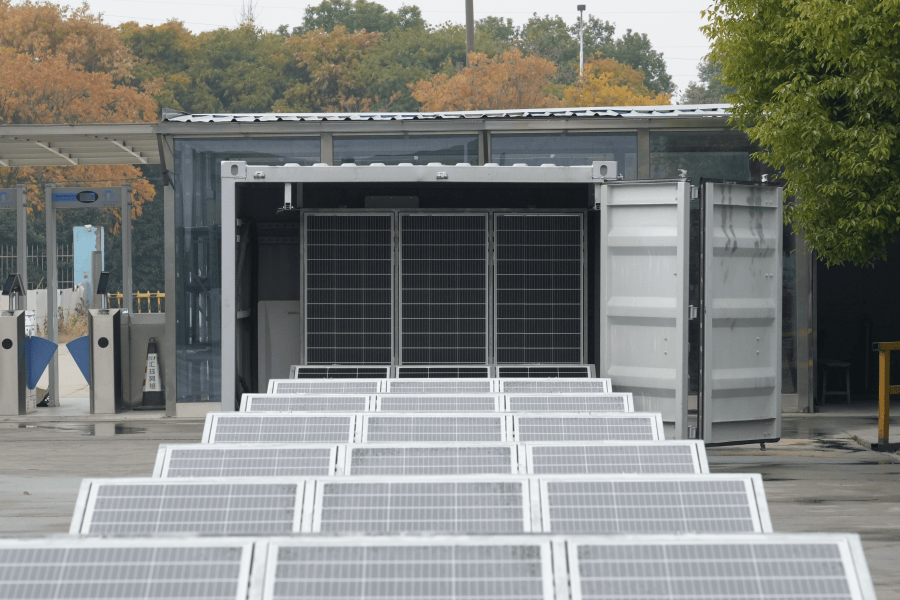
We deployed a 1MWh grid-forming BESS coupled with a 300kW solar canopy. The optimization levers we pulled were crucial:
- We specified a 1C power rating to handle simultaneous EV charging and office HVAC loads.
- The liquid cooling system was oversized for the valley's 100F+ summers.
- The Energy Management System was programmed to "learn" the solar pattern and always keep a 20% reserve for nighttime security, completely eliminating the need for a standby generator.
The result? The generator never left the trailer. They achieved 100% renewable daytime power and ~95% overnight. The project manager told me the predictable power cost was a bigger relief than the fuel savings - it took a major variable out of his budget.
Making It Happen on Your Site
So, how do you optimize your grid-forming storage project? It starts with the right partner. You need someone who asks about your load sequence and site climate before they quote a price. Look for proven compliance with UL and IEC standards - it's your baseline assurance of safety and quality.
Ask the hard questions: What's the real-world round-trip efficiency? How is the thermal system designed for my specific location? Can you show me the EMS logic for generator minimization? The goal is a system that feels like a reliable, silent crew member, not another piece of high-maintenance equipment.
What's the biggest power pain point on your site right now - is it cost, noise, reliability, or all of the above?
Tags: Construction Site Power UL Standard BESS LCOE Microgrid Grid-forming Solar Storage
Author
James Zhang
20+ years agricultural energy storage engineer / Highjoule CTO