
High-voltage DC Off-grid Solar Generators for Industrial Parks: The Ultimate Guide
The Ultimate Guide to High-voltage DC Off-grid Solar Generator for Industrial Parks
Honestly, if you're managing an industrial park in the US or Europe right now, you're probably having more conversations about energy than ever before. I've been on-site from Texas to North Rhine-Westphalia, and the story is the same: rising demand charges, unpredictable grid stability, and sustainability targets that are getting harder to ignore. The traditional approach - just pulling more power from the grid - isn't just expensive anymore; it's becoming a genuine business risk. Let's talk about what's really happening and, more importantly, a solution I've seen transform operations firsthand.
Quick Navigation
- The Real Problem: It's More Than Just Cost
- Why It Hurts: The Hidden Costs of Grid Dependence
- The Solution Unpacked: High-voltage DC Off-grid Systems
- A Case in Point: How a German Park Regained Control
- Key Tech Made Simple: What You Need to Know
- Making It Work for You: Beyond the Hardware
The Real Problem: It's More Than Just Cost
We all see the electricity bills. But the real pain point I hear from facility managers goes deeper. It's about reliability. A brief voltage dip from the grid can halt a precision manufacturing line for hours, costing tens of thousands. It's about predictability. According to the International Energy Agency (IEA), industrial electricity prices in Europe have seen volatility far exceeding historical averages. And it's about control. You have ESG goals, but how do you reliably power a 24/7 operation with intermittent renewables like solar? The grid-tied systems with basic batteries often fall short here - they're still tied to the grid's whims.
Why It Hurts: The Hidden Costs of Grid Dependence
Let's agitate that pain a little, because understanding it is key. When your entire operation is grid-tied, you're exposed. Demand charges alone can constitute 30-50% of a commercial bill. But a power outage? That's existential. I was on-site at a plastics plant in Ohio during a grid disturbance. Their low-voltage backup system took 9 seconds to kick in. That was 8 seconds too long - the polymer in the extruders solidified. The cleanup and restart took three days. The financial loss was staggering. Furthermore, many older industrial parks have grid connection limits. Want to expand your production line? You might need a costly grid infrastructure upgrade first. This isn't just an energy problem; it's a constraint on your business growth.
The Solution Unpacked: High-voltage DC Off-grid Solar Generators
This is where the concept of a true High-voltage DC Off-grid Solar Generator comes in. Think of it not as a backup, but as a primary, independent energy plant for your park. The core is a high-voltage Battery Energy Storage System (BESS) directly coupled with a large-scale solar array, operating on a DC bus. Why DC and why high-voltage? Honestly, it's about efficiency and scale. By keeping the solar power as DC and storing it as DC at a higher voltage (typically around 800-1500V DC), we cut out multiple AC-DC conversion steps. Every conversion loses 1.5-3% of your hard-earned solar energy as heat. For a 2 MW system running all day, those percentages translate into massive, wasted kilowatt-hours over a year.
This architecture is the heart of a genuine off-grid or "grid-islanding" capability. Your critical loads can run entirely on your own solar-stored energy, completely isolated from grid issues. When the grid is stable and prices are low, you can charge or even provide services back. It's the ultimate energy autonomy.
A Case in Point: How a German Park Regained Control
Let me give you a real example. We worked with a mid-sized automotive supplier park in Germany. Their challenges were classic: tight grid capacity preventing expansion, high Strompreis (electricity price), and corporate mandates to reduce carbon footprint. A standard grid-following system wouldn't solve the capacity issue.
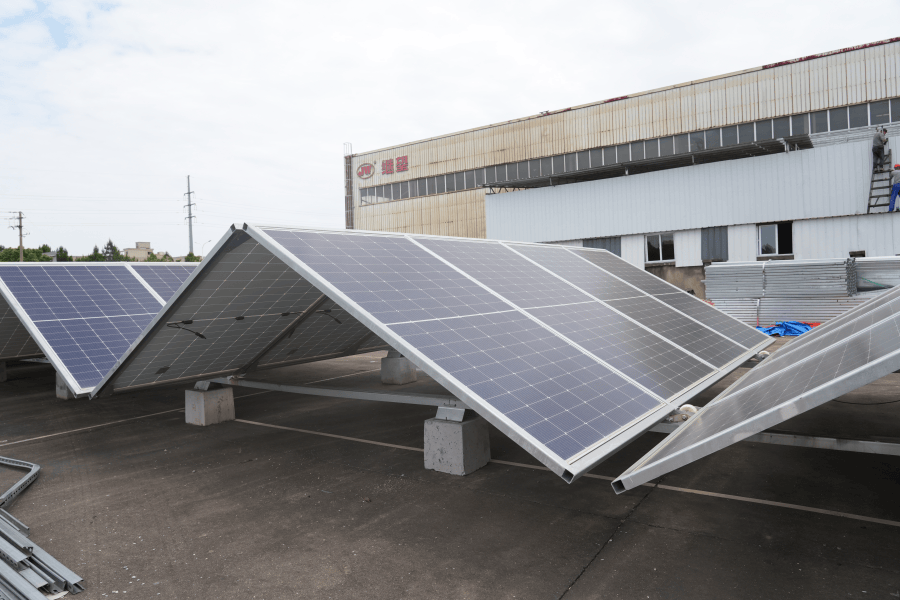
The solution was a containerized, high-voltage DC-coupled system. We deployed a 1.8 MWh BESS unit (UL 9540 and IEC 62619 certified, non-negotiable for us at Highjoule) paired with a 1.2 MWp rooftop solar canopy across their facilities. The system was designed for off-grid islanding. Now, during peak afternoon production, the entire park seamlessly isolates from the public grid and runs on solar + storage for 4-5 hours. They've capped their peak demand from the grid, avoided a ?500k grid upgrade fee, and are hitting 80% renewable self-consumption.

The key was the DC coupling and the robust system design that allowed for stable, black-start capable off-grid operation - something AC-coupled systems struggle with. Seeing the facility manager's relief when they realized they could finally control their energy destiny was the best part of the job.
Key Tech Made Simple: What You Need to Know
I know terms get thrown around. Let me break down three critical ones from a practical, on-the-ground perspective:
- C-rate: Simply put, it's how fast you can charge or discharge the battery. A 1C rate means you can use the battery's full capacity in one hour. For industrial applications, we often design with a moderate C-rate (like 0.5C). Why? Because a slower discharge is gentler on the battery, leading to much longer lifespan and better economics. Chasing a super-high C-rate for short bursts often isn't worth the long-term degradation.
- Thermal Management: This is the unsung hero. Batteries perform best and live longest at a stable, optimal temperature. I've opened units with poor thermal design where hotspots were degrading cells 40% faster. Our approach uses a liquid cooling system that precisely controls each cell's temperature. It's like a high-performance car's cooling system - it's essential for reliability and safety, especially in off-grid scenarios where you can't afford a failure.
- LCOE (Levelized Cost of Energy): This is your true "cost per kWh" over the system's entire life. It includes the upfront capex, maintenance, and degradation. A high-quality, well-cooled BESS with a smart DC design might have a slightly higher upfront cost but a significantly lower LCOE because it lasts 5-7 years longer. That's the number your CFO cares about.
Making It Work for You: Beyond the Hardware
The technology is proven. But success lies in deployment and partnership. When evaluating a solution, ask these questions: Is the system designed and tested to UL 9540 (the US safety standard for energy storage systems) and IEC 62619 (the international equivalent)? Does the provider have local engineers who understand your region's grid codes and permitting maze? At Highjoule, our project teams include local field engineers who handle everything from interconnection studies to ongoing remote monitoring. Because the best system in the world is only as good as the team that stands behind it.
The future for industrial parks is energy-resilient. The question isn't really if you'll move towards greater energy independence, but when and how. What's the one process in your park that a 2-second power interruption would shut down for a week? Let's start the conversation there.
Tags: UL Standard LCOE Europe US Market Industrial BESS Renewable Energy Energy Independence High-voltage DC Off-grid Solar Generator
Author
James Zhang
20+ years agricultural energy storage engineer / Highjoule CTO