
High-Altitude BESS Safety: Meeting IP54 & UL Standards for Outdoor ESS
Contents
- The Silent Challenge: Why Your BESS Hates Thin Air
- When the Air Gets Thin: Cost, Safety, and Performance at Stake
- Engineering for the Edge: The IP54 High-Altitude Container Blueprint
- From Blueprint to Reality: A Case from the Rockies
- The Expert's Notebook: What Your Spec Sheet Doesn't Tell You
The Silent Challenge: Why Your BESS Hates Thin Air
Honestly, when most of my clients think about deploying an outdoor Battery Energy Storage System (BESS), their main concerns are usually upfront cost, energy density, and maybe the local fire code. They picture a sturdy container sitting in a sunny field or behind a factory, humming away. What rarely comes up in the first meeting is altitude. But let me tell you, after 20 years of deploying these systems from the Alps to the Rockies, altitude is the silent variable that can make or break your project's safety, performance, and total cost of ownership.
Here's the simple physics we often overlook: as you go higher, air pressure drops. At 2000 meters (about 6560 feet), it's roughly 80% of sea-level pressure. At 3000 meters, it's close to 70%. That thinner air does two critical things everyone in the US and European markets needs to understand: it changes how heat dissipates from your container, and it stresses your electrical insulation. If your system is designed for sea-level conditions, deploying it at high altitude without specific adaptations isn't just a minor oversight - it's a genuine risk.
When the Air Gets Thin: Cost, Safety, and Performance at Stake
I've seen this firsthand on site. A well-known project in the US intermountain west (I'll keep it anonymous) used a standard, off-the-shelf outdoor container rated IP54 at sea level. At 2500 meters, their thermal management system struggled. The fans and cooling loops, sized for denser air, couldn't pull enough heat away from the battery racks. This led to consistent operating temperatures 8-10C above design specs. You know what that means? Accelerated battery degradation. A study by the National Renewable Energy Laboratory (NREL) suggests that a sustained 10C increase above optimal temperature can halve a lithium-ion battery's cycle life. That's a direct, massive hit to your project's economics and Levelized Cost of Energy (LCOE).
And it's not just about money. The reduced air density also lowers the dielectric strength of air. Arcing distances change. What was a safe clearance at sea level might become a potential flashover risk at high altitude. This isn't a theoretical issue; it directly impacts compliance with UL 9540 and IEC 62933 standards, which mandate altitude-specific testing for safety. Ignoring this means risking non-compliance, failed inspections, and in the worst case, a safety incident that could have been prevented.
Engineering for the Edge: The IP54 High-Altitude Container Blueprint
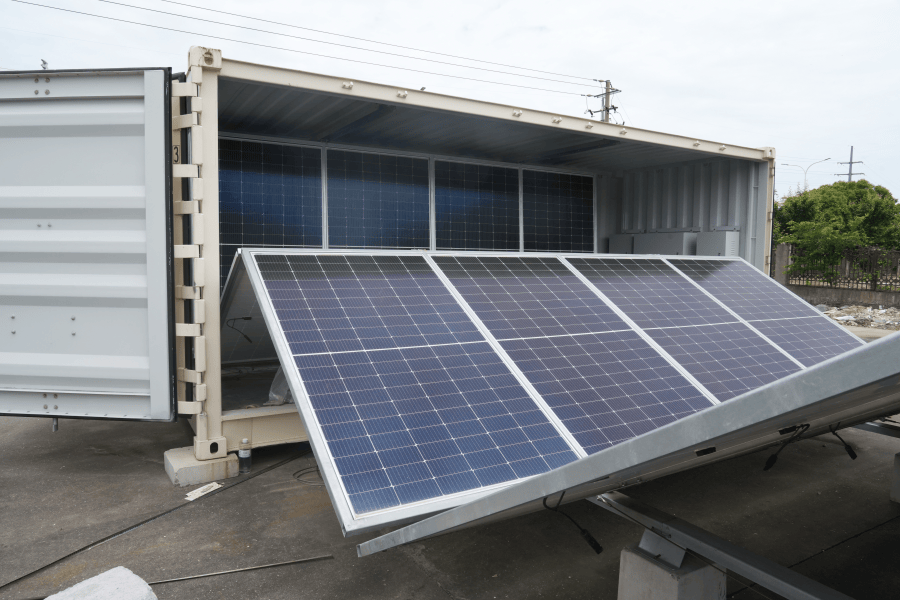
So, what's the solution? It's not a magic bullet, but a deliberate, engineered system approach. A true high-altitude ready IP54 Outdoor Industrial ESS Container is built from the ground up with these physics in mind. The "IP54" rating is just the starting point - it means dust-protected and protected against water splashes. For altitude, we need to go deeper.
At Highjoule, our design philosophy for these environments focuses on three pillars beyond the basic enclosure:
- Thermal Management Re-engineering: We don't just upsize fans. We model the specific site conditions and often move towards liquid cooling systems with larger, lower-pressure radiators. The goal is to maintain optimal cell temperature (usually around 25C) even with 30% less air density. This precision directly preserves your battery asset's value.
- Electrical System Derating & Reinforcement: Components like circuit breakers, transformers, and busbars are selected or derated for high-altitude operation to prevent overheating and manage arc flash risks. This is a non-negotiable step for meeting both UL and IEC standards in regions like Colorado or Switzerland.
- Pressure-Equalized & Monitored Enclosures: A standard IP54 container isn't airtight. We design for controlled internal pressure and monitor for particulate ingress. This is crucial because in thin, dry mountain air, static discharge risks can also increase, and dust is a different beast.

From Blueprint to Reality: A Case from the Rockies
Let me give you a real example. We deployed a 4 MWh system for a remote microgrid serving a mining operation in Colorado, above 2800 meters. The challenge was triple: altitude, huge daily temperature swings, and a requirement for UL 9540 certification. The client's initial proposal from another vendor used a standard container design, which threatened to blow the project's long-term LCOE due to predicted battery degradation.
Our solution was a customized IP54 container where the entire cooling loop was oversized by 40% based on altitude-adjusted calculations. We used passive cooling loops where possible to reduce fan dependency on thin air. Furthermore, all major electrical components had documented altitude ratings from their manufacturers, which was key for the local authority having jurisdiction (AHJ) approval. The system has been running for 18 months now, with battery temperatures staying within a tight 3C band of the setpoint, even on peak summer days. That's performance predictability you can bank on.
The Expert's Notebook: What Your Spec Sheet Doesn't Tell You
Here's my blunt advice from the field: Don't get fixated on the C-rate (charge/discharge power) alone. At high altitude, a slightly lower C-rate with a robust thermal system will give you a better LCOE than a high C-rate system that cooks itself. Ask your provider for the altitude-specific performance curves of their cooling system and the altitude derating documents for every major component.
Also, understand that Thermal Management is the heart of the system. It's not a commodity accessory. In high-altitude design, it's the main event. A well-designed system here doesn't just prevent problems; it actively extends asset life, which is the single biggest lever on improving your LCOE.
Finally, think about service. When we at Highjoule deploy in these remote, high-altitude locations, our service planning starts with the design. We need access panels, monitoring points, and replaceable modules that a technician can handle safely in cold, thin air. That kind of practical forethought is what separates a PowerPoint solution from one that will operate reliably for 15+ years.
So, the next time you're evaluating a BESS for a site even 1500 meters above sea level, what's the first question you'll ask your vendor about their container design?
Tags: BESS LCOE UL Standards IEC Standards Thermal Management High-Altitude Safety Regulations IP54 Outdoor ESS
Author
James Zhang
20+ years agricultural energy storage engineer / Highjoule CTO