
Novec 1230 Fire Safety for Agricultural BESS: A Must for UL/IEC Compliance
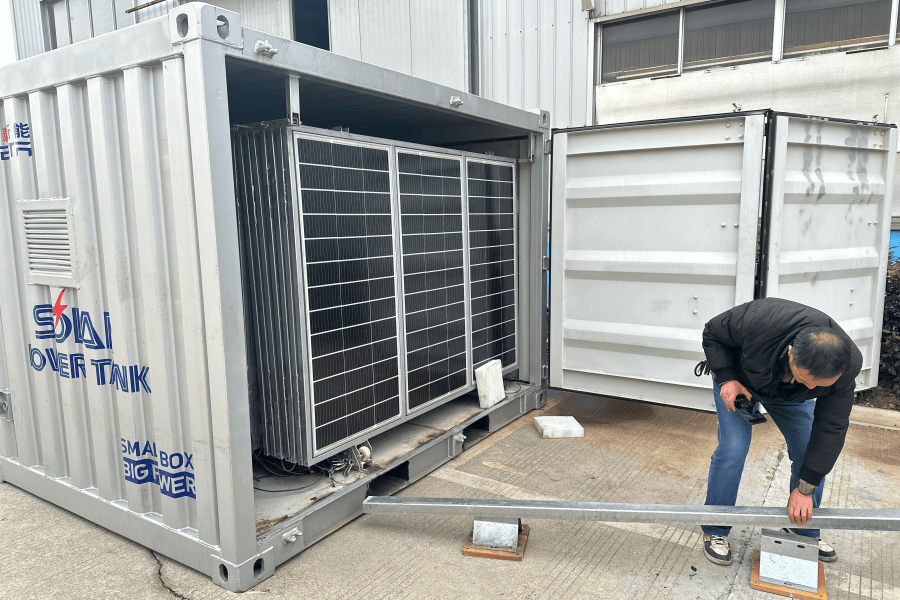
Beyond the Pump: Why Your Farm's Battery Storage Safety Can't Be an Afterthought
Hey there. Let's be honest, when you're planning an energy storage system for your irrigation or farm operations, the conversation usually starts with capacity, runtime, and ROI. The safety specs, especially the fire suppression tucked away in the container? That often gets a quick nod and gets filed under "compliance." I've been on enough sites from California's Central Valley to the farmlands of Bavaria to tell you: that's where the most critical - and costly - oversights happen.
Quick Navigation
- The Real Problem: It's Not Just About Compliance
- Why It Matters More Than You Think
- The Solution: Novec 1230 Isn't Just a "Nice-to-Have"
- A Case in Point: Learning from the Field
- What You Need to Know: The Tech Made Simple
The Real Problem: It's Not Just About Compliance
The push for renewables in agriculture is massive. You're looking to cut diesel costs, harness solar for those pivot irrigators, and maybe even create a microgrid. So you get a Battery Energy Storage System (BESS) container. The supplier talks about the UL 9540 certification for the system, and you think you're covered. But here's the nuance that keeps engineers like me up at night: the system-level certification and the specific safety regulations for the fire suppression inside that container are two different beasts, especially in a remote, dusty, agricultural setting.
I've seen containers where the fire suppression was an afterthought - a generic system that might protect the asset but could cause catastrophic collateral damage to crops, soil, and equipment if deployed. Water or traditional chemicals in a lithium-ion battery fire? That's a whole new emergency. The real problem is treating the container's internal safety as a checkbox, not as the core risk mitigation strategy it is.
Why It Matters More Than You Think
Let's agitate that point a bit. A report by the National Renewable Energy Laboratory (NREL) highlights that while BESS failure rates are low, thermal runaway events are a top concern for insurers and operators. In an agricultural context, the risk multiplies. You're not in an industrial park with a fire station five minutes away. You're in a field. A small thermal event turning into a full-blown fire doesn't just mean losing a $200,000 battery. It can mean:
- Business Destruction: Contamination of land, loss of critical irrigation timing during a growing season.
- Regulatory Hell: Failing a local fire marshal inspection or, worse, facing liabilities after an incident because your suppression system wasn't up to the specific Safety Regulations for Novec 1230 Fire Suppression Lithium Battery Storage Container for Agricultural Irrigation standards expected by authorities having jurisdiction (AHJs).
- Total Cost of Ownership (TCO) Spike: Skyrocketing insurance premiums, or worse, being uninsurable. Insurers are now digging deep into these specs.
Honestly, the cost of getting the fire suppression wrong can dwarf the initial "savings" from opting for a non-compliant or generic system.
The Solution: Novec 1230 Isn't Just a "Nice-to-Have"
So, what's the way forward? This is where my two decades of field experience converge with clear engineering best practices. For agricultural and remote industrial BESS containers, a suppression system designed around Novec 1230 fluid isn't just another option; it's becoming the de-facto standard for mitigating the unique risks we face.
Why? Because the regulations and standards - think UL, IEC, and the specific guidelines from bodies like the International Energy Agency that inform local codes - are increasingly aligning with its profile. Novec 1230 is a clean agent. It extinguishes fire by removing heat, not oxygen, which is safer for personnel. It leaves no residue, meaning no secondary damage to the sensitive battery modules or your farm's electronics. It has a low global warming potential, which matters for sustainability-focused operations. When you see a container spec that meticulously follows Safety Regulations for Novec 1230 Fire Suppression, you're looking at a provider who understands holistic risk, not just component assembly.
At Highjoule, this philosophy is baked into our Agri-Stack container design from day one. It's not a module we bolt on later. The thermal management system, the sensor placement, the airflow - they're all integrated with the assumption that the suppression agent of choice is Novec 1230, ensuring the fastest possible detection and agent deployment to contain a cell-level event before it cascades. This integrated approach is what gets you a smooth sign-off from AHJs, because it demonstrates a complete understanding of the safety envelope.
A Case in Point: Learning from the Field
Let me give you a real example from a few years back. We were brought into a vineyard project in Northern California after the initial BESS container failed the county's fire safety review. The container itself was fine, but the suppression system was a mismatch - it met a generic standard but not the local interpretation for agricultural battery storage. The project was stalled.
Our team did a full audit. The challenge wasn't just swapping tanks; it was redesigning the internal compartmentalization and sensor network to work optimally with a Novec 1230 system, complying with the stricter local Safety Regulations for Novec 1230 Fire Suppression Lithium Battery Storage Container guidelines. We worked hand-in-hand with the county fire marshal, showing them the integration, the fail-safes, the clean agent properties. The re-certification was approved. The lesson? Proactive, specification-level compliance avoids costly delays. That vineyard now has a system we continue to service remotely, with peace of mind.

What You Need to Know: The Tech Made Simple
I know this can get technical, but let's break down two key terms you'll hear, and what they mean for you:
- C-rate & Thermal Management: Simply put, C-rate is how fast you charge or discharge the battery. A higher C-rate for powerful irrigation pumps generates more heat. A superior thermal management system (like the liquid cooling we use) keeps cells evenly cool, drastically reducing thermal stress. A stressed cell is a higher risk cell. A good Novec 1230 system is your last line of defense, but a great thermal system is your first, making that last line less likely to ever be needed.
- LCOE (Levelized Cost of Energy): This is your true cost of stored energy over the system's life. A cheap, non-compliant safety system increases your LCOE through risk of failure, downtime, and insurance costs. A robust, compliant Novec 1230 system might have a slightly higher upfront cost but protects your LCOE over 10-15 years. It's the definition of a value-driven investment.
The bottom line is this: when evaluating a BESS for your agricultural needs, dig into the safety chapter. Ask the supplier: "Can you show me how this container specifically meets the Safety Regulations for Novec 1230 Fire Suppression Lithium Battery Storage Container for Agricultural Irrigation as interpreted by UL and my local fire code?" Their answer will tell you everything about their depth of experience.
What's the one safety specification you're going to ask about in your next BESS quote?
Tags: Energy Storage Container UL Standard BESS Agricultural Irrigation Novec 1230 Fire Safety
Author
James Zhang
20+ years agricultural energy storage engineer / Highjoule CTO