
Environmental Impact of 1MWh All-in-One Solar Storage for Industrial Parks
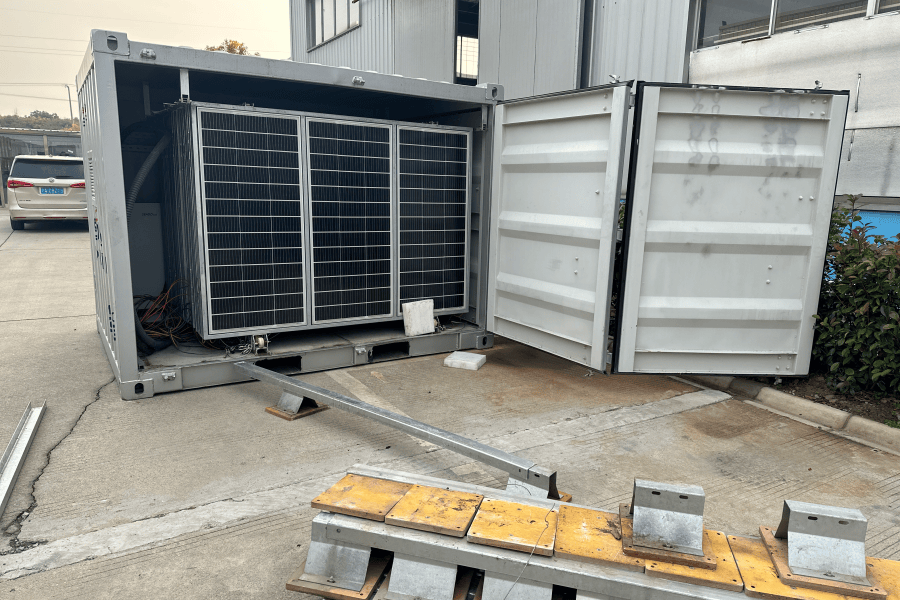
Table of Contents
- The Real Problem Isn't Just Carbon, It's Complexity
- The Hidden Environmental Costs of "Frankenstein" Systems
- The Integrated 1MWh Answer: More Than Just a Box
- A Case in Point: Lessons from a German Automotive Supplier
- Expert Insight: What "All-in-One" Really Means for Your Bottom Line and Planet
- Looking Beyond the Installation
The Real Problem Isn't Just Carbon, It's Complexity
Let's be honest. When most industrial park managers in the US or Europe think about the environmental impact of all-in-one integrated 1MWh solar storage, the first thing that comes to mind is the obvious: reducing grid dependency and cutting Scope 2 emissions. That's a fantastic goal. But from my 20+ years on site, from Texas to North Rhine-Westphalia, I've seen the real environmental story start long before the system generates its first clean kilowatt-hour.
The traditional approach to deploying a megawatt-scale solar-plus-storage system? It often involves a patchwork of components from multiple vendors - solar inverters here, battery racks from there, a separate thermal management system, and a complex web of DC/AC cabling and containment. I call them "Frankenstein" systems. Each component has its own manufacturing footprint, its own supply chain, and its own set of compatibility issues that can lead to inefficiency down the line. The Environmental Impact of All-in-one Integrated 1MWh Solar Storage for Industrial Parks begins with consolidating that chaos.
The Hidden Environmental Costs of "Frankenstein" Systems
Why does this complexity matter for the planet? Let me agitate the problem a bit with what I've seen firsthand.
- Embodied Carbon Sprawl: Multiple shipments from multiple global locations. More packaging, more transportation fuel, and a larger physical footprint on your site. The International Energy Agency (IEA) has highlighted that material efficiency is a critical lever for clean energy transitions. A disparate system is inherently less materially efficient.
- Inefficiency by Design: When components aren't designed from the ground up to work together, you get sub-optimal performance. A slight mismatch in voltage tolerances or communication protocols can lead to clipping losses or inefficient battery cycling. Over 15 years, that wasted energy adds up to a significant, avoidable carbon footprint.
- End-of-Life Headache: Decommissioning a system made of 10 different vendors' equipment is a logistical and environmental nightmare. Responsible recycling streams get muddied when you have to disassemble and sort a tangled ecosystem of parts.
This is where the promise of a truly integrated 1MWh solution shifts from a technical spec to an environmental imperative.
The Integrated 1MWh Answer: More Than Just a Box
So, what's the solution? It's moving from a project to a product. An all-in-one, containerized 1MWh BESS unit, like the ones we engineer at Highjoule Technologies, is designed to tackle these hidden impacts head-on.
Think of it as a clean energy appliance. The power conversion, battery modules, thermal management, and safety systems are co-engineered in a single, UL 9540 and IEC 62933-compliant enclosure. This isn't just about neatness; it's about fundamental efficiency. The thermal system is precisely calibrated for the specific cell chemistry and C-rate, which is just a fancy term for how fast you charge or discharge the battery. Proper thermal management is the single biggest factor in extending battery life - and maximizing the return on your embodied carbon investment.

A Case in Point: Lessons from a German Automotive Supplier
I remember working with a mid-sized automotive parts supplier in Bavaria. Their goal was to maximize self-consumption of their rooftop solar and provide backup for critical CNC machining lines. They initially looked at a multi-vendor setup.
The challenge? Limited space, strict local fire safety codes (VdS in Germany), and a need for predictable Levelized Cost of Energy (LCOE). The fragmented design would have required a custom fire suppression design, extra switchgear, and nearly 40% more footprint.
We proposed a pre-certified, all-in-one 1MWh system. Because it arrived as a single unit with integrated fire detection and suppression (meeting both UL and local standards), site preparation was minimal - just a concrete pad. The commissioning time dropped from an estimated 8 weeks to 10 days. Honestly, the biggest environmental win was the reduction in site disturbance and construction waste. The system's advanced cycling algorithms have optimized their solar self-consumption to over 92%, drastically reducing their grid mix consumption, which, according to data from IRENA, still carries a significant carbon intensity in the region.
Expert Insight: What "All-in-One" Really Means for Your Bottom Line and Planet
Let's break down two technical terms that decision-makers should care about: LCOE and C-rate.
LCOE (Levelized Cost of Energy): This is your total cost to own and operate the system per MWh produced over its lifetime. An integrated system lowers LCOE not through cheaper parts, but through superior longevity and lower operational costs. Better thermal management (possible only with co-engineered components) can add years to battery life. Fewer interconnection points mean lower failure risk and simpler, less carbon-intensive maintenance. A lower LCOE directly correlates with a better environmental ROI.
C-rate: Simply put, it's the speed of battery charge/discharge. A 1C rate means fully charging or discharging in 1 hour. For industrial applications, you rarely need extreme C-rates. An integrated system can be optimally tuned for a moderate, durable C-rate (like 0.5C) that minimizes stress on the cells. I've seen overspecified, high-C-rate cells in mismatched systems degrade 30% faster because the cooling wasn't up to the task. That's wasted resources and a need for earlier replacement.
At Highjoule, our design philosophy is "right-sizing for resilience." We don't over-engineer on specs you don't need, which is itself a sustainable practice. Our integrated units are tested as a whole system, not just as parts, ensuring the performance we model on paper is what you get on your site.
Looking Beyond the Installation
The final piece of the environmental puzzle is the operational phase and beyond. A well-integrated system with robust, remote monitoring (a service we provide for all our deployments) ensures it's always running at peak efficiency. We can spot a slight deviation in a module's temperature or voltage before it becomes a problem, preventing energy waste.
And at end-of-life? Dealing with a single, known chemistry and a standardized module design makes responsible recycling and second-life applications - like using retired battery packs for less demanding stationary storage - a viable, closed-loop pathway. This circular economy thinking is baked into the integrated product from the start.
So, when you evaluate the Environmental Impact of All-in-one Integrated 1MWh Solar Storage for Industrial Parks, look beyond the carbon offset calculation. Ask your provider about embodied carbon in the supply chain, design for longevity, and the plan for the system's final chapter. The most sustainable kilowatt-hour is the one that comes from a system designed to waste nothing - not space, not materials, and not a single electron.
What's the single biggest site constraint you're facing in your own decarbonization plan? Is it physical space, interconnection complexity, or finding a solution that truly meets both your financial and sustainability KPIs?
Tags: UL Standard BESS LCOE Europe US Market Industrial Energy Storage Renewable Energy
Author
James Zhang
20+ years agricultural energy storage engineer / Highjoule CTO