
Why Novec 1230 Fire Suppression is Critical for Construction Site BESS Safety
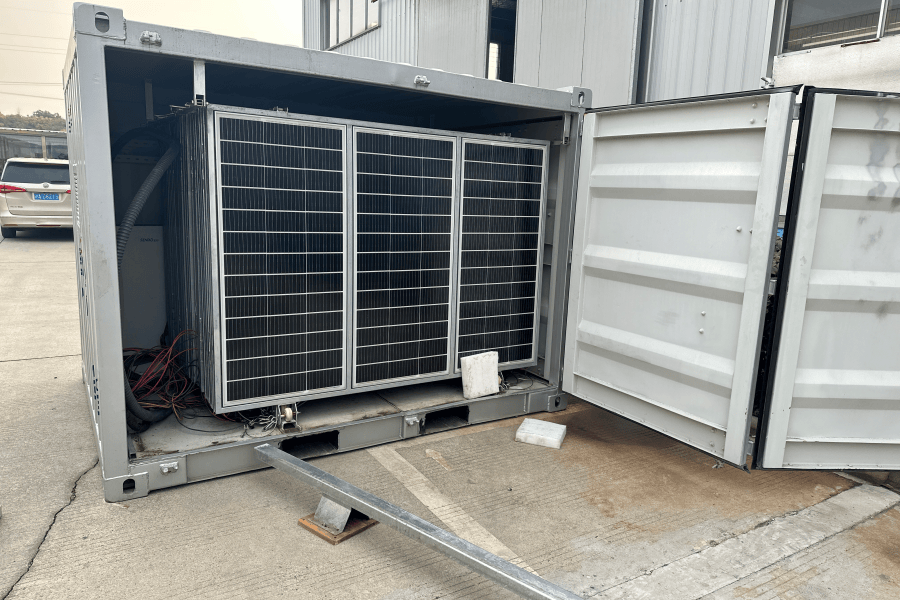
Table of Contents
- The Silent Risk on Your Construction Site
- Beyond the Spark: The Real Cost of a BESS Incident
- Novec 1230: The Engineered Solution for a Unique Environment
- From Blueprint to Reality: A German Case Study
- The Expert's Deep Dive: C-rate, Thermal Runaway, and LCOE
- Choosing the Right Partner for Your Site's Power
The Silent Risk on Your Construction Site
Let's be honest. When you're managing a major construction project, your risk assessment checklist is a mile long. You've got fall protection, heavy machinery protocols, electrical safety C the works. But here's something I've seen firsthand on site after site, especially here in Europe and across the Atlantic: the temporary power setup, particularly a photovoltaic (PV) and battery storage system (BESS), is often an afterthought. It gets plopped down, connected, and as long as the lights stay on and the tools run, everyone moves on. The focus is on getting the permanent structure built, not on the safety intricacies of the temporary power plant fueling it.
This creates a blind spot. A construction site BESS isn't sitting in a pristine, climate-controlled energy storage facility. It's in a dusty, vibration-prone, dynamically changing environment with a higher probability of physical damage, electrical faults, and, frankly, human error. According to a 2023 analysis by the National Renewable Energy Laboratory (NREL), while BESS failure rates are low, environmental and operational stressors - exactly what a construction site delivers in spades - are significant contributing factors to safety events. The standard fire suppression you might use in a finished building? It's often completely inadequate for a lithium-ion battery fire.
Beyond the Spark: The Real Cost of a BESS Incident
So, what happens if something goes wrong? It's not just about a small fire you can put out with an extinguisher. A thermal runaway event in a battery module is a chemical fire that feeds on itself, releasing intense heat and toxic, flammable gases. It can escalate in minutes.
On a construction site, the stakes are multiplied:
- Project Halt: A serious fire will shut down the entire site. Not for a day, but for weeks or months during investigation, cleanup, and sourcing a new power solution. The delay costs are astronomical.
- Asset Loss: You lose the entire BESS unit, a capital asset worth hundreds of thousands.
- Secondary Damage: Fire and corrosive gases can damage nearby equipment, partially built structures, and materials.
- Reputational & Regulatory Hell: The headlines write themselves. "Green Construction Site Goes Up in Flames." Your insurance premiums will skyrocket, and you'll face a mountain of compliance paperwork from local fire marshals and safety authorities.
The core problem is that water or common gaseous agents can't effectively penetrate battery racks to stop the chain reaction at its source, and they can cause catastrophic short circuits in the surrounding equipment. You need a agent designed for energized electrical equipment and deep-seated chemical fires.

Novec 1230: The Engineered Solution for a Unique Environment
This is where specific Safety Regulations for Novec 1230 Fire Suppression Photovoltaic Storage System for Construction Site Power aren't just bureaucratic red tape - they are the operational blueprint for risk mitigation. Novec 1230 fluid isn't a generic choice; it's the industry-prescribed solution for high-value, critical electrical assets for a few rock-solid reasons:
- Electrically Non-Conductive: It can be safely discharged directly onto live electrical components without causing a short circuit. On a construction site where someone might accidentally nick a cable, this is critical.
- Clean Agent, Zero Residue: It evaporates completely. After discharge, there's no corrosive mess to clean up. You don't have to worry about it ruining sensitive inverter electronics or creating a slurry of dust and sludge inside the BESS container.
- Rapid Fire Knockdown & Heat Absorption: It works by removing heat from the fire triangle at an incredible speed, stopping thermal runaway from jumping to adjacent battery modules.
- People-Safe for Occupied Spaces: Its design concentration is safe for human exposure, allowing for a quicker, safer response in an emergency.
Regulations built around Novec 1230 for these systems dictate everything from cylinder placement and piping design to detection sensitivity (smoke and heat) and discharge time. They ensure the system isn't just present, but is precisely engineered to protect that specific BESS layout.
From Blueprint to Reality: A German Case Study
Let me give you a real example. We worked on a large automotive plant expansion in North Rhine-Westphalia, Germany. The contractor needed a 1 MWh BESS to buffer solar power from a temporary array and provide overnight power for site offices and security. The local fire authority (Feuerwehr) and insurers flatly refused to sign off on the permit until the BESS's fire suppression plan was presented.
The challenge? The BESS container was positioned in a tight area, close to other temporary structures. A standard water mist system wouldn't get approval due to runoff and electrical risk. Our solution was a fully integrated, UL-certified BESS platform from Highjoule, where the Novec 1230 system wasn't an add-on, but a core part of the design from day one. We provided the fire authority with the full system schematic, agent calculation sheets, and compliance certificates with IEC 62933 and the relevant NFPA standards. It turned a potential 6-week permitting delay into a 3-day review. The system has been running flawlessly for 14 months now. The project manager told me last month that their insurer specifically commended the safety setup, which reflected in their policy.
The Expert's Deep Dive: C-rate, Thermal Runaway, and LCOE
Now, for a bit of insider perspective. You might hear "Novec 1230" and think it's just a fire system. But it's deeply tied to the core economics and engineering of your BESS. Here's how:
Thermal Management & C-rate: The C-rate is basically how fast you charge or discharge the battery. On a construction site, you might have huge spikes in demand (everyone starting equipment at 7 AM). A higher discharge C-rate generates more heat inside the cells. A robust thermal management system (which we design for) handles this, but it's your first line of defense. The Novec system is the absolute last line. If the first line fails under extreme stress or damage, you have a world-class backup that contains the event to a single module or rack. This allows for more aggressive, cost-saving power usage profiles without compromising safety.
The Real LCOE (Levelized Cost of Energy): Everyone buys a BESS to save money on energy. But the true cost includes risk. A cheaper BESS with an inferior or non-compliant fire suppression system has a hidden "risk premium." Its potential for total loss and project delay is higher. When you factor that in, the LCOE of the safer, compliant system is often lower over the lifespan of your project. You're buying certainty. At Highjoule, we model this not just as an equipment sale, but as a total risk-adjusted energy solution for your site's timeline.

Choosing the Right Partner for Your Site's Power
So, when you're evaluating a temporary PV storage system for your next project, don't just look at the price per kWh. Drill into the safety specs. Ask the hard questions:
- "Is the fire suppression system pre-engineered and tested with this specific BESS model, or is it a generic third-party add-on?"
- "Can you provide the UL 9540A test report and the system's compliance with NFPA 855 for the installed configuration?"
- "How does the detection system differentiate between dust (common on sites) and genuine smoke particulates?"
Our approach at Highjoule has always been to engineer the safety in from the start. It's more work for us upfront, but it saves our clients a world of pain downstream. We handle the local regulatory nuance, whether it's UL in the U.S. or the evolving IEC standards in the EU, because we've done it for two decades.
What's the one safety specification you now realize you've been overlooking in your temporary site plans?
Tags: Construction Site Power UL Standard BESS Thermal Management Photovoltaic Storage Novec 1230 Fire Safety
Author
James Zhang
20+ years agricultural energy storage engineer / Highjoule CTO