
ROI Analysis: Air-cooled BESS for EV Charging Stations in US & Europe
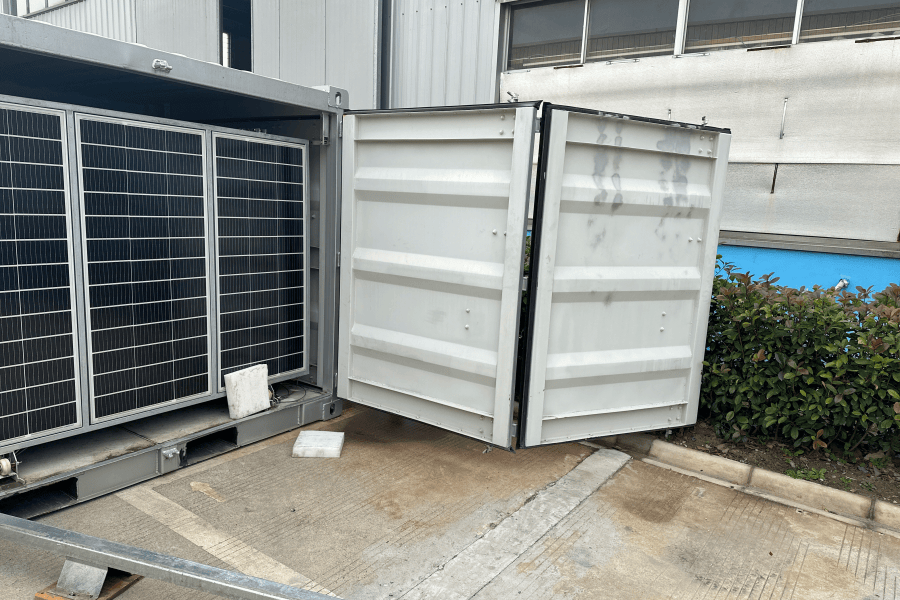
Beyond the Charger: The Real ROI of Air-Cooled BESS for Your EV Charging Hub
Honestly, if I had a dollar for every time a client showed me their soaring electricity bill after installing a dozen DC fast chargers, well, let's just say I wouldn't be writing this blog. I've seen this firsthand on site: a well-intentioned business rolls out EV charging to attract customers, only to get blindsided by demand charges and an unstable local grid. The excitement fades fast when the operational costs start eating into the profits. The conversation quickly shifts from "how many chargers?" to "how do we make this financially sustainable?"
That's where a solid ROI analysis for a Battery Energy Storage System (BESS), specifically an air-cooled one, becomes your most crucial planning tool. It's not just about buying batteries; it's about building a resilient, profitable energy asset. Let's break down the real numbers and on-the-ground realities.
Quick Navigation
- The Hidden Cost of "Fast" Charging
- Why Air-Cooled BESS Makes Financial Sense Now
- The ROI Breakdown: More Than Peak Shaving
- A Real-World Case: California Retail Site
- Key Technical Factors in Your ROI Calculation
- Getting Your Analysis Right
The Hidden Cost of "Fast" Charging
Here's the core problem everyone faces: EV fast charging is incredibly power-hungry. A single 150 kW charger can draw the equivalent of 50 homes all at once. For commercial sites, this creates two massive financial headaches:
- Demand Charges: In many US and European tariffs, up to 50% of your commercial bill can be based on your peak 15-minute power draw in a month. One cluster of EVs charging simultaneously can spike that peak, resulting in punishing charges that last for an entire billing cycle.
- Grid Upgrade Costs: When your site's power needs exceed the local transformer or line capacity, the utility will quote you for a costly upgrade - often in the hundreds of thousands. I've seen projects get shelved entirely because of this.
The International Energy Agency (IEA) highlights that smart charging and onsite storage are key to integrating EVs without overburdening grids. Without a buffer, your EV charging investment can become a liability.
Why Air-Cooled BESS Makes Financial Sense Now
So, you're considering storage. The immediate question is often: liquid-cooled or air-cooled? For the majority of commercial and industrial EV charging depots, the ROI analysis is increasingly favoring modern air-cooled systems. Here's why.
Air-cooled BESS uses fans and ambient air to manage battery temperature. It's simpler. And in engineering, simpler often means more reliable and cost-effective. The upfront CAPEX is typically 15-25% lower than an equivalent liquid-cooled system. But the bigger savings are operational. There are no coolant lines, pumps, or heat exchangers to maintain. The system's efficiency - its round-trip AC-AC efficiency - is consistently high because it isn't powering a complex liquid cooling loop.
Now, I can hear the objection: "But what about thermal management in hot climates?" This is a fair point. At Highjoule, we've engineered our air-cooled containers with advanced internal airflow design and cell-level monitoring that preemptively manages heat. For the typical duty cycle of an EV charging station - bursts of high power (high C-rate) followed by idle periods - a well-designed air-cooled system is more than adequate and fully compliant with strict safety standards like UL 9540 and IEC 62933.

The ROI Breakdown: More Than Peak Shaving
A good ROI model looks at all revenue streams and cost avoidances. For an air-cooled BESS at an EV station, it's a multi-layered value stack:
| Value Stream | Impact on ROI |
|---|---|
| Demand Charge Management | The primary saver. The BESS discharges during charging peaks, clipping your site's draw from the grid. This can reduce demand charges by 30-50%. |
| Energy Arbitrage | Charge the BESS with cheap, off-peak or solar power, discharge during expensive peak periods to supply chargers. |
| Grid Upgrade Deferral | Avoids a massive capital outlay. The BESS provides the needed "peak" power, delaying or eliminating the need for a transformer upgrade. |
| Resilience & Uptime | If the grid goes down, your chargers (or a critical subset) can still operate. For fleet operators, this uptime has direct revenue value. |
| Lower Maintenance Costs | Air-cooled systems contribute to a lower Levelized Cost of Storage (LCOS) over the 15-year lifespan due to minimal complex maintenance. |
A Real-World Case: California Retail Site
Let me share a scenario from a project we did in Southern California. A big-box retailer installed eight 350 kW chargers. Their initial peak demand jump threatened a $200k grid upgrade and added $15k/month in new demand charges.
We deployed a 1.5 MWh / 1.5 MW air-cooled Highjoule BESS. The system was designed to:
- Cap the site's peak grid import at a pre-set safe level.
- Charge overnight at low time-of-use rates.
- Integrate with their existing rooftop solar.
The result? The grid upgrade was postponed indefinitely. Monthly demand charges were cut by over $11,000. The combined savings created a simple payback period of under 5 years. The reliability has been stellar - the simplicity of the air-cooled design meant our remote monitoring and once-a-year onsite check were all that was needed.
Key Technical Factors in Your ROI Calculation
When you're deep in the numbers, don't overlook these technical aspects that directly impact financial returns:
- C-rate Capability: This is the speed of charge/discharge. EV charging needs high power bursts. Ensure your BESS can handle a sustained C-rate of 1C or more to effectively shave those short, sharp peaks. An undersized inverter relative to the battery will cripple your ROI.
- Thermal Management & Degradation: Heat is the enemy of battery life. A sophisticated air-cooled system with precise control will keep cells in the optimal temperature window, slowing degradation. This preserves your system's capacity and earning potential over its entire life, which is critical for long-term ROI.
- LCOS (Levelized Cost of Storage): This is your ultimate metric. It sums all costs (capex, opex, degradation) over the system's lifetime and divides by total energy discharged. A reliable, low-maintenance air-cooled system often wins on LCOS against more complex alternatives, especially in moderate climates.

Getting Your Analysis Right
The biggest mistake is using generic assumptions. Your ROI analysis must be hyper-localized. You need:
- 12 months of your site's actual utility bills (rates, demand charges).
- Local utility interconnection rules and potential incentives (like the ITC in the US).
- Projected EV charging usage profiles (how many cars, at what power, and when).
At Highjoule, this is where we start every conversation. We model your specific data with our system's performance specs to give you a transparent, no-surprises financial projection. We build to the standards you require - UL, IEC, IEEE - because compliance isn't just about safety; it's about insurance, financing, and long-term asset value.
So, is an air-cooled BESS the right financial move for your EV charging project? The answer is increasingly yes. But the real question is: do you have the right, site-specific data to make that decision with confidence?
Tags: LCOE UL Standards EV Charging Infrastructure ROI Analysis Battery Energy Storage System Air-Cooled BESS
Author
James Zhang
20+ years agricultural energy storage engineer / Highjoule CTO