
Novec 1230 Fire Safety for BESS: A Must-Have for Utility-Scale Projects in the US & EU
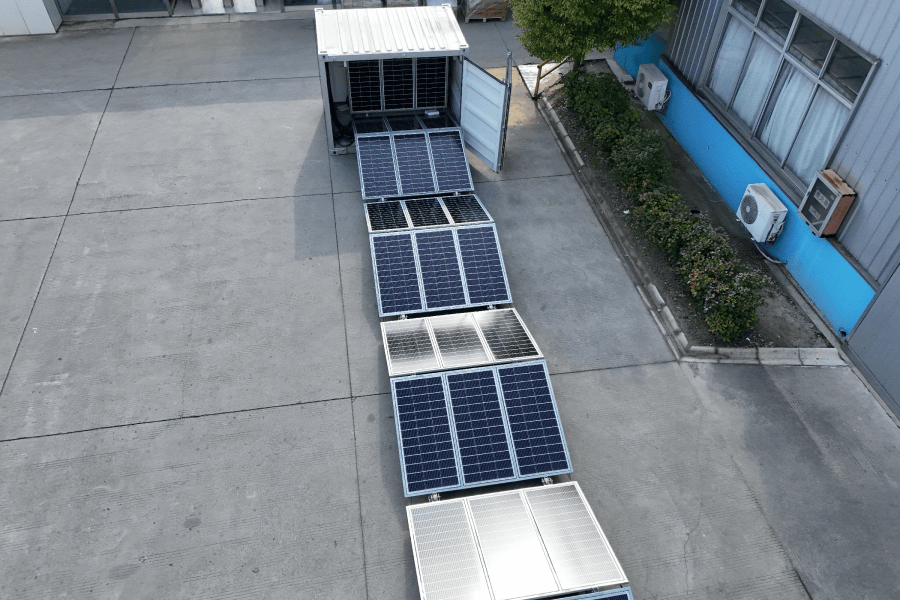
Beyond the Hype: Why Your Grid-Scale BESS Can't Afford to Compromise on Fire Safety
Hey there. Let's be honest for a minute. Over coffee with clients, the talk always starts with capacity, duration, and the all-mighty Levelized Cost of Storage (LCOS). But ten minutes in, the conversation inevitably turns to the elephant in the room: "What about the fire risk?" I've been on-site for over two decades, from the deserts of Arizona to the industrial parks in Germany's Ruhr Valley, and I can tell you firsthand - this isn't just a technical checkbox. It's the single biggest factor that can derail a project's financing, public acceptance, and long-term viability. Today, I want to cut through the noise and talk about a specific, non-negotiable layer of protection that's becoming the gold standard for serious players: Safety Regulations for Novec 1230 Fire Suppression in Solar Containers for Public Utility Grids.
Quick Navigation
- The Real Problem: It's More Than Just a "Risk"
- Why It Hurts: The Domino Effect of Inadequate Safety
- The Solution: Novec 1230 as a System-Level Philosophy
- Case in Point: A Lesson from the Field
- Beyond the Gas: The Integrated Safety Mindset
The Real Problem: It's More Than Just a "Risk"
We're deploying battery energy storage systems (BESS) at an unprecedented scale. The IEA reports that global grid-scale storage capacity is set to multiply exponentially this decade. That's fantastic for the energy transition. But here's the phenomenon I see: the race to deploy and capitalize on incentives sometimes outpaces the meticulous, on-the-ground engineering for safety. We're not talking about small residential units here; we're talking about containers holding megawatt-hours of energy, often situated near critical infrastructure or communities.
The core problem isn't the probability of a thermal event - good design keeps that extremely low. It's the consequence. A fire in a lithium-ion battery pack is a chemical fire, producing intense heat and toxic, flammable gases. Water alone can be ineffective and even hazardous. Without a suppression system designed specifically for this chemistry, a single cell failure can cascade, leading to total asset loss, prolonged grid instability, and devastating reputational damage for the entire industry.
Why It Hurts: The Domino Effect of Inadequate Safety
Let's agitate this a bit. What does "consequence" actually mean on a balance sheet or a project timeline?
- Insurance & Financing Wall: I've seen projects where the term sheet was conditional on achieving a specific safety certification, like UL 9540A. Insurers and lenders are not battery experts; they need quantifiable, third-party-verified risk mitigation. A robust, recognized fire suppression system like one using Novec 1230 is often a prerequisite to get that stamp of approval and secure competitive rates.
- Total Cost of Ownership (TCO) Spike: Think beyond the capex of the container. A serious incident means not just replacing the BESS, but potential site remediation, regulatory fines, and years of lost revenue. That can obliterate your carefully calculated LCOS.
- Community & Permitting Hurdles: In California or parts of Europe, local fire marshals and planning committees have become incredibly savvy. Showing up with a design that meets only the bare minimum national codes won't fly. They want to see proactive, best-practice solutions. Novec 1230, with its clean agent properties (no residue, safe for people), directly addresses community safety concerns, smoothing the permitting process.
The Solution: Novec 1230 as a System-Level Philosophy
So, where does Novec 1230 fit in? Honestly, it's not a magic bullet you just spray into a box. It's the centerpiece of a holistic safety philosophy mandated by evolving Safety Regulations for Novec 1230 Fire Suppression Solar Container for Public Utility Grids. This approach integrates several key layers:
First, Thermal Management. You have to manage the battery's C-rate - the speed at which it charges and discharges - because that generates heat. A good liquid cooling system is your first line of defense, keeping cells in their happy zone and preventing stress.
Second, Early Detection. We use laser-based smoke detection (like VESDA) that can sniff out off-gassing particles long before a traditional smoke alarm would trigger. This gives the system a critical head start.
Third, and this is where Novec 1230 shines, is Targeted Suppression. When a thermal runaway is detected, the system floods the specific module or enclosure with Novec 1230. This agent works by removing heat incredibly fast, cooling the cells below the runaway threshold and stopping the chain reaction. It's electrically non-conductive and leaves no residue, meaning no secondary damage to healthy battery modules or electronics. For utilities, this isn't just about putting out a fire; it's about containing an event to a single, manageable section, preserving the majority of the asset's functionality and grid service.

Case in Point: A Lesson from the Field
Let me give you a real example from a project we were involved with in the Midwest US. A developer was integrating a 100 MWh BESS into a substation to provide grid frequency regulation. The initial design met basic code but used a generic suppression agent. During value engineering, our team pushed for an upgrade to a UL-certified Novec 1230 system designed to the latest NFPA standards.
The challenge? It added upfront cost. The outcome? It became the key differentiator. The local fire authority, after reviewing the system's test data and clean agent properties, fast-tracked the permit. More importantly, the project's insurer provided a significantly reduced premium, which over the 20-year project life, more than paid for the upgraded system. The finance team saw it immediately: lower operational risk translated directly into a more robust, financeable asset. That's the power of treating safety as a value driver, not a cost center.
What This Means for Your LCOE
People get scared by technical terms like LCOE. Let's simplify. LCOE is the total cost to build and operate the asset over its life, divided by the energy it puts out. A fire event makes the numerator (cost) skyrocket and the denominator (energy output) plunge to zero. A premium safety system like a Novec 1230 setup slightly increases the initial numerator but protects the denominator for the entire project lifespan. It's the ultimate insurance policy that actually improves your long-term economics.
Beyond the Gas: The Integrated Safety Mindset
At Highjoule, when we design a containerized BESS for the utility market, the Safety Regulations for Novec 1230 Fire Suppression are a given, a baseline. But we build around it. Our architecture considers compartmentalization - physically separating battery racks with fire barriers to limit propagation paths. We design for serviceability so that if an event is contained, technicians can safely access and replace only the affected module. And we ensure every component, from the battery racks to the HVAC, is sourced and tested to meet the stringent demands of UL, IEC, and IEEE standards that our North American and European clients require.
The goal isn't to sell a container with a gas tank attached. The goal is to deliver a resilient grid asset that operators can trust, communities can accept, and financiers can bank on. Because in the end, the success of our energy transition depends on reliability, and nothing kills reliability - and confidence - faster than a preventable disaster.
So, next time you're evaluating a BESS proposal, dig into the safety section. Ask, "How does the suppression system actually work with the battery chemistry?" The answer will tell you everything you need to know about the vendor's experience and your project's real-world readiness.
Tags: UL Standard BESS Utility-Scale Energy Storage Grid Stability Novec 1230 Fire Safety Project Finance
Author
James Zhang
20+ years agricultural energy storage engineer / Highjoule CTO