
IP54 Outdoor Industrial ESS Container for Remote Island Microgrids: A Practical Guide
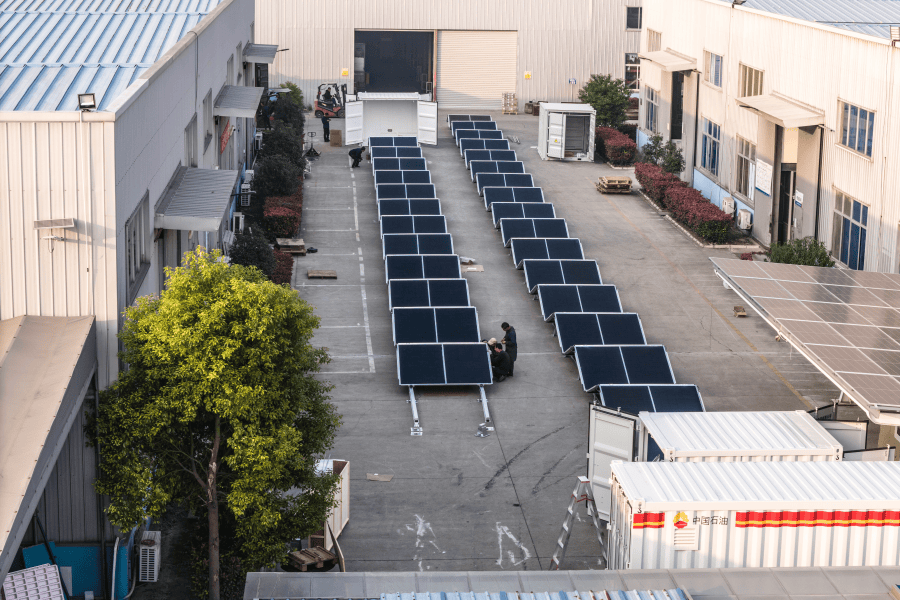
IP54 Outdoor Industrial ESS Container for Remote Island Microgrids: What You Really Need to Know
Hey there. If you're reading this, chances are you're evaluating energy storage for a remote or islanded grid project. Maybe you're in the Caribbean, off the coast of Scotland, or on an Alaskan island. I've been on-site for more of these deployments than I can count over the last two decades, from initial feasibility studies to the final commissioning handshake. And honestly, one of the most critical C and often underestimated C decisions you'll make is selecting the right outdoor container for your Battery Energy Storage System (BESS). It's not just a box; it's the first and last line of defense for your multi-million dollar investment against salt, sand, storms, and sheer isolation. Let's talk about what matters, beyond the spec sheet.
Quick Navigation
- The Real Problem: It's More Than Just a Box
- The Agitating Truth: The Hidden Cost of "Resilience"
- The IP54 Outdoor Container: A Pragmatic Solution Framework
- Case in Point: Lessons from a Mediterranean Island
- Expert Insights: C-Rate, Thermal Management & LCOE in the Real World
- Making the Choice: What to Look For
The Real Problem: It's More Than Just a Box
Here's the common scenario in the US and Europe: a project team specifies an "outdoor-rated" container. The focus is overwhelmingly on the battery cells, the PCS rating, the software. The enclosure is an afterthought, a commodity item. I've seen this firsthand on site. The assumption is that if it's steel and has an air conditioner, it's good to go. For a suburban industrial park in Ohio, maybe that's fine. But for a remote island microgrid? That's where the trouble starts.
The core problem isn't weatherproofing in a general sense; it's defending against a specific, brutal cocktail of environmental stressors while maintaining operational efficiency and safety, often with minimal on-site maintenance. We're talking about:
- Corrosive Atmospheres: Salt-laden air that eats away at electrical connections and structural components within months, not years.
- Particulate Ingress: Fine sand and dust that can clog air filters, coat heat sinks, and interfere with cooling systems, leading to thermal runaway risks.
- Thermal Extremes & Humidity: Not just high ambient heat, but the combination of high heat with 95%+ humidity, which strains climate control and promotes condensation inside the enclosure.
- Limited Service Windows: You can't just call a technician for a next-day visit. Every maintenance action is a complex, costly logistical exercise.
The Agitating Truth: The Hidden Cost of "Resilience"
So, what happens when the enclosure isn't up to the task? The pain isn't theoretical; it's financial and operational.
First, premature failure. A study by the National Renewable Energy Laboratory (NREL) on offshore wind O&M highlights that corrosion and environmental wear can increase operations and maintenance costs by up to 30% in harsh environments. BESS containers face similar physics. A failed HVAC unit in the tropics can spike internal temperatures to critical levels in hours, forcing a full system shutdown and potentially degrading battery lifespan permanently.
Second, efficiency loss. A container that's poorly sealed or insulated forces its HVAC system to work overtime. I've measured auxiliary power loads (the "parasitic load" of cooling, lighting, etc.) consuming 8-10% of the system's stored energy in a badly designed box, compared to 3-4% in a well-engineered one. That directly hits your Levelized Cost of Storage (LCOS). You're literally wasting the energy you paid to store.
Finally, safety compromises. IP (Ingress Protection) rating isn't just about keeping water out. IP54, specifically, protects against limited dust ingress (5) and water splashes from any direction (4). In a dusty, salty environment, maintaining that seal around cable entry points, door gaskets, and ventilation louvres is critical for preventing electrical faults and internal corrosion.
The IP54 Outdoor Container: A Pragmatic Solution Framework
This is where a properly designed IP54-rated industrial ESS container transitions from a commodity to a strategic asset. It's not the highest possible rating (that would be IP66/67), but for most remote island applications, IP54 represents a sweet spot of robust protection, thermal management feasibility, and cost-effectiveness. The key is in the execution of that rating across the entire system lifecycle.
A true solution-oriented container for this application is built around a few non-negotiable principles:
- Holistic Sealing: Every seam, every conduit entry, every service panel is designed with dual seals and corrosion-resistant gaskets.
- Corrosion-First Material Science: This means hot-dip galvanized steel frames, aluminum or stainless-steel exterior cladding with appropriate coatings, and dielectric grease on all major electrical connections as standard. At Highjoule, we've moved to a proprietary marine-grade aluminum composite for many of our overseas projects after seeing the results of accelerated salt-spray testing.
- Intelligent Thermal Management: This goes beyond slapping on a big AC unit. It's about passive design (solar-reflective paint, optimized internal airflow aisles), redundancy (N+1 configuration for condenser fans), and integration with the BMS to pre-cool based on charge/discharge schedules.
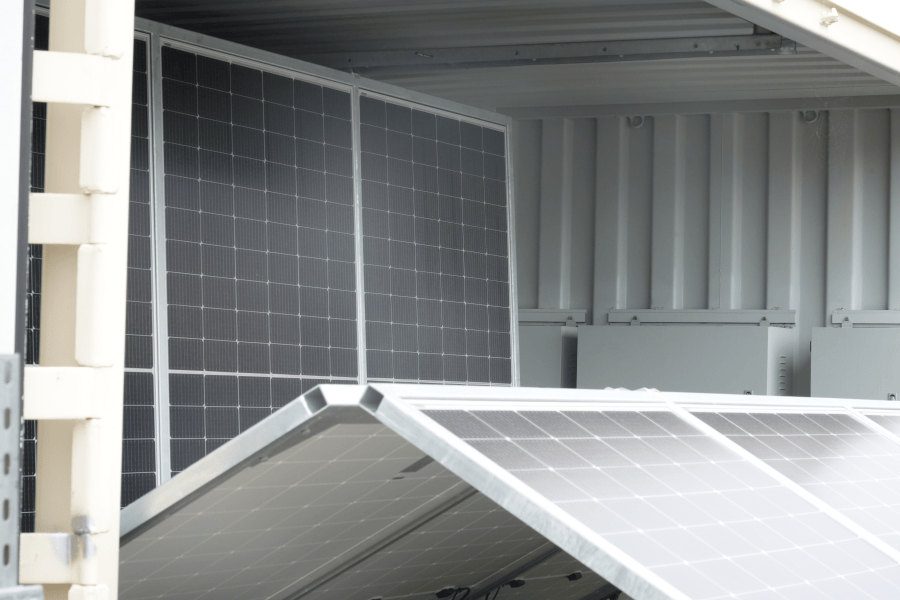
Case in Point: Lessons from a Mediterranean Island
Let me give you a concrete example from a project we were involved in a few years back. A small Greek island wanted to integrate a 2MW solar PV farm with storage to reduce diesel generator runtime. The initial container supplied by another vendor was a standard "outdoor" unit. Within 18 months, they were facing issues: salt corrosion on busbars, frequent filter changes clogged with a mix of dust and organic matter (pollen, etc.), and one total HVAC failure during a heatwave that required an emergency fly-in of parts.
When we were brought in to help rectify, we didn't just replace the container. We deployed one of our purpose-built IP54 outdoor ESS units with a few key mods:
- Enhanced Filtration: Two-stage particulate and salt filter on the HVAC intake.
- Positive Pressure System: Maintains a slight positive pressure inside the container to actively prevent ingress of dusty, salty air when doors are opened for service.
- Remote Diagnostics: Integrated sensors for internal humidity, corrosion rate (via coupon monitors), and filter differential pressure, all feeding into our cloud-based monitoring platform. The local team gets alerts for filter changes weeks in advance.
The result? After three years of operation, the auxiliary load is down by 35%, there have been zero unplanned outages due to environmental factors, and the scheduled maintenance interval has been extended. The microgrid operator's total cost of ownership is visibly lower.
Expert Insights: C-Rate, Thermal Management & LCOE in the Real World
Let's connect these hardware choices to the big-picture metrics you care about.
C-Rate & Thermal Management: You might be speccing a system for a 1C discharge to handle peak shaving. But in a hot climate, if your container's cooling can't keep the battery cells at their optimal 25C (5C), you won't get that performance consistently. The internal resistance goes up, the usable capacity goes down, and you're effectively derating your own system. A robust thermal design ensures you get the C-rate you paid for, day in and day out.
LCOE/LCOS Impact: Every decision flows into the Levelized Cost. A cheaper, less robust container leads to: 1. Higher O&M costs (more frequent service, parts replacement). 2. Higher auxiliary consumption (inefficient cooling). 3. Potential for shorter asset life (corrosion, thermal stress). 4. Revenue loss from downtime. A 20% premium on a superior, IP54-engineered container at the CAPEX stage often pays back 2-3 times over the project life in avoided OPEX and sustained performance. That's the math we help our clients at Highjoule Technologies work through, using real-world degradation models that factor in environment.
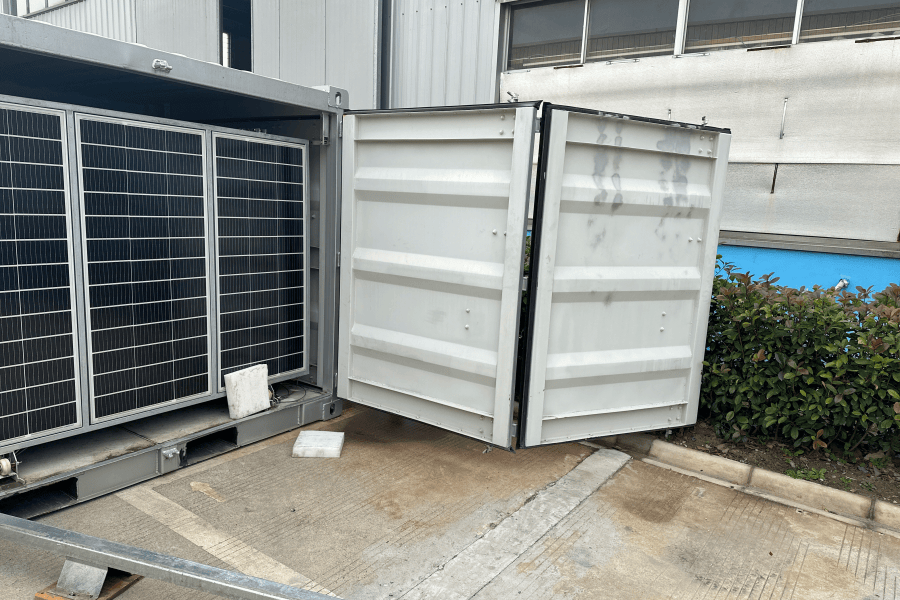
Making the Choice: What to Look For
So, when you're comparing IP54 outdoor industrial ESS containers for your remote microgrid, move beyond the checkbox. Ask these questions:
- "Can you show me the specific UL 9540 and UL 9540A test reports for this full container assembly?" (It's about system-level safety, not just component listings).
- "What is the detailed corrosion protection strategy for cable entry glands, hinges, and the underside?"
- "How is the thermal management system sized for my specific ambient profile, and what is its part-load efficiency?"
- "What remote monitoring capabilities are native to the enclosure for environmental conditions?"
The goal isn't to buy a container. It's to purchase reliability, longevity, and predictable returns in a place where the margin for error is razor-thin. The right partner should be able to have this conversation with you, grounded in site photos, data logs, and hard-earned lessons from the field.
What's the one environmental challenge in your project location that keeps you up at night? Is it the salt spray, the dust storms, or the sheer remoteness of it all? Let's talk about how to engineer the resilience in, from the ground up.
Tags: UL Standard BESS LCOE Thermal Management Remote Island Microgrids IP54 Outdoor ESS Container
Author
James Zhang
20+ years agricultural energy storage engineer / Highjoule CTO