
Safety Regulations for Rapid Deployment Photovoltaic Storage System for Agricultural Irrigation
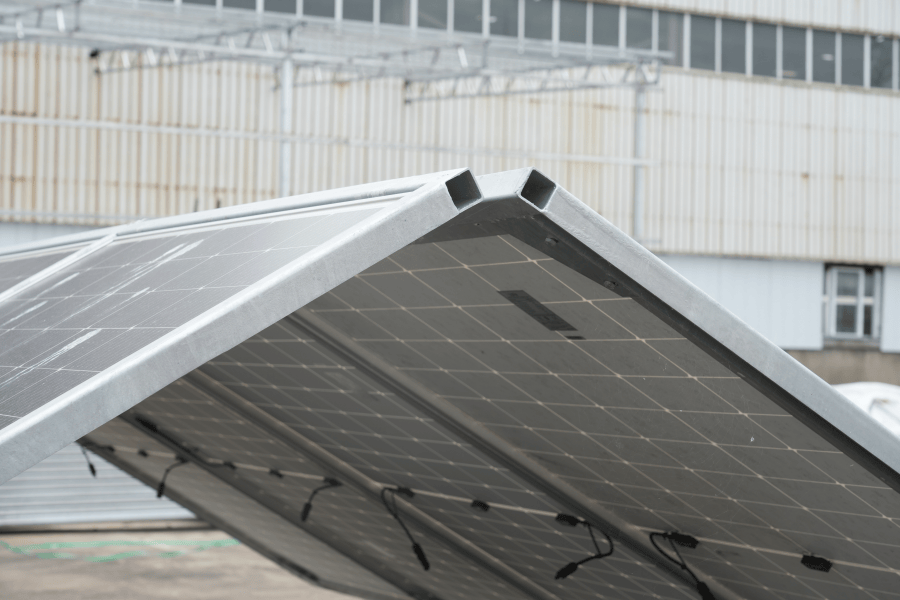
Beyond the Quick Fix: Why Safety is the Real Harvest in Rapid-Deploy Ag-Energy Storage
Honestly, over two decades of deploying BESS from California vineyards to German potato farms, I've learned one thing: speed is seductive, but safety is sovereign. Especially when we're talking about rapid deployment photovoltaic storage systems for agricultural irrigation. The market's pushing for fast turnkey solutions, and I get it. A farmer needs water, the sun's shining, and the clock's ticking. But here's the hard truth I've seen firsthand on site: cutting corners on safety regulations doesn't just risk compliance - it risks the entire farm's livelihood, and frankly, lives.
Table of Contents
- The Rush and The Risk: A Real Industry Pain Point
- Data Doesn't Lie: The Scale of the Challenge
- A California Case: When "Fast" Almost Meant Failure
- Decoding the Rulebook: Key Regulations You Can't Ignore
- Building for the Long Haul, Not Just the Quick Install
- Your Next Step: Questions to Ask Your Provider
The Rush and The Risk: A Real Industry Pain Point
The phenomenon is clear across the US and Europe. Agribusiness is under pressure - climate volatility, energy price spikes, and sustainability goals. A containerized "plug-and-play" solar-plus-storage unit for irrigation seems like a godsend. Deploy it in weeks, not months, offset diesel gensets, and harness free solar power. The problem? That "rapid deployment" label can sometimes make people treat the system like a temporary generator, not a permanent, complex power plant. I've walked onto sites where the electrical interconnections were an afterthought, where thermal management was barely considered for a container sitting in a 40C (104F) field, and where no one had a clear plan for long-term maintenance. The safety regulations exist for a reason, but in the rush to get water pumping, they become the first casualty.
Data Doesn't Lie: The Scale of the Challenge
This isn't just anecdotal. The National Renewable Energy Laboratory (NREL) has highlighted that improperly managed thermal runaway in battery systems remains a critical research focus. In agricultural settings, where systems are often remote and unattended, the risk profile changes. Furthermore, a report by the International Energy Agency (IEA) on renewables integration stresses that system safety and grid interoperability are foundational to sustainable deployment. Ignoring standards like UL 9540 for energy storage systems or the specific requirements in IEEE 1547 for grid interconnection isn't just a technical slip - it's a business-ending liability.
A California Case: When "Fast" Almost Meant Failure
Let me share a story from California's Central Valley. A large almond grower brought in a "rapid-deploy" BESS to pair with a new solar array for their irrigation pumps. The vendor promised a two-week commissioning. On paper, it looked great. But when I was called in for a secondary review, the issues were glaring. The system's C-rate - basically, how fast you charge and discharge the battery - was mismatched with the pump motors' massive inrush current demands. This meant the batteries were being stressed way beyond their design specs daily, a major thermal and longevity risk. The container was placed on bare earth with poor ventilation, turning it into an oven. And the interconnection design? It barely addressed the local utility's (PG&E) specific fault current requirements.
We had to hit pause. We worked with the grower to relocate the unit onto a proper pad, redesigned the power electronics to include soft-start capabilities for the pumps, and upgraded the thermal management with an active cooling system rated for the local ambient extremes. The "rapid" deployment took an extra three weeks. But three years later, that system is running flawlessly, with zero safety incidents and optimal LCOE (Levelized Cost of Energy). The initial delay saved them a fortune in potential downtime or, worse, a catastrophic failure.

Decoding the Rulebook: Key Regulations You Can't Ignore
So, what are the non-negotiables? Let's break down the core safety pillars for these agricultural systems in simple terms.
- UL 9540 & IEC 62933: These are the bedrock safety standards for the BESS unit itself. They cover everything from cell to system level, including electrical, mechanical, and environmental testing. A unit without this certification is a red flag. At Highjoule, our containerized solutions are designed from the ground up to meet and exceed these, with built-in fire suppression and containment that goes beyond the checklist.
- IEEE 1547-2018: This is the rulebook for connecting to the grid (even if you're mostly off-grid, the interconnection for backup matters). It ensures your system safely handles voltage fluctuations, faults, and can disconnect properly. For irrigation systems that might export surplus power, this is absolutely critical.
- NEC (NFPA 70) Article 706: The National Electrical Code's specific article for Energy Storage Systems. It dictates wiring methods, disconnects, labeling, and location safety. An installer unfamiliar with Article 706 is an installer you should avoid.
- Local AHJ (Authority Having Jurisdiction) Requirements: This is where on-the-ground experience matters. The county fire marshal or the utility's engineering department will have the final say on setbacks, signage, and access. I've spent countless hours in trailers with AHJs, walking them through our designs. Building that trust is part of a safe deployment.
The heart of it all is Thermal Management. A battery's worst enemy is heat. In a metal container in the middle of a sun-baked field, you need a robust, redundant cooling system. It's not just an air conditioner; it's a precision climate control system that manages humidity and temperature uniformly across all battery racks. Skimp here, and you accelerate degradation and court disaster.
Building for the Long Haul, Not Just the Quick Install
Our philosophy at Highjoule Technologies has always been that "rapid deployment" is about smart, modular engineering before the unit ships, not about skipping steps on-site. How do we bake safety and speed together?
- Pre-certified Modular Design: Our Agri-Store units arrive on-site with full UL 9540 certification. The major electrical work and safety systems are integrated and tested at the factory, minimizing field uncertainties.
- Site-in-a-Box Assessment Toolkit: We provide partners with digital tools to conduct pre-deployment site surveys - checking soil composition for the pad, clearances, solar access, and grid connection points. This front-loaded diligence prevents 90% of field surprises.
- LCOE-Optimized Architecture: By right-sizing the battery chemistry (considering C-rate and cycle life) and the inverter capabilities specifically for irrigation load profiles, we build a system that's not just safe, but economically optimal over its 15+ year life. That's real sustainability.
- Localized Service Networks: A safe system needs a watchful eye. Our performance monitoring and local technician networks in key EU and US ag regions mean we're not just selling a container; we're providing a long-term energy service with proactive maintenance.

Your Next Step: Questions to Ask Your Provider
So, if you're evaluating a rapid-deploy solution, move beyond the spec sheet. Sit down with your provider and ask: Can you walk me through the specific UL 9540 test report for this configuration? How does the thermal management system handle [your region's] peak ambient temperature? Can you show me a single-line diagram compliant with NEC Article 706 and IEEE 1547? What is your process for engaging with the local AHJ and utility? What is the projected annual degradation rate, and how does your BMS actively manage cell balance to ensure safety and hit that target?
The right partner won't just have answers - they'll welcome the questions. Because in the end, the safest harvest isn't just the one from your fields, but the reliable, risk-free energy that waters them, season after season.
Tags: UL Standard BESS Photovoltaic Storage Agricultural Irrigation Renewable Energy Safety Regulations
Author
James Zhang
20+ years agricultural energy storage engineer / Highjoule CTO