
Safety-First Scalable BESS for Telecom: Navigating Regulations & Cutting LCOE
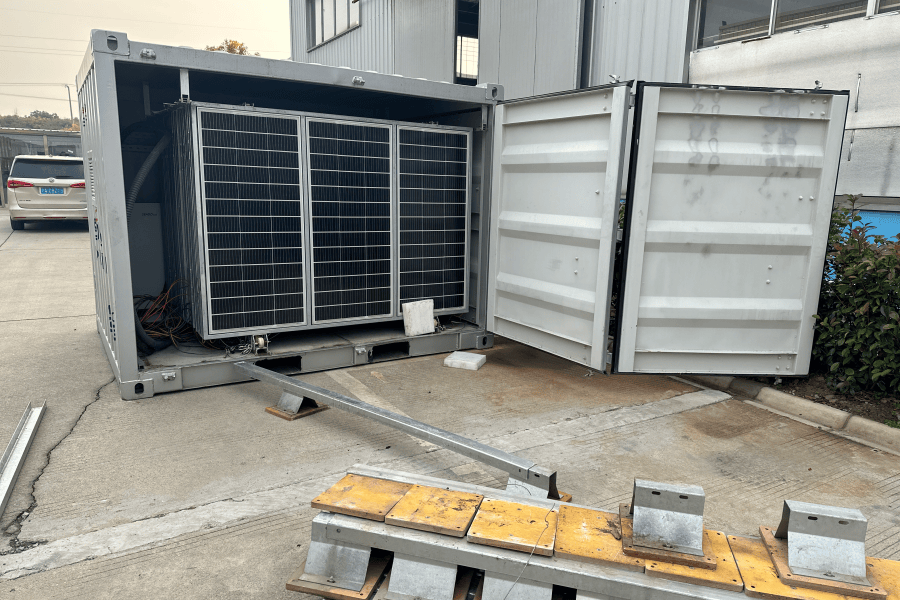
Table of Contents
- The Real Cost of "Just Making It Work"
- Why Safety is Now a Boardroom Issue for Telecom
- The Modular Solution: More Than Just a Box
- A Case from the Field: California's 5G Rollout Challenge
- Expert Breakdown: The Tech Behind Safe, Scalable Power
- Looking Beyond Compliance: The Total Cost of Ownership Win
The Real Cost of "Just Making It Work"
Honestly, if I had a dollar for every time I walked onto a telecom site and saw a battery storage setup that was... let's call it "creative," I'd be retired by now. We've all seen it, especially in the rush to support 5G backhaul and edge computing. A container here, a few racks there, often from different vendors, pieced together to meet immediate power needs. The immediate problem isn't that it doesn't function - it usually does. The problem is the hidden iceberg of liability, inefficiency, and future upgrade nightmares lurking beneath. According to a 2023 NREL report, system integration and safety compliance can account for up to 30% of total BESS project soft costs in distributed deployments. That's a massive chunk of budget eaten up not by the batteries themselves, but by making ad-hoc solutions fit into a regulatory framework they were never designed for.
Why Safety is Now a Boardroom Issue for Telecom
Let's agitate that pain point a bit. This isn't just an engineering headache anymore. With the density of 5G networks and the critical nature of telecom infrastructure, local fire departments, permitting authorities, and insurance underwriters are scrutinizing these sites like never before. I've been on calls where a project was delayed for months because the fire marshal wasn't convinced about the thermal runaway mitigation of a patched-together system. The delay cost? Tens of thousands per week. The real issue with ignoring cohesive Safety Regulations for Scalable Modular Lithium Battery Storage Container for Telecom Base Stations is that it turns every site into a custom engineering project. There's no repeatability, no standardized maintenance protocol, and certainly no easy path to scale from 100 kWh today to 500 kWh next year.

The Modular Solution: More Than Just a Box
This is where the industry is finally getting smart. The solution isn't just stricter rules - it's designing with the rules as the foundation. A true, purpose-built scalable modular container isn't a simple metal shed for batteries. It's an integrated power system where safety and scalability are baked into the DNA. Think of it like building with LEGO blocks that are all pre-certified. Each module - the battery rack, the HVAC, the fire suppression, the power conversion - is designed to UL 9540, UL 1973, and IEC 62619 standards from the get-go. At Highjoule, our approach has always been to build this compliance into the product on the factory floor. That way, when it arrives on your site in Texas or Bavaria, it's not a question of if it meets code, but a demonstration of how it exceeds it. This turns compliance from a project cost into a pre-validated product feature.
A Case from the Field: California's 5G Rollout Challenge
Let me give you a real example. We worked with a major tower company in Southern California. Their challenge was classic: they needed to deploy backup and demand-charge management across dozens of urban and semi-urban sites to support new 5G radios. Each site had unique space constraints and grid interconnection rules. Their previous approach used various components, leading to a permitting nightmare with the local AHJ (Authority Having Jurisdiction).
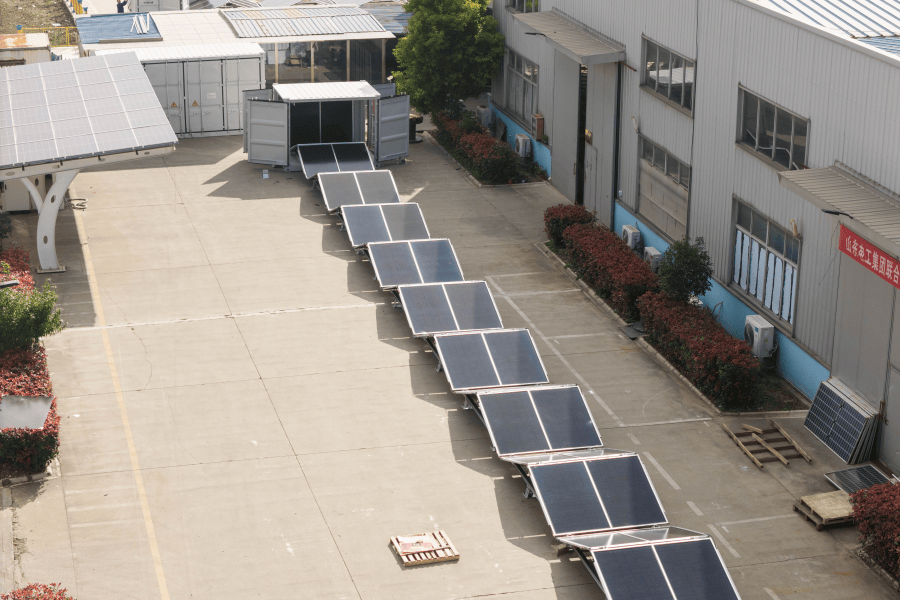
We deployed our pre-certified modular containers. The game-changer was the consistency. Because every container shared the same safety architecture - same fire suppression, same thermal management layout, same shut-off procedures - the approval for the first site became the template for the twentieth. The local fire marshal only needed to be deeply briefed once. This cut the permitting timeline for subsequent sites by about 70%. The scalability was just as crucial. As their power needs grew, they didn't need to re-engineer the site. They just added another identical, pre-wired module. The site grew from 250 kWh to 750 kWh over 18 months with minimal new paperwork or civil work.
Expert Breakdown: The Tech Behind Safe, Scalable Power
Okay, let's get into the weeds for a minute - I promise to keep it simple. Three technical concepts are critical here, and they all intertwine with safety regulations.
- C-rate (Charge/Discharge Rate): Simply put, it's how fast you push or pull energy from the battery. A higher C-rate means more power, but it also generates more heat. For telecom, you need bursts of power for backup. A modular system designed to regulations manages this by having a battery chemistry and cooling system rated for the specific duty cycle, preventing stress and overheating that could lead to premature failure or worse.
- Thermal Management: This is the unsung hero. It's not just air conditioning. It's about precise, zone-based cooling and heating to keep every cell in its happy place. I've seen systems fail because they cooled the aisle but not the core of the battery rack. Modern regulations demand granular monitoring. Our containers, for instance, have sensors at the cell cluster level, not just the container level. This data is crucial for preventing thermal runaway and is a key part of UL 9540A test validation.
- Levelized Cost of Energy (LCOE): This is the big one for your CFO. LCOE is the total lifetime cost of your energy storage divided by the total energy it will dispatch. A safer, modular system might have a slightly higher upfront cost, but it dramatically lowers LCOE. How? Longer system life (from better thermal management), lower maintenance costs (from standardized parts), and zero costly retrofits when you scale or when codes change. Safety and smart design directly translate to a better bottom line over 10+ years.
Looking Beyond Compliance: The Total Cost of Ownership Win
So, what's the takeaway from two decades in the field? Viewing Safety Regulations for Scalable Modular Lithium Battery Storage Container for Telecom Base Stations as a constraint is looking at it backwards. The most forward-thinking operators I work with now see these regulations as a blueprint for building a resilient, profitable, and future-proof power asset. It forces the design discipline that should have been there all along. When you choose a solution built from the ground up to this standard, you're not just buying a container. You're buying predictability. You're buying speed-to-market for your next 100 sites. You're buying the confidence that your insurance provider and local community are on your side.
The question for your next site isn't "What's the cheapest battery we can install?" It's "What's the smartest foundation we can build on today that won't hold us back tomorrow?" Getting that right from the start is the only conversation that matters.
Tags: UL Standard BESS LCOE Telecom Energy Storage Scalable Modular Container
Author
James Zhang
20+ years agricultural energy storage engineer / Highjoule CTO