
Safety Regulations for Scalable Modular Solar Containers in Agricultural Irrigation
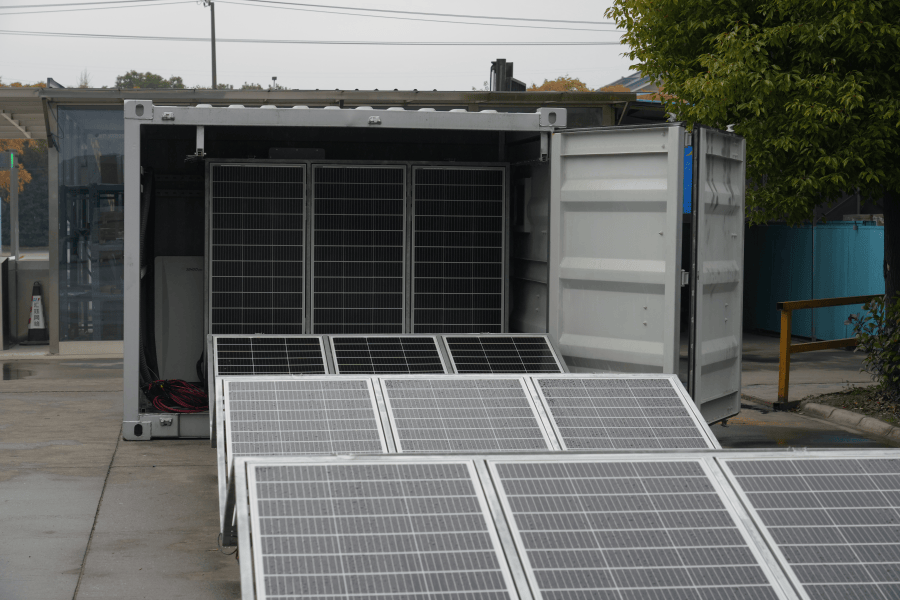
Beyond the Field: Why Safety Standards Are the Unsung Hero of Your Farm's Solar & Storage System
Hey there. Let's grab a virtual coffee. Over my two decades on sites from California's Central Valley to rural Germany, I've had countless conversations with farm owners and agribusiness managers. The talk always starts with energy independence and reducing those crippling diesel bills. But honestly, it quickly pivots to a very real, very quiet concern: "This container full of batteries... how do I know it won't become a liability on my land?" It's the right question to ask. Today, I want to chat about the often-overlooked backbone of any reliable agricultural energy project: the Safety Regulations for Scalable Modular Solar Container for Agricultural Irrigation.
Table of Contents
- The Real Problem: It's More Than Just a Box
- The Staggering Cost of Cutting Corners
- The Solution: It's All in the Framework
- Case in Point: A Winery in Napa Valley
- Expert Insight, Decoded: C-Rate, Thermal Runaway, and LCOE
- Your Next Step: Questions to Ask Your Provider
The Real Problem: It's More Than Just a Box
The market is flooded with "plug-and-play" containerized solutions. The pitch is seductive: a sleek, modular unit that promises to solve all your irrigation and farmstead power needs. But here's the phenomenon I see firsthand: many decision-makers, rightly focused on upfront cost and energy output specs, treat the container itself as a simple metal shed. They underestimate the complex, living ecosystem of power electronics, battery chemistry, and thermal dynamics inside.
An agricultural setting isn't a controlled lab. It's dust, humidity, temperature swings from freezing nights to scorching days, and sometimes, curious wildlife. A standard industrial unit might not cut it. The core pain point isn't a lack of technology; it's a gap in understanding how specific, rigorous safety regulations translate directly to uptime, longevity, and peace of mind for your operation.
The Staggering Cost of Cutting Corners
Let's agitate that pain point a bit. What happens when safety is an afterthought?
- Catastrophic Failure Risk: Thermal runaway - a cascading battery failure - is rare but devastating. Without proper cell-level fusing, compartmentalization, and gas venting (as mandated by standards like UL 9540 and IEC 62933), a single fault can compromise the entire asset.
- The Hidden Opex Killer: Poor thermal management forces the system to derate itself (slow down charging/discharging) on hot days - precisely when you need water most. This inefficiency silently inflates your Levelized Cost of Energy (LCOE). According to a National Renewable Energy Laboratory (NREL) analysis, proper thermal design can improve usable cycle life by 30% or more, a direct capital preservation.
- Insurance and Liability Nightmares: I've seen projects stalled because local authorities and insurers wouldn't sign off on non-compliant systems. Deploying equipment that doesn't meet local UL (North America) or IEC/IEEE (International/Europe) codes isn't just risky; it can be a showstopper.

The Solution: It's All in the Framework
So, what's the answer? It's not a magic product. It's a commitment to a safety-first regulatory framework as the foundation of your modular solar container. This isn't about adding bells and whistles; it's about rigorous, non-negotiable engineering.
At Highjoule, when we design a system for, say, a large irrigation pivot or cold storage facility, we don't start with the megawatt-hour number. We start with the safety envelope. This means:
- Designing to the Strictest Local Code: Whether it's UL 9540A for fire safety testing in the US or IEC 62485 for stationary battery safety in the EU, our containers are engineered for certification from the ground up.
- Building in Redundancy: Scalable modularity shouldn't mean single points of failure. Independent fire suppression zones, segregated battery stacks, and distributed monitoring are baked into our architecture.
- Planning for the Real World: That includes ingress protection (IP ratings) against dust and water for those dusty field edges, and corrosion-resistant materials for long-term durability.
Case in Point: A Winery in Napa Valley
Let me share a quick story. A prestigious winery in California wanted to offset grid demand for irrigation and run critical cooling fans during peak hours. Their challenge? Extremely limited, sloped space and a non-negotiable requirement for absolute fire safety due to proximity to dry vegetation.
The solution was a scalable, two-container Highjoule system. The key to approval wasn't the capacity; it was our documentation and design adherence to UL 9540 and the California Electrical Code. We provided the local fire marshal with detailed schematics showing thermal runaway containment pathways and the integration of a dedicated, non-water-based suppression system. The system passed inspection seamlessly. Today, it not only shaves their peak demand charges but does so with a safety certificate that satisfied their insurer and gave the owners genuine peace of mind.
Expert Insight, Decoded: C-Rate, Thermal Management, and LCOE
Let's break down some jargon you'll hear, in plain English.
C-Rate: Think of this as the "speed" of the battery. A 1C rate means a 100 kWh battery can discharge 100 kW in one hour. For irrigation, you might need a high burst (high C-rate) to start pumps. A safe system is designed so that high C-rate events don't overstress the cells and cause excessive heat - that's where quality battery management and cell selection, validated by standards, come in.
Thermal Management: This is the HVAC for your batteries. Passive systems are simpler; active liquid cooling (which we often use) is more complex but supremely effective. Why does it matter? For every 10C above a battery's ideal temperature, its degradation rate can double. Good thermal management, as prescribed by IEEE 2030.2.1 guides, is the single biggest factor in ensuring your 20-year project actually lasts 20 years.
LCOE (Levelized Cost of Energy): The true "cost per kWh" over the system's life. A cheaper, less safe unit might have a lower upfront cost but a higher LCOE because it degrades faster or requires more maintenance. Investing in a safety-compliant system is an investment in a lower, more predictable LCOE.

Your Next Step: Questions to Ask Your Provider
You don't need to be an engineer. You just need to ask the right questions. When evaluating a Scalable Modular Solar Container for Agricultural Irrigation, ask your provider:
- "Can you show me the specific UL or IEC certifications for this container system, not just the components?"
- "What is your thermal management strategy, and how does it maintain cell temperature within optimal range in my specific climate?"
- "Can you provide a documented risk assessment and safety case for this deployment, including fire containment?"
- "How does your design ensure safety and functionality as I add more modules to scale up in the future?"
Honestly, the confidence and clarity of their answers will tell you almost everything you need to know. The right partner will welcome these questions, because they live and breathe this stuff every day, just like we do at Highjoule. It's what turns a metal box into a resilient, profitable asset for your land.
What's the one safety concern keeping you up at night about bringing storage to your farm? I've probably heard it before, and there's always a practical path forward.
Tags: UL Standard BESS Europe US Market Solar Container Agricultural Irrigation Renewable Energy IEC Standard Safety Regulations
Author
James Zhang
20+ years agricultural energy storage engineer / Highjoule CTO