
All-in-One Integrated 5MWh BESS Cost for Remote Island Microgrids
Navigating the True Cost of Powering Remote Islands: The 5MWh All-in-One BESS Reality Check
Honestly, when a client first asks me "How much does a 5-megawatt-hour battery system cost?", I usually suggest we grab a coffee. Because the real answer isn't a single number on a brochure. It's a story - a story about avoiding decades of diesel dependency, about navigating complex logistics to a rocky island port, and about making a financial decision that has to stand up for 20+ years. I've seen this firsthand, from the Caribbean to the Scottish Isles. The old way of piecing together storage systems is a big part of why costs have been so unpredictable. Today, let's talk about the new reality: the all-in-one, utility-scale BESS for remote microgrids, and what you're really paying for.
Jump to a Section
- The Real Problem: It's More Than Just a Price Tag
- The Hidden Cost Culprits in Traditional Deployments
- The Solution: How All-in-One Integration Changes the Math
- Breaking Down the Cost Components of a 5MWh System
- Case in Point: Learning from a Real Island Deployment
- Thinking Beyond CAPEX: The Lifetime Cost (LCOE) Advantage
The Real Problem: It's More Than Just a Price Tag
For remote islands and off-grid communities, the dream is clear: slash diesel consumption, integrate more solar and wind, and achieve energy independence. The barrier has always been the perceived high upfront capital cost (CAPEX) of the battery storage needed to make it work. But focusing solely on the dollar-per-kilowatt-hour sticker price of the battery racks is where many projects get their first, and sometimes fatal, shock.
The problem isn't just buying batteries. It's everything that surrounds them. You're not building in an industrial park with easy grid connection and a dozen qualified contractors next door. You're managing a multi-vendor puzzle - battery containers from one supplier, power conversion systems (PCS) from another, medium-voltage switchgear from a third, and a control system that needs to make them all talk. Each piece comes with its own engineering, its own commissioning team, and its own finger-pointing manual when something goes wrong. The complexity is immense, and it all gets magnified by distance.
The Hidden Cost Culprits in Traditional Deployments
Let's agitate that pain point a bit. Based on my site experience, here's what bloats the budget after the "core" equipment is purchased:
- Site Integration & "Balance of Plant" (BoP): This can easily add 25-40% to your project cost. We're talking custom concrete foundations, complex cabling between separate containers, fire suppression systems that need to be engineered on-site, and climate control that has to work in both tropical heat and salty air.
- Extended Commissioning & Startup: With components from different vendors, the commissioning phase stretches out. I've been on sites where we spent weeks just troubleshooting communication protocols between the battery management system and the inverter. That's weeks of paying for expensive specialist fly-in labor, hotel costs, and project delays.
- Long-Term O&M Uncertainty: Who do you call at 2 AM when the system trips? With a fragmented supply chain, you're managing multiple service contracts. Spare parts logistics to an island are a nightmare. This operational risk often gets translated into higher contingency fees in the financial model.
According to the National Renewable Energy Laboratory (NREL), soft costs - engineering, permitting, grid interconnection, and financing - can represent up to 50% of the total installed cost for energy storage projects. For remote locations, that percentage is even higher.

The Solution: How All-in-One Integration Changes the Math
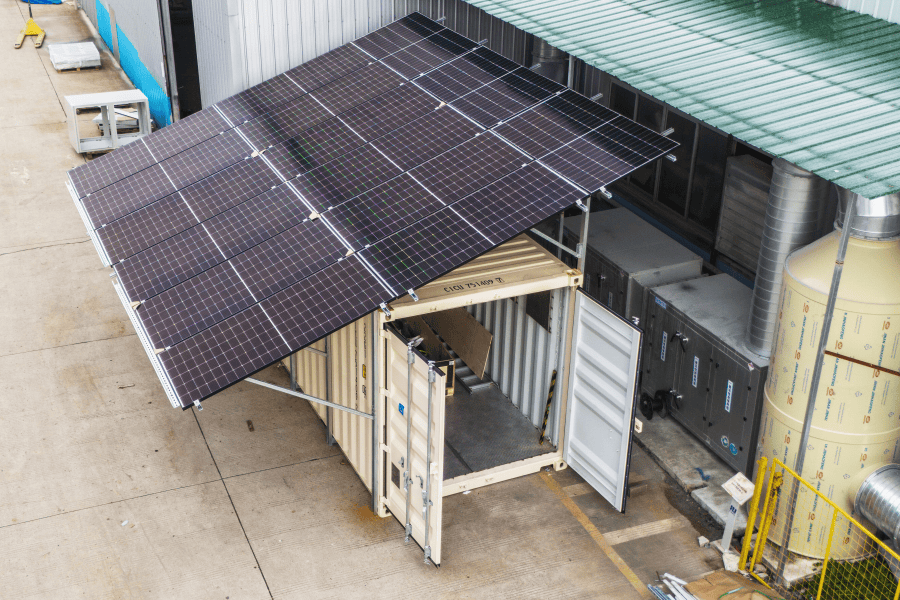
This is where the concept of the all-in-one, pre-integrated 5MWh utility-scale BESS becomes a game-changer. It's not just a product; it's a fundamentally different approach to project delivery. Instead of buying components, you're buying a power plant in a box.
At Highjoule, when we design a system like our GridFort 5MWh solution for these environments, we start with the end in mind. We pre-assemble and pre-test the entire system in the factory: the battery racks, the PCS, the transformer, the switchgear, and the advanced microgrid controller - all housed in a single, robust, climate-controlled enclosure that's built to UL 9540 and IEC 62933 standards. This turns the on-site deployment from a years-long construction project into a matter of months.
Breaking Down the Cost Components of a 5MWh System
So, back to the big question. While final pricing requires a detailed proposal, we can talk structure. The total installed cost for a robust, island-ready 5MWh all-in-one system typically ranges between $1.2 million to $1.8 million. The variance depends on specific requirements like:
| Cost Driver | Impact on Price | How All-in-One Design Mitigates It |
|---|---|---|
| Battery Cells & Chemistry | Core cost. LFP (Lithium Iron Phosphate) is the standard for safety and cycle life. | Pre-negotiated, high-volume supply chain ensures stable pricing and quality. |
| Power Conversion System (PCS) Rating | Defines charge/discharge power (C-rate). A 2.5MW PCS for a 5MWh pack is common. | Pre-integrated and matched to the battery, eliminating oversizing and compatibility costs. |
| Thermal Management | Critical for island heat. Liquid cooling vs. air cooling has cost implications. | Factory-optimized cooling system is part of the package, reducing BoP engineering. |
| Grid Interconnection & Compliance | Meeting local codes (UL, IEEE 1547) and grid operator requirements. | System is pre-certified to core standards, drastically reducing on-site compliance risk and time. |
| Shipping & Logistics | Major cost for islands. Weight, dimensions, and port access matter. | A single containerized unit simplifies shipping, handling, and customs. |
Case in Point: Learning from a Real Island Deployment
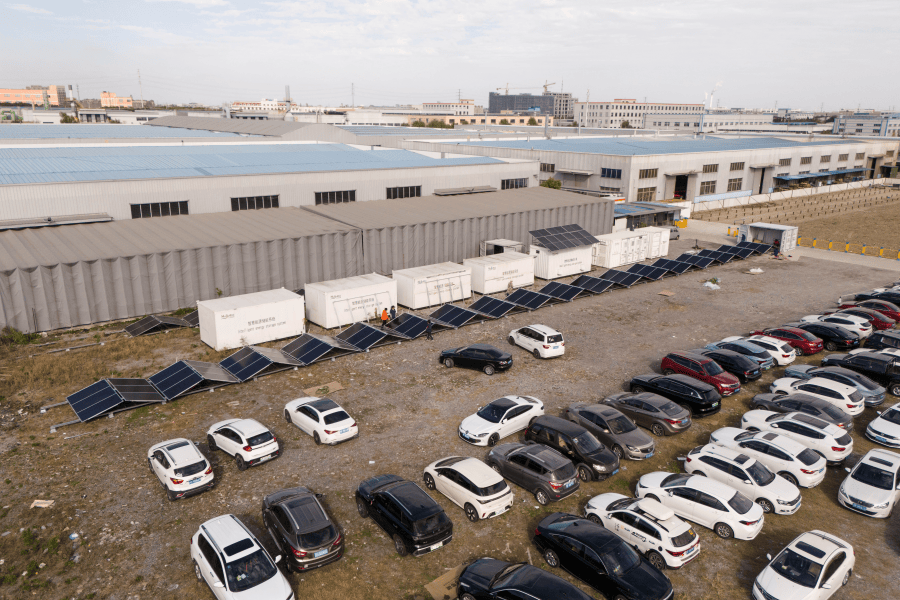
Let me give you a non-proprietary example from a project in the Mediterranean. A small island community wanted to pair a 5MW solar farm with storage to run for 6 hours at night. The initial bids using a disaggregated approach came in with high BoP costs and a 24-month timeline.
They switched to an all-in-one strategy. The unit was built and fully tested in Northern Europe, shipped as one piece, and placed on a pre-prepared pad. The on-site commissioning time was reduced by over 60%. The biggest saving wasn't just in the hardware; it was in the avoided costs of prolonged on-island labor, delayed renewable energy production, and the financial de-risking that came from a single warranty and performance guarantee from one vendor. That holistic view is what defines the true cost.
Thinking Beyond CAPEX: The Lifetime Cost (LCOE) Advantage
For a financial decision-maker, the most critical metric is the Levelized Cost of Energy (LCOE) C the total lifetime cost of the asset divided by the energy it produces. A slightly higher upfront CAPEX can be a brilliant trade for a much lower LCOE.
Here's how an integrated 5MWh BESS drives down LCOE:
- Higher Efficiency & Yield: Pre-optimized components mean less energy loss in conversion and thermal management. Over 20 years, those percentage points add up to massive megawatt-hour savings.
- Predictable O&M: With a single point of contact and a system designed for remote monitoring, operational costs are stable and predictable. Highjoule's platform can often diagnose issues before they cause downtime, and we can dispatch the right part and technician the first time.
- Longer Lifespan: Superior thermal management (a must for islands) is baked into the integrated design, reducing cell degradation. This extends the usable life of the system, directly improving your financial return.
So, the next time you're evaluating a proposal, ask not just "What is the cost?", but "What is the value over the life of this project?" The integrated approach is built to answer that second, more important question. It transforms a complex capital expenditure into a predictable, high-performance energy asset.
What's the single biggest cost variable you're wrestling with in your remote microgrid planning? Is it the logistics, the long-term service model, or the financing structure? Let's discuss the specifics - the coffee's still warm.
Tags: UL Standard LCOE BESS Cost Utility-scale Battery Storage Energy Storage System Island Microgrid Remote Power
Author
James Zhang
20+ years agricultural energy storage engineer / Highjoule CTO