
Safety Regulations for Tier 1 Battery Cell Solar Container for EV Charging Stations
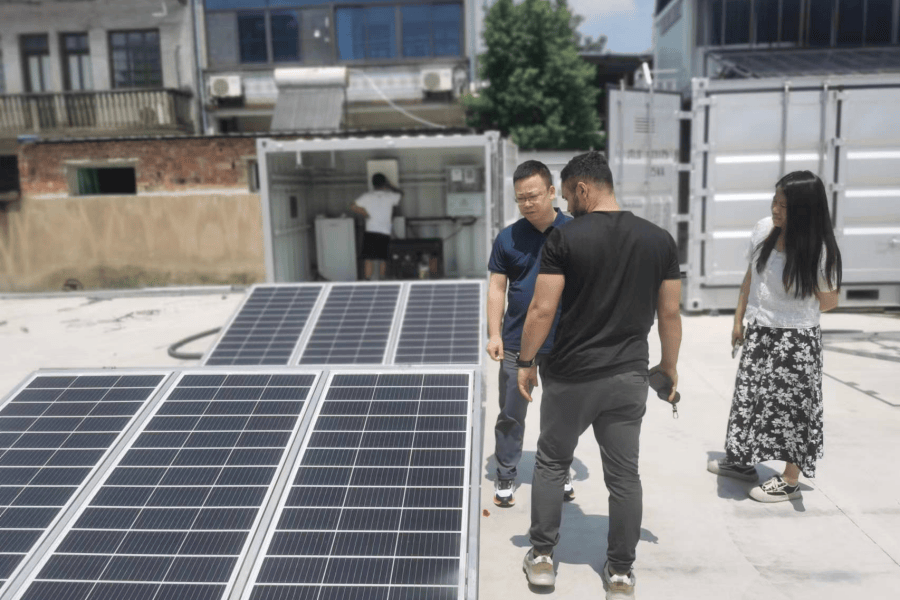
Table of Contents
- The Silent Accelerant in Your EV Charging Project
- When Speed Meets Risk: The Unseen Costs of Cutting Corners
- The Framework That Builds Trust: More Than Just a Checklist
- Beyond the Datasheet: The On-Site Reality of Safe BESS
- A Partner, Not Just a Provider
The Silent Accelerant in Your EV Charging Project
Let's be honest. When you're planning an EV charging station, especially a fast-charging hub, your mind is on throughput, power availability, and that all-important driver experience. The battery energy storage system (BESS) C the solar container that smooths out demand, integrates renewables, and slashes demand charges C often gets tagged as a "necessary box." But here's what I've seen firsthand on site: that "box" isn't just an asset. If not handled with extreme care from day one, it can become the single biggest liability to your project's timeline, budget, and, most critically, its operational license.
The rush to deploy is real. According to the International Energy Agency (IEA), global EV sales are set to grow strongly through 2030, demanding a massive expansion of charging infrastructure. This pressure can lead to a dangerous oversight: treating the BESS as a commodity, where procurement decisions hinge solely on $/kWh. The Safety Regulations for Tier 1 Battery Cell Solar Container for EV Charging Stations aren't bureaucratic red tape. They are the collective wisdom of decades of engineering, written in the language of standards like UL 9540, IEC 62933, and IEEE 1547, to prevent very real, very expensive failures.
When Speed Meets Risk: The Unseen Costs of Cutting Corners
I was on a site in California a while back, a prime location for a solar-powered charging depot. The developer had sourced a "cost-effective" containerized BESS. On paper, it met basic specs. But during the interconnection study, the utility flagged it. The system's fault current response wasn't certified to IEEE 1547-2018, and its internal construction didn't have the proper UL 9540A test report for fire safety. The project didn't just stall; it went into reverse.
This is the pain point, magnified:
- Financial Agony: Months of delays. Re-engineering. Potential full system rejection. The "savings" on the unit evaporated tenfold in lost revenue and redesign costs.
- Insurance & Liability Nightmare: Insurers are getting smart. Without recognized safety certifications (UL, IEC), your premium skyrockets, or coverage is denied outright. In the event of an incident, the liability falls entirely on you, the asset owner.
- Reputational Ruin: Imagine the headline: "EV Charging Station Fire Traced to Battery System." It's not just about equipment loss; it's about eroding public trust in the very transition we're trying to enable.
The core issue? A fundamental misunderstanding that safety is a feature you add on. It's not. For a Tier 1 battery cell system in a high-utilization, public-facing environment like a charging station, safety is the foundational architecture. It's designed in, from the cell chemistry selection to the millisecond-level response of the power conversion system.

The Framework That Builds Trust: More Than Just a Checklist
So, what do these regulations and standards actually do? They provide a predictable, rigorous framework that de-risks your investment. Let's break down the key pillars for a solar container at an EV site:
- Cell & Module Safety (The Heart): "Tier 1" isn't a marketing term. It refers to cells from manufacturers with proven, scalable quality and safety records. Regulations mandate rigorous testing for thermal runaway propagation. At Highjoule, we don't just buy cells; we audit the manufacturing process and demand full traceability and test reports that exceed baseline IEC 62619 requirements.
- System-Level Certification (The Body): This is where UL 9540 and its critical component, UL 9540A (thermal runaway fire propagation), come in. This isn't a simple pass/fail. It's a test that simulates a worst-case cell failure and proves the system's design contains it. Getting this right is non-negotiable for permitting in most US jurisdictions and is becoming the benchmark in Europe.
- Grid Integration Safety (The Brain): IEEE 1547-2018 is the rulebook. Your BESS must "play nice" with the grid. It needs to detect faults, islands, and abnormalities and respond in a prescribed, safe manner to protect utility workers and the grid itself. A system not built to this standard won't get connected.
Honestly, navigating this alone is a full-time job. That's why our approach at Highjoule has always been to engineer compliance in from the first schematic. Our solar containers are designed as integrated systems, not a collection of parts, with all major certifications pre-validated. It turns a potential project bottleneck into a smooth path to commissioning.
From Regulations to Real-World Performance: The LCOE Connection
Here's an expert insight many miss: strict adherence to safety regulations directly lowers your Levelized Cost of Energy Storage (LCOE). How? Two ways: Thermal Management and C-rate.
A robust, safety-first thermal system (liquid cooling for these high-power EV applications) doesn't just prevent fires. It maintains optimal cell temperature, drastically reducing degradation. A battery that lasts 15 years instead of 10 has a much lower cost per cycle. Similarly, designing for a responsible, sustainable C-rate (the rate of charge/discharge) instead of pushing cells to their absolute limit extends lifespan. We've seen systems where a 10% reduction in peak C-rate design leads to a 40%+ improvement in cycle life. That's the real economics of safety.
Beyond the Datasheet: The On-Site Reality of Safe BESS
Let me give you a case from Germany. We were working on a microgrid for a logistics park in North Rhine-Westphalia that included fleet EV charging. The challenge was space constraints and strict local fire codes (VdS guidelines). The client needed a system that was compact but offered maximum safety assurance.
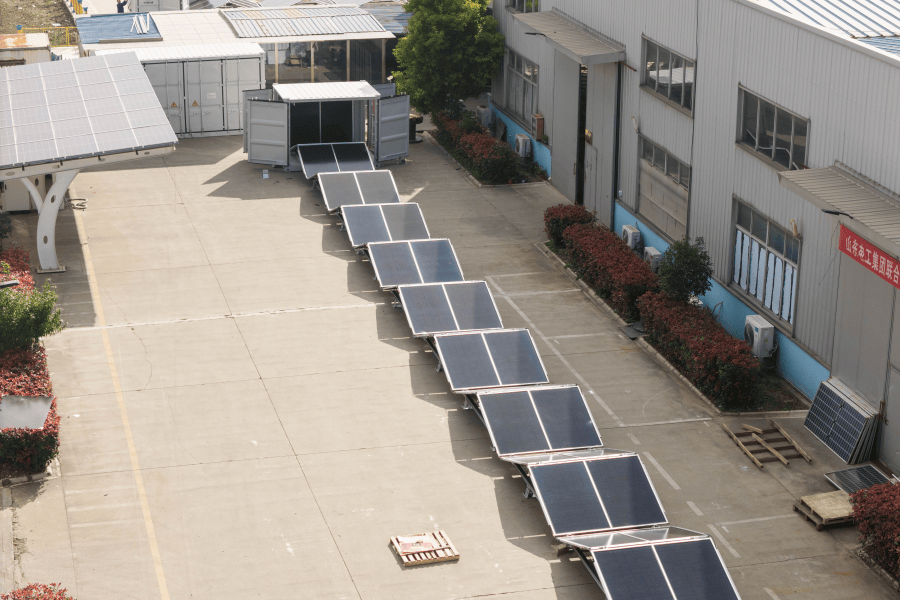
We deployed one of our UL 9540-certified containers with a dedicated, multi-zone gas detection and suppression system. But the real work was in the integration and documentation. We provided the local fire department with full as-built drawings, suppression system schematics, and emergency response guides in German. We conducted a joint training session. This wasn't just about checking a regulatory box; it was about building community trust and ensuring seamless operational safety. The system passed inspection immediately, and the fire authority commended the proactive approach. That's deployment with confidence.
A Partner, Not Just a Provider
The landscape of Safety Regulations for Tier 1 Battery Cell Solar Container for EV Charging Stations is complex and local. What flies in Texas might need adjustments for the UK. The goal isn't to sell you a container. The goal is to deliver a compliant, reliable, and profitable energy asset that powers your chargers for decades.
That requires a partner who's been in the trenches C who understands that the safety manual is as important as the inverter, and that local utility relationships are as crucial as the battery cycle life. It's about designing with the end in mind: not just installation day, but day 3,650 and beyond.
So, as you evaluate your next EV charging project, ask your BESS provider this: "Walk me through your UL 9540A test report for this exact configuration. How does your system's fault response align with IEEE 1547-2018 for this specific utility territory?" The depth and clarity of their answer will tell you everything you need to know about the safety C and ultimate success C of your investment.
What's the one safety or compliance hurdle you're currently facing in your market?
Tags: UL Standard BESS Energy Storage Tier 1 Battery EV Charging Safety Regulations IEEE Standard
Author
James Zhang
20+ years agricultural energy storage engineer / Highjoule CTO